. 2015 Apr 8:5:9684.
doi: 10.1038/srep09684.

A rapid and reliable strategy for chromosomal integration of gene(s) with multiple copies

Affiliations

A rapid and reliable strategy for chromosomal integration of gene(s) with multiple copies

Pengfei Gu et al. Sci Rep. .

Abstract

Direct optimization of the metabolic pathways on the chromosome requires tools that can fine tune the overexpression of a desired gene or optimize the combination of multiple genes. Although plasmid-dependent overexpression has been used for this task, fundamental issues concerning its genetic stability and operational repeatability have not been addressed. Here, we describe a rapid and reliable strategy for chromosomal integration of gene(s) with multiple copies (CIGMC), which uses the flippase from the yeast 2-μm plasmid. Using green fluorescence protein as a model, we verified that the fluorescent intensity was in accordance with the integration copy number of the target gene. When a narrow-host-range replicon, R6K, was used in the integrative plasmid, the maximum integrated copy number of Escherichia coli reached 15. Applying the CIGMC method to optimize the overexpression of single or multiple genes in amino acid biosynthesis, we successfully improved the product yield and stability of the production. As a flexible strategy, CIGMC can be used in various microorganisms other than E. coli.


Figures
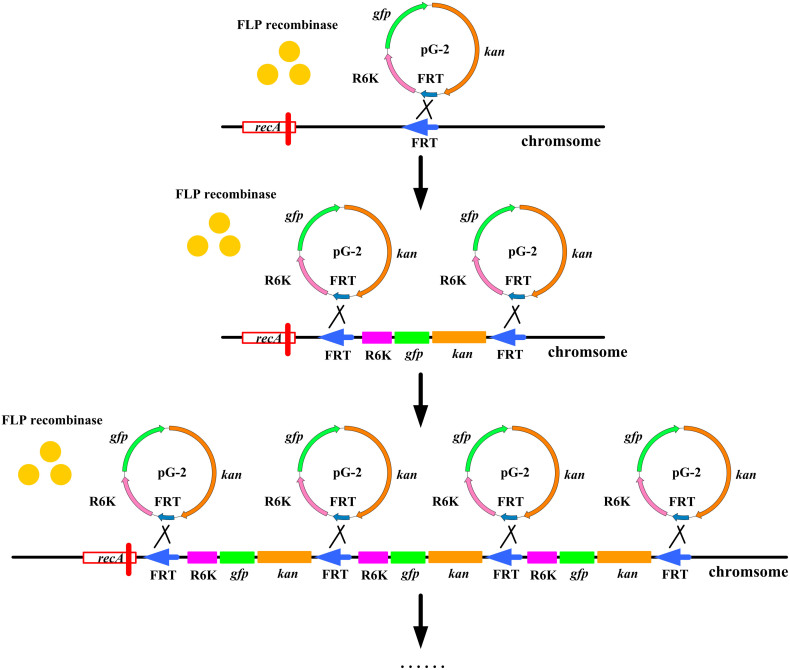
Figure 1
Figure 1. Outline of the chromosomal integration of gene(s) with multiple copies (CIGMC) system in Escherichia coli.
recA, encoding the DNA strand exchange and recombination protein, was previously deleted to prevent subsequent homologous recombination that could reduce the integrated copy number. kan, kanamycin resistance gene; R6K, narrow-host-range replicon; gfp, green fluorescent protein; FRT, flippase recombination target.
Figure 2
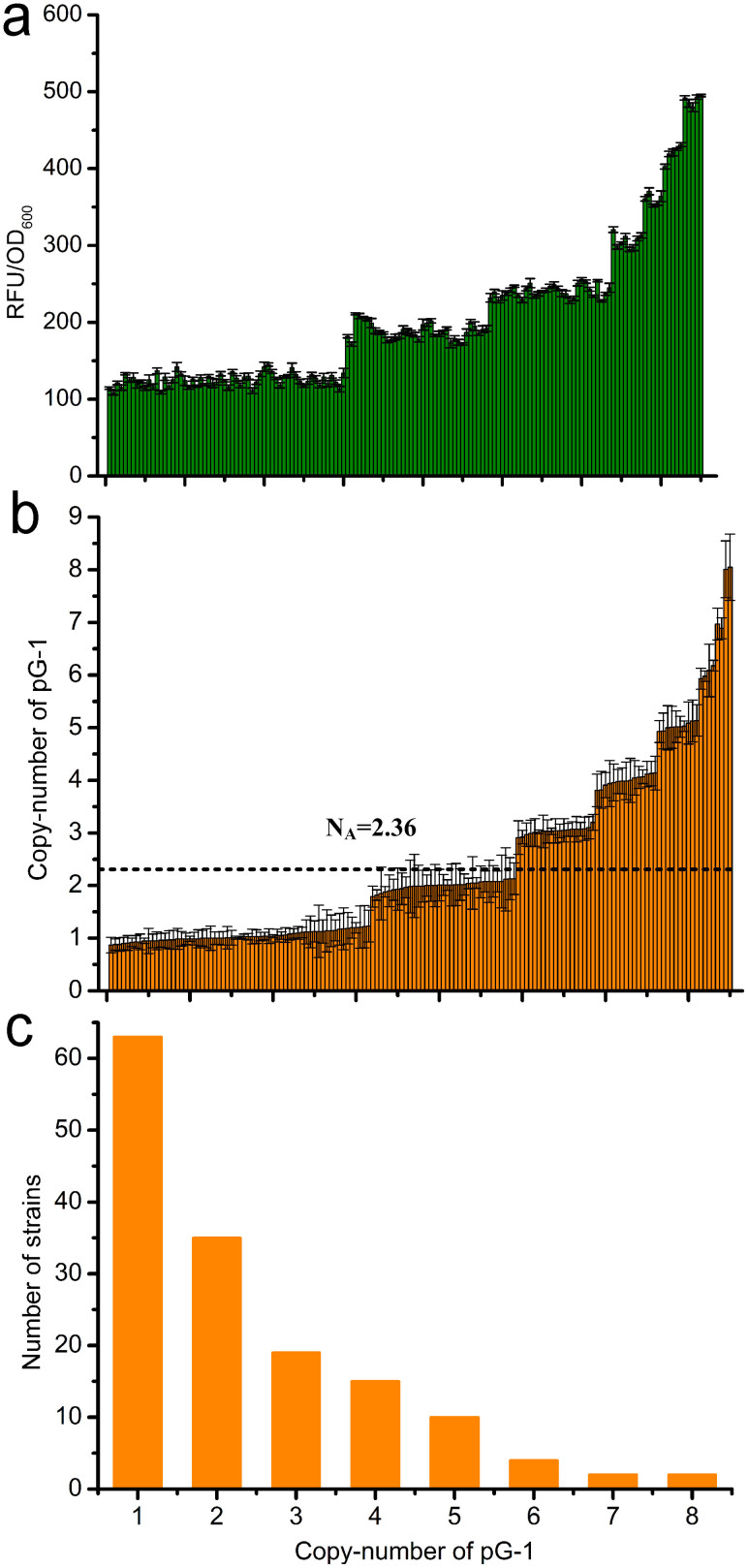
Figure 2. Characterization of the CIGMC system by randomly integrating pG-1 into the chromosome of strain GPF-5.
(a) Relative fluorescence units (RFU) per OD600 of the 150 CIGMC strains randomly selected. (b) Integrated copy number of pG-2 of the CIGMC strains in Fig. 2a. NA indicates the average integrated copy number. (c) Distribution of the integrated copy number of the 150 CIGMC strains in Fig. 2a. Error bars represent the s.d. (n = 3).
Figure 3
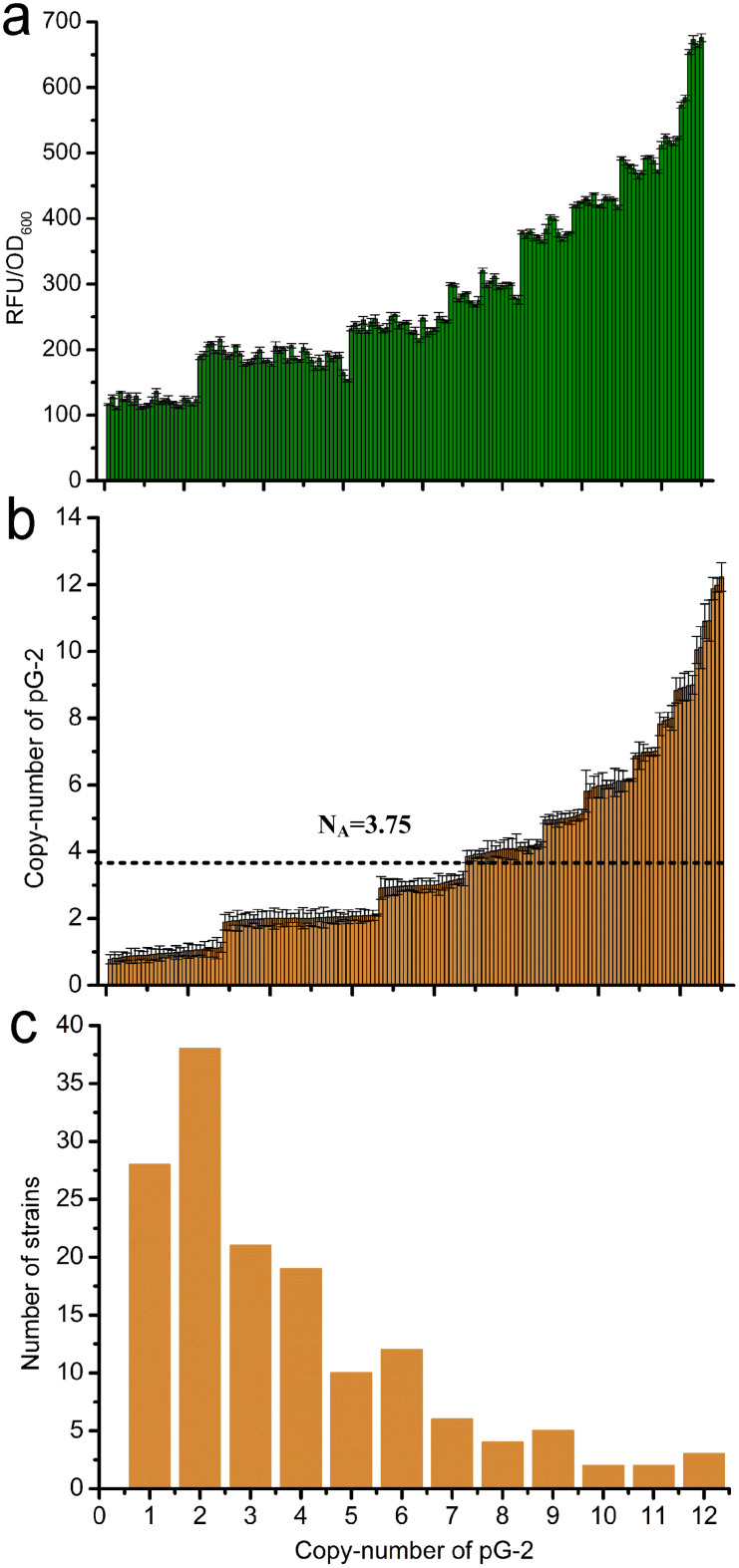
Figure 3. Characterization of the CIGMC system by randomly integrating pG-2 into the chromosome of strain GPF-5.
(a) RFU per OD600 of the 150 CIGMC strains randomly selected. (b) Integrated copy number of pG-2 of the CIGMC strains in Fig. 3a. NA indicates the average integrated copy number. (c) Distribution of the integrated copy number of the 150 CIGMC strains in Fig. 3a. Error bars represent the s.d. (n = 3).
Figure 4
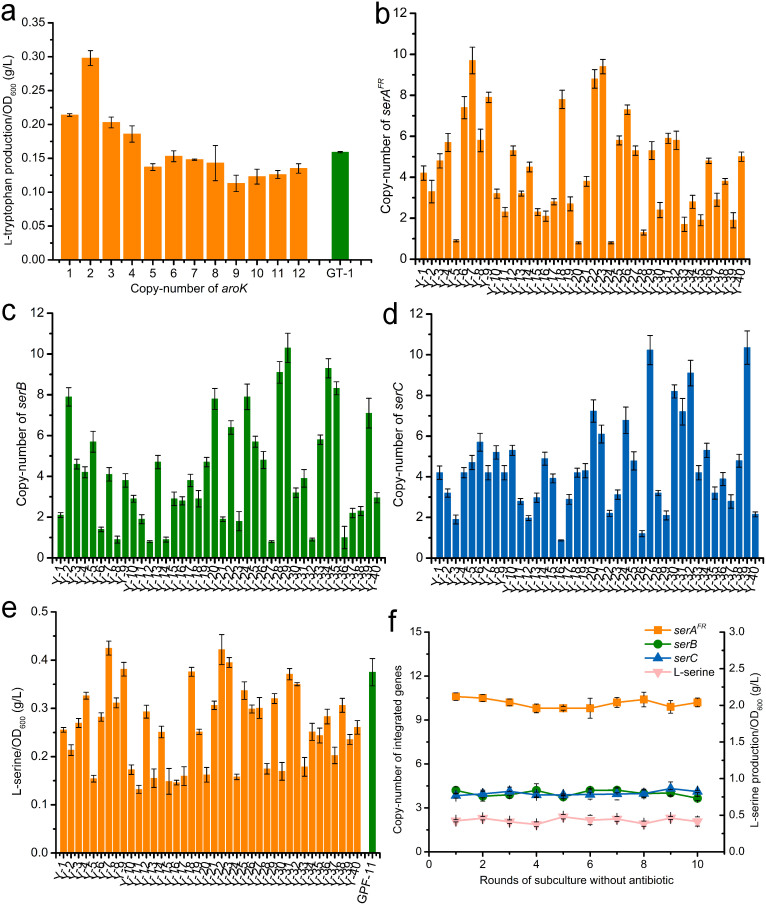
Figure 4. Application of the CIGMC strategy to optimize amino acid production in E. coli.
(a) L-tryptophan accumulation of CIGMC strains by introducing random copies of aroK into GPF-5 and transforming with plasmid pTAT. The L-tryptophan production was determined after batch cultivation for 24 h. The indicated copy number excludes the original aroK gene on the chromosome. L-tryptophan-producing strain GT-1, containing wild-type aroK, deleted recA, and plasmid pTAT, was selected as a control. (b) Integrated copy number of serAFR in CIGMC strains. (c) Integrated copy number of serB in CIGMC strains. (d) Integrated copy number of serC in CIGMC strains. (e) L-serine production of CIGMC strains with random copies of serAFR, serB, and serC integrated into the chromosome. Strain GPF-11, containing deleted recA and plasmid pYF-1 overexpressing serAFR, serB, and serC, was selected as a control. The L-serine production was determined after batch cultivation for 36 h. (f) Stability of genetic constructs and L-serine production in recombinant strain Y-7, which has 10 copies of serAFR, 4 copies of serB, and 4 copies of serC. Error bars represent the s.d. (n = 3).

References

    1. Juminaga D. et al. Modular engineering of L-tyrosine production in Escherichia coli. Appl Environ Microbiol 78, 89–98 (2012). - PMC - PubMed
    1. Jiang M. & Pfeifer B. A. Metabolic and pathway engineering to influence native and altered erythromycin production through E. coli. Metab Eng 19, 42–49 (2013). - PubMed
    1. Alper H., Fischer C., Nevoigt E. & Stephanopoulos G. Tuning genetic control through promoter engineering. Proc Natl Acad Sci U S A 102, 12678–12683 (2005). - PMC - PubMed
    1. Friehs K. Plasmid copy number and plasmid stability. Adv Biochem Eng Biotechnol 86, 47–82 (2004). - PubMed
    1. Hägg P., De Pohl J. W., Abdulkarim F. & Isaksson L. A. A host/plasmid system that is not dependent on antibiotics and antibiotic resistance genes for stable plasmid maintenance in Escherichia coli. J Biotechnol 111, 17–30 (2004). - PubMed

Publication types

Substances