


Stress and Negative Relationship Quality among Older Couples: Implications for Blood Pressure
- PMID: 25852106
- PMCID: PMC4982382
- DOI: 10.1093/geronb/gbv023
Stress and Negative Relationship Quality among Older Couples: Implications for Blood Pressure
Abstract
Objectives: The cardiovascular system may represent a significant pathway by which marriage and stress influence health, but research has focused on married individuals cross-sectionally. This study examined associations among chronic stress, negative spousal relationship quality, and systolic blood pressure over time among middle-aged and older husbands and wives.
Method: Participants were from the nationally representative longitudinal Health and Retirement Study. A total of 1,356 (N = 2,712) married and cohabitating couples completed psychosocial and biomeasure assessments in waves 2006 and 2010. Analyses examined whether Wave 1 (2006) relationship quality and stress were associated with changes in blood pressure over time.
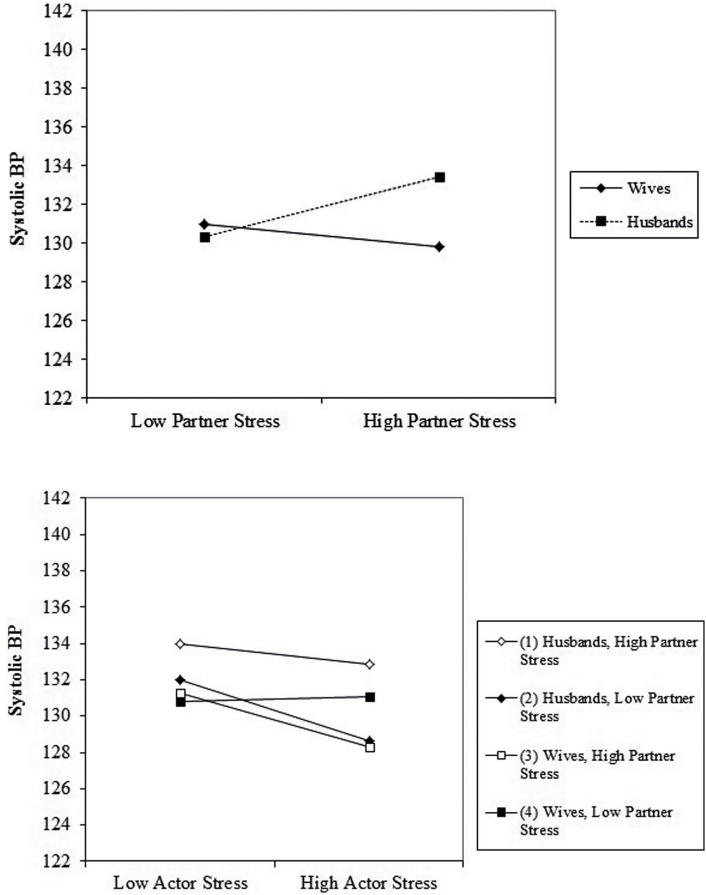
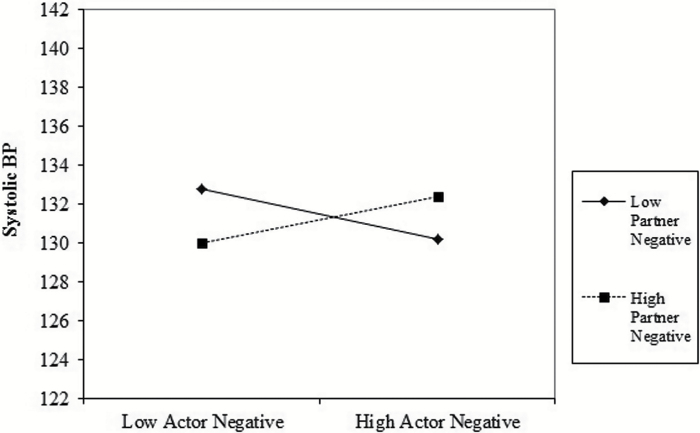
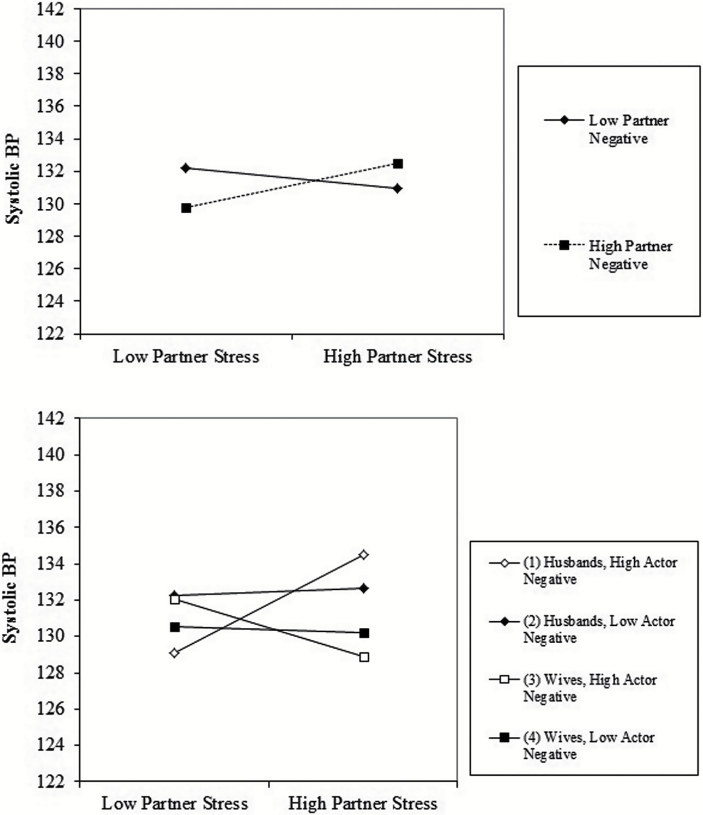
Results: The effects of stress and negative relationship quality were dyadic and varied by gender. Husbands had increased blood pressure when wives reported greater stress, and this link was exacerbated by negative spousal relationship quality. Negative relationship quality predicted increased blood pressure when both members of the couple reported negative quality relations.
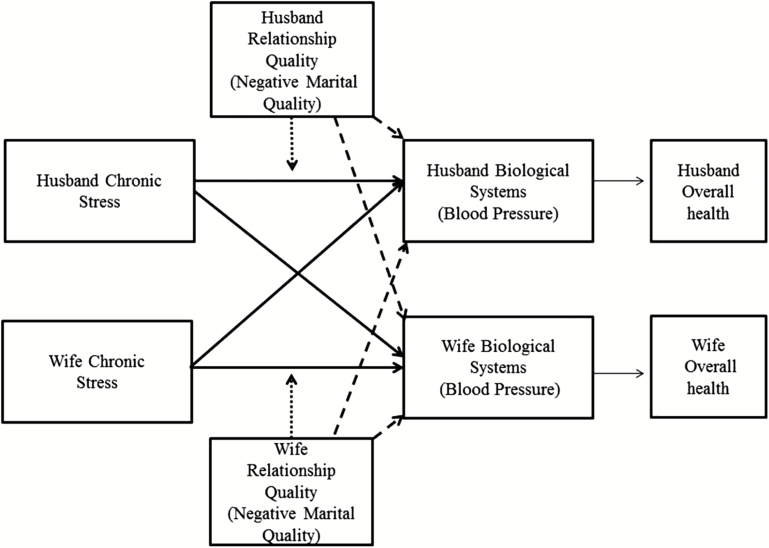
Discussion: Findings support the dyadic biopsychosocial model of marriage and health indicating: (a) stress and relationship quality directly effect the cardiovascular system, (b) relationship quality moderates the effect of stress, and (c) the dyad rather than only the individual should be considered when examining marriage and health.
Keywords: Blood pressure; Couples; Marriage; Middle age; Older adults; Stress.
© The Author 2015. Published by Oxford University Press on behalf of The Gerontological Society of America. All rights reserved. For permissions, please e-mail: journals.permissions@oup.com.
Figures
References
-
- Antonucci T. C., Birditt K. S., Webster N. J. (2010). Social relations and mortality: A more nuanced approach. Journal of Health Psychology, 15, 649–659. doi:10.1177/1359105310368189 - PubMed
-
- Badr H., Acitelli L. K. (2005). Dyadic adjustment in chronic illness: Does relationship talk matter? Journal of Family Psychology, 19, 465–469. doi:10.1037/0893-3200.19.3.465 - PubMed
-
- Berg C. A., Upchurch R. (2007). A developmental-contextual model of couples coping with chronic illness across the adult life span. Psychological Bulletin, 133, 920–954. doi:10.1037/0033-2909.133.6.920 - PubMed
Publication types
MeSH terms
Grants and funding
LinkOut - more resources
Full Text Sources
Other Literature Sources
Medical
