


Cancer-associated fibroblasts connect metastasis-promoting communication in colorectal cancer
- PMID: 25853091
- PMCID: PMC4369728
- DOI: 10.3389/fonc.2015.00063
Cancer-associated fibroblasts connect metastasis-promoting communication in colorectal cancer
Abstract
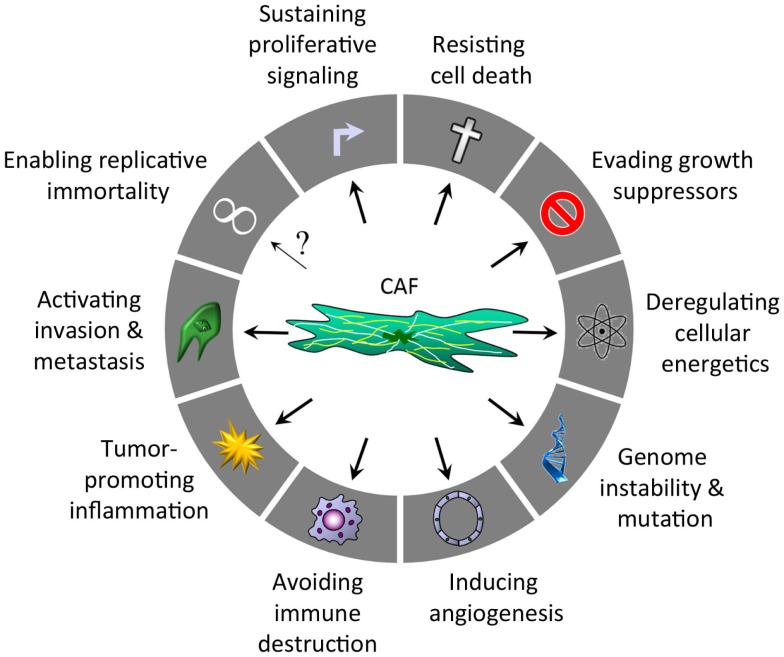
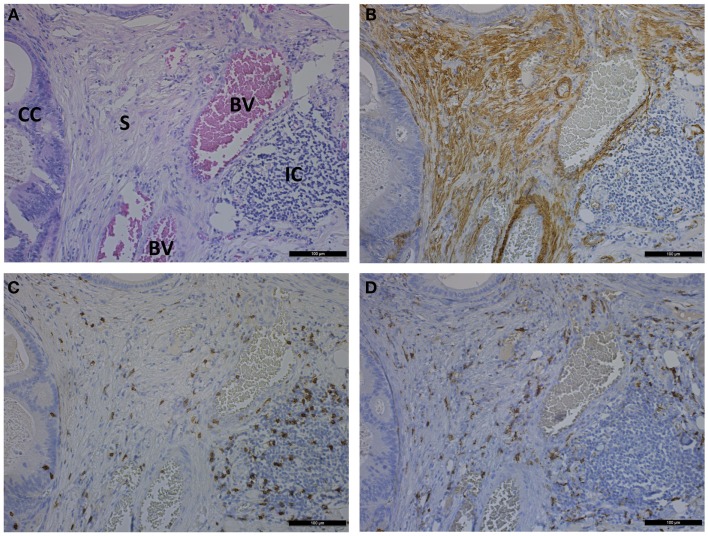
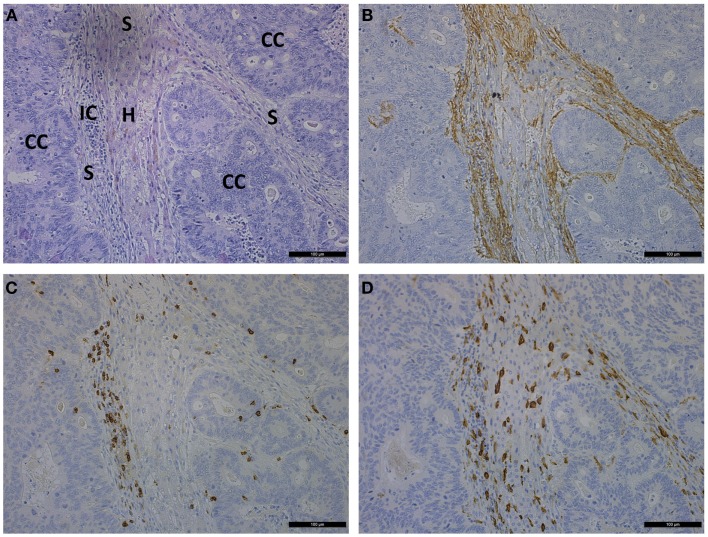
Colorectal cancer (CRC) progression and eventually metastasis is directed in many aspects by a circuitous ecosystem consisting of an extracellular matrix scaffold populated by cancer-associated fibroblasts (CAFs), endothelial cells, and diverse immune cells. CAFs are recruited from local tissue-resident fibroblasts or pericryptal fibroblasts and distant fibroblast precursors. CAFs are highly abundant in CRC. In this review, we apply the metastasis-promoting communication of colorectal CAFs to 10 cancer hallmarks described by Hanahan and Weinberg. CAFs influence innate and adaptive tumor immune responses. Using datasets from previously published work, we re-explore the potential messages implicated in this process. Fibroblasts present in metastasis (metastasis-associated fibroblasts) from CRC may have other characteristics and functional roles than CAFs in the primary tumor. Since CAFs connect metastasis-promoting communication, CAF markers are potential prognostic biomarkers. CAFs and their products are possible targets for novel therapeutic strategies.
Keywords: cancer-associated fibroblasts; colorectal cancer; immune cells; metastasis; pericryptal fibroblasts.
Figures
References
Publication types
LinkOut - more resources
Full Text Sources
Other Literature Sources
