


The importance of evaluating primary midwifery care for improving the health of women and infants
- PMID: 25853136
- PMCID: PMC4369669
- DOI: 10.3389/fmed.2015.00017
The importance of evaluating primary midwifery care for improving the health of women and infants
Abstract
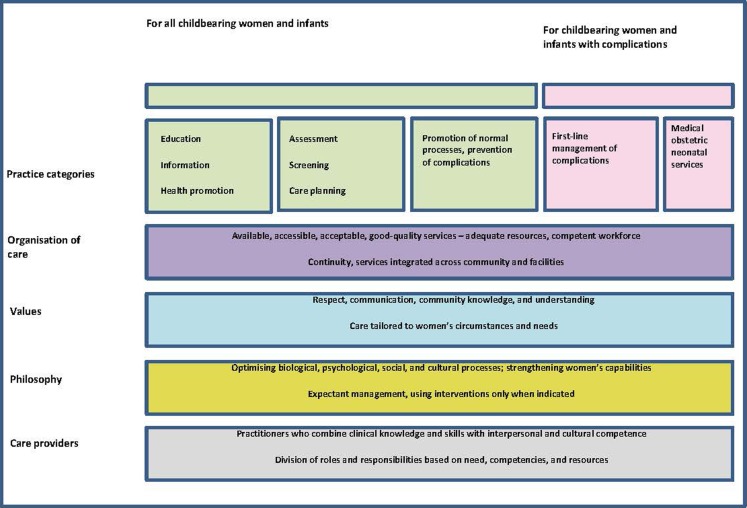
In most countries, maternal and newborn care is fragmented and focused on identification and treatment of pathology that affects only the minority of women and babies. Recently, a framework for quality maternal and newborn care was developed, which encourages a system-level shift to provide skilled care for all. This care includes preventive and supportive care that works to strengthen women's capabilities and focuses on promotion of normal reproductive processes while ensuring access to emergency treatment when needed. Midwifery care is pivotal in this framework, which contains several elements that resonate with the main dimensions of primary care. Primary health care is the first level of contact with the health system where most of the population's curative and preventive health needs can be fulfilled as close as possible to where people live and work. In this paper, we argue that midwifery as described in the framework requires the application of a primary care philosophy for all childbearing women and infants. Evaluation of the implementation of the framework should therefore include tools to monitor the performance of primary midwifery care.
Keywords: maternal health services; medical intervention; midwifery; newborn health; primary health care.
Figures
References
-
- Hixon AL, Maskarinec GG. The Declaration of Alma Ata on its 30th anniversary: relevance for family medicine today. Fam Med (2008) 40(8):585–8. - PubMed
Publication types
LinkOut - more resources
Full Text Sources
Other Literature Sources
