


Mucosal-associated invariant T cell is a potential marker to distinguish fibromyalgia syndrome from arthritis
- PMID: 25853812
- PMCID: PMC4390316
- DOI: 10.1371/journal.pone.0121124
Mucosal-associated invariant T cell is a potential marker to distinguish fibromyalgia syndrome from arthritis
Abstract
Background: Fibromyalgia (FM) is defined as a widely distributed pain. While many rheumatologists and pain physicians have considered it to be a pain disorder, psychiatry, psychology, and general medicine have deemed it to be a syndrome (FMS) or psychosomatic disorder. The lack of concrete structural and/or pathological evidence has made patients suffer prejudice that FMS is a medically unexplained symptom, implying inauthenticity. Furthermore, FMS often exhibits comorbidity with rheumatoid arthritis (RA) or spondyloarthritis (SpA), both of which show similar indications. In this study, disease specific biomarkers were sought in blood samples from patients to facilitate objective diagnoses of FMS, and distinguish it from RA and SpA.
Methods: Peripheral blood mononuclear cells (PBMCs) from patients and healthy donors (HD) were subjected to multicolor flow cytometric analysis. The percentage of mucosal-associated invariant T (MAIT) cells in PBMCs and the mean fluorescent intensity (MFI) of cell surface antigen expression in MAIT cells were analyzed.
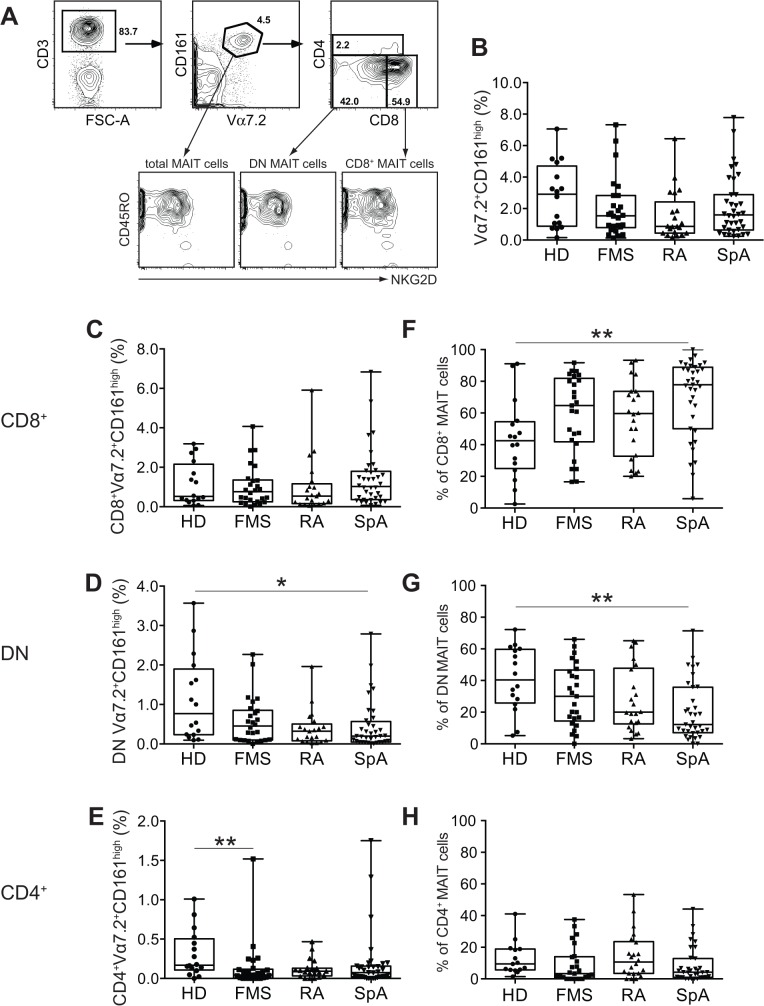
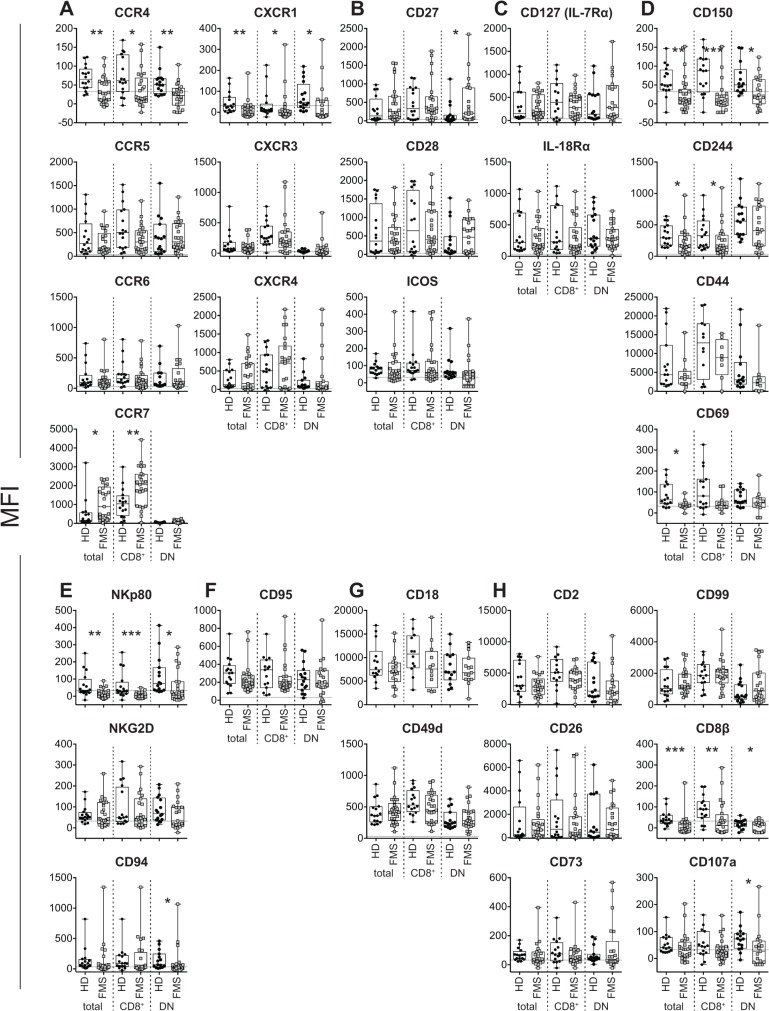
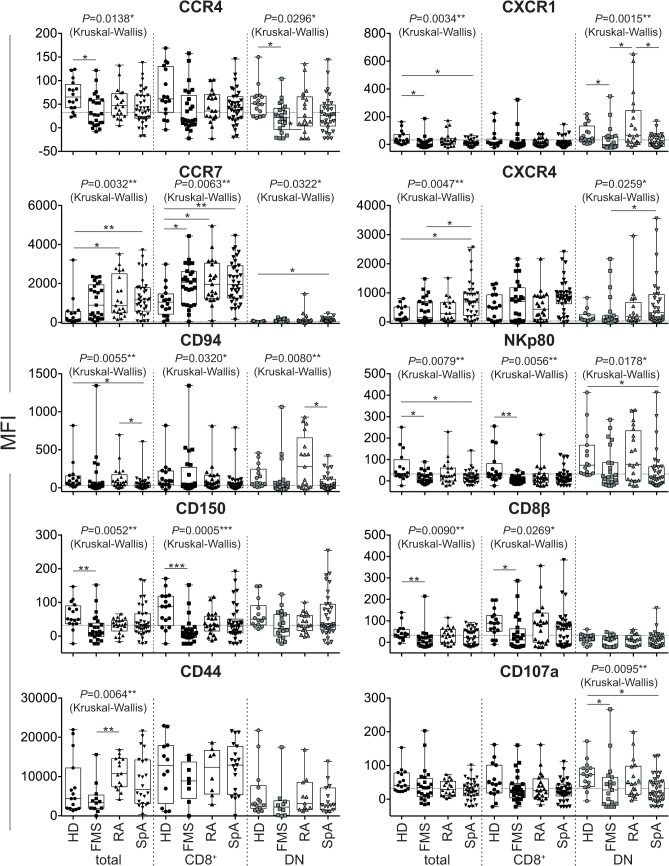
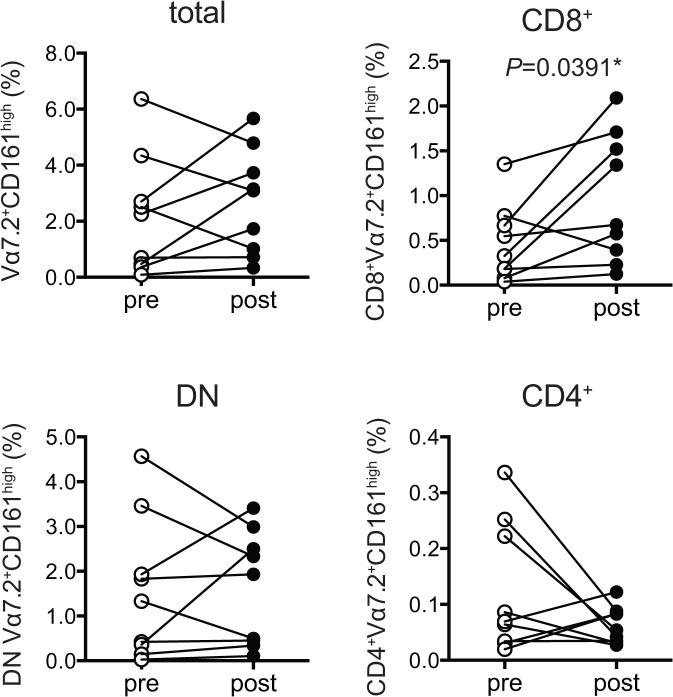
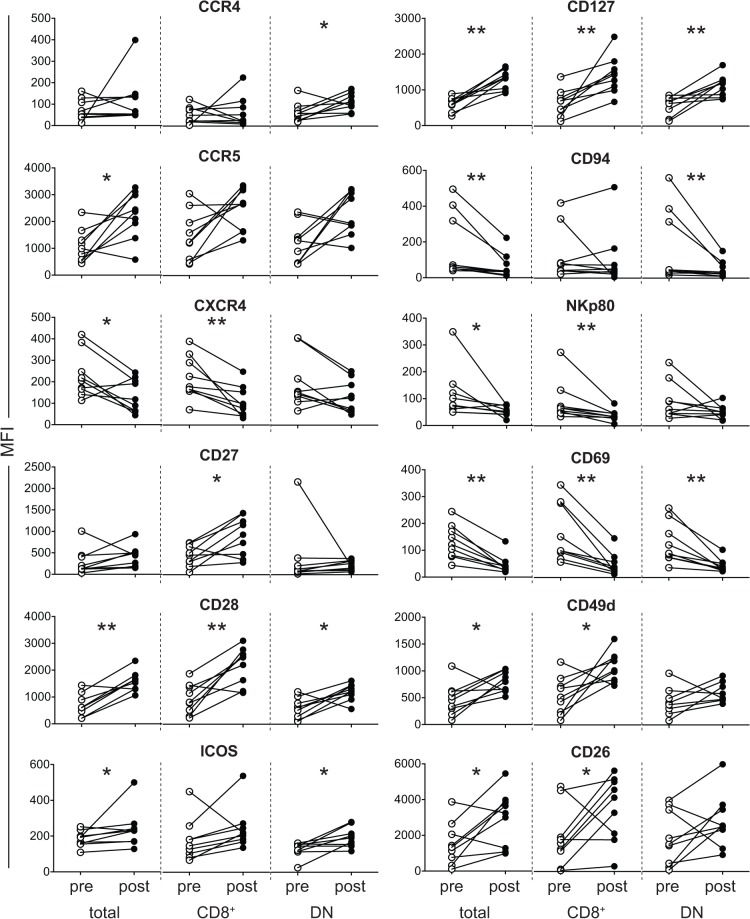
Results: There was a decrease in the MAIT cell population in FMS, RA, and SpA compared with HD. Among the cell surface antigens in MAIT cells, three chemokine receptors, CCR4, CCR7, and CXCR1, a natural killer (NK) receptor, NKp80, a signaling lymphocyte associated molecule (SLAM) family, CD150, a degrunulation marker, CD107a, and a coreceptor, CD8β emerged as potential biomarkers for FMS to distinguish from HD. Additionally, a memory marker, CD44 and an inflammatory chemokine receptor, CXCR1 appeared possible markers for RA, while a homeostatic chemokine receptor, CXCR4 deserved for SpA to differentiate from FMS. Furthermore, the drug treatment interruption resulted in alternation of the expression of CCR4, CCR5, CXCR4, CD27, CD28, inducible costimulatory molecule (ICOS), CD127 (IL-7 receptor α), CD94, NKp80, an activation marker, CD69, an integrin family member, CD49d, and a dipeptidase, CD26, in FMS.
Conclusions: Combined with the currently available diagnostic procedures and criteria, analysis of MAIT cells offers a more objective standard for the diagnosis of FMS, RA, and SpA, which exhibit multifaceted and confusingly similar clinical manifestations.
Conflict of interest statement
Figures
References
-
- Kroenke K (2007) Somatoform disorders and recent diagnostic controversies. Psychiatr Clin North Am 30: 593–619. - PubMed
-
- Lipowski ZJ (1988) Somatization: the concept and its clinical application. Am J Psychiatry 145: 1358–1368. - PubMed
-
- Pernambuco AP, Schetino LP, Alvim CC, Murad CM, Viana RS, Carvalho LS, et al. (2013) Increased levels of IL-17A in patients with fibromyalgia. Clin Exp Rheumatol 31: S60–S63. - PubMed
Publication types
MeSH terms
Substances
LinkOut - more resources
Full Text Sources
Other Literature Sources
Medical
Research Materials
Miscellaneous
