


An Unusual Case of Statin-Induced Myopathy: Anti-HMGCoA Necrotizing Autoimmune Myopathy
- PMID: 25855481
- PMCID: PMC4636568
- DOI: 10.1007/s11606-015-3303-9
An Unusual Case of Statin-Induced Myopathy: Anti-HMGCoA Necrotizing Autoimmune Myopathy
Abstract
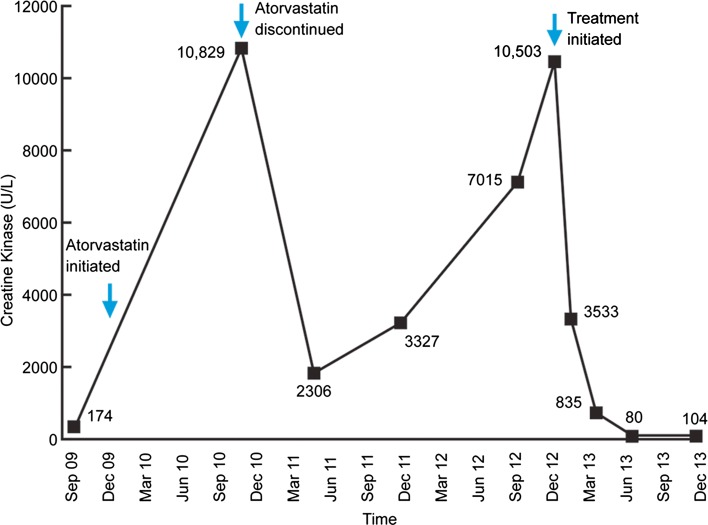
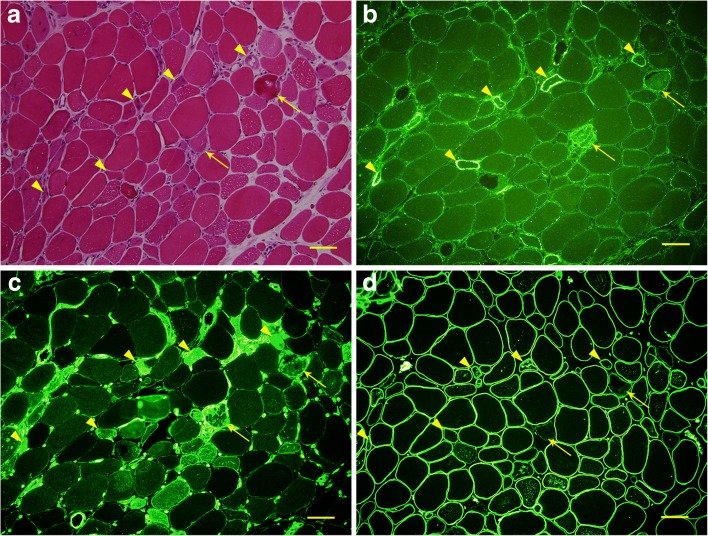
Statins are some of the most widely prescribed medications, and though generally well tolerated, can lead to a self-limited myopathy in a minority of patients. Recently, these medications have been associated with a necrotizing autoimmune myopathy (NAM). Statin-associated NAM is characterized by irritable myopathy on electromyography (EMG) and muscle necrosis with minimal inflammation on muscle biopsy. The case presented is a 63-year-old woman who has continued elevation of creatine kinase (CK) after discontinuation of statin therapy. She has irritable myopathy on EMG and NAM is confirmed by muscle biopsy. She subsequently tests positive for an experimental anti-3-hydroxy-3-methylglutaryl-coenzyme A (anti-HMGCoA) antibody that is found to be present in patients with statin-associated NAM. Though statin-associated NAM is a relatively rare entity, it is an important consideration for the general internist in patients who continue to have CK elevation and weakness after discontinuation of statin therapy. Continued research is necessary to better define statin-specific and dose-dependent risk, as well as optimal treatment for this condition.
Keywords: anti-HMGCR antibody; idiopathic inflammatory myopathy; necrotizing autoimmune myopathy; statin.
Figures
References
-
- Stagnitti M. Trends in Statins Utilization and Expenditures for the U.S. Civilian Noninstitutionalized Population, 2000 and 2005: Statistical Brief #205. Agency for Healthcare Research and Quality Medical Expenditure Panel Survey. 2008. - PubMed
-
- Sever PS, Dahlöf B, Poulter NR, et al. Prevention of coronary and stroke events with atorvastatin in hypertensive patients who have average or lower-than-average cholesterol concentrations, in the Anglo-Scandinavian Cardiac Outcomes Trial—Lipid Lowering Arm (ASCOT-LLA): a multicentre randomised controlled tria. Lancet. 2003;361(9364):1149. doi: 10.1016/S0140-6736(03)12948-0. - DOI - PubMed
Publication types
MeSH terms
Substances
LinkOut - more resources
Full Text Sources
Other Literature Sources
Medical
Research Materials
