


Vital signs: trends in use of long-acting reversible contraception among teens aged 15-19 years seeking contraceptive services—United States, 2005-2013
- PMID: 25856258
- PMCID: PMC4584628
Vital signs: trends in use of long-acting reversible contraception among teens aged 15-19 years seeking contraceptive services—United States, 2005-2013
Abstract
Background: Nationally, the use of long-acting reversible contraception (LARC), specifically intrauterine devices (IUDs) and implants, by teens remains low, despite their effectiveness, safety, and ease of use.
Methods: To examine patterns in use of LARC among females aged 15-19 years seeking contraceptive services, CDC and the U.S. Department of Health and Human Services' Office of Population Affairs analyzed 2005-2013 data from the Title X National Family Planning Program. Title X serves approximately 1 million teens each year and provides family planning and related preventive health services for low-income persons.
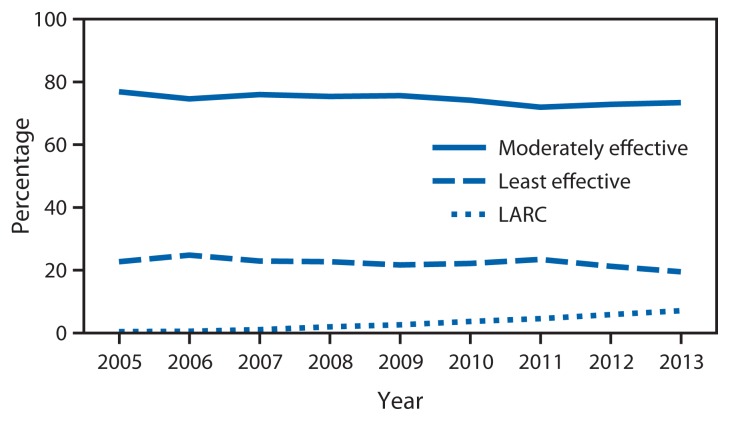
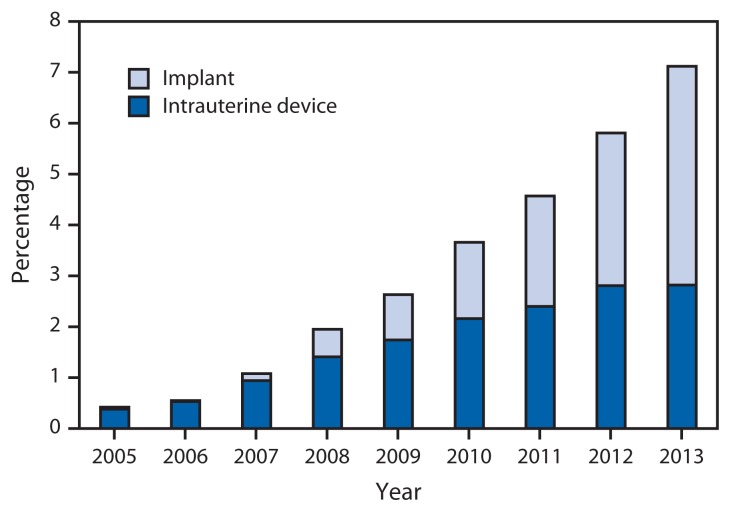
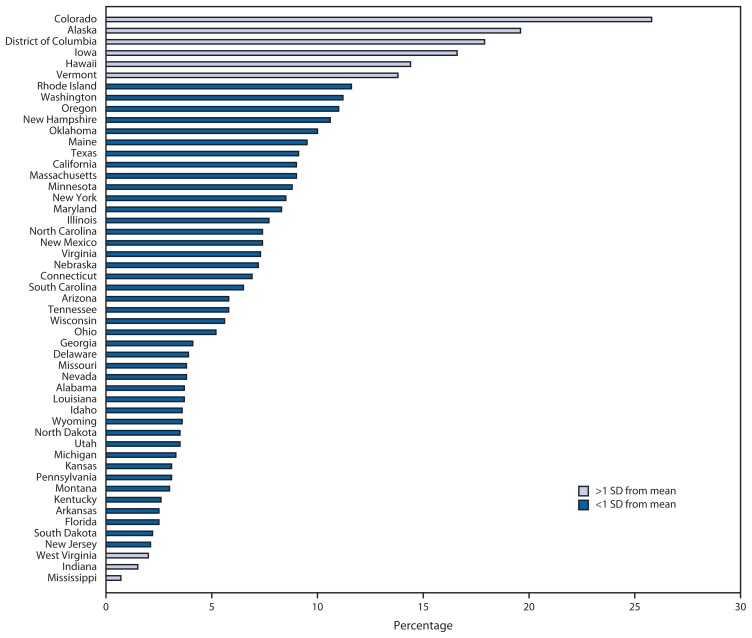
Results: Use of LARC among teens seeking contraceptive services at Title X service sites increased from 0.4% in 2005 to 7.1% in 2013 (p-value for trend <0.001). Of the 616,148 female teens seeking contraceptive services in 2013, 17,349 (2.8%) used IUDs, and 26,347 (4.3%) used implants. Use of LARC was higher among teens aged 18-19 years (7.6%) versus 15-17 years (6.5%) (p<0.001). The percentage of teens aged 15-19 years who used LARC varied widely by state, from 0.7% (Mississippi) to 25.8% (Colorado).
Conclusions: Although use of LARC by teens remains low nationwide, efforts to improve access to LARC among teens seeking contraception at Title X service sites have increased use of these methods.
Implications for public health practice: Health centers that provide quality contraceptive services can facilitate use of LARC among teens seeking contraception. Strategies to address provider barriers to offering LARC include: 1) educating providers that LARC is safe for teens; 2) training providers on LARC insertion and a client-centered counseling approach that includes discussing the most effective contraceptive methods first; and 3) providing contraception at reduced or no cost to the client.
Figures
References
-
- Martin JA, Hamilton BE, Osterman MJK, Curtin SC, Matthews TJ. Births: final data for 2013. Natl Vital Stat Rep. 2015;64:1–65. - PubMed
-
- Hoffman SD. Updated estimates of the consequences of teen childbearing for mothers. In: Hoffman S, Maynard R, editors. Kids having kids: economic costs and social consequences of teen pregnancy. Washington, DC: The Urban Institute Press; 2008.
-
- National Campaign to Prevent Teen and Unplanned Pregnancy. Counting it up: the public costs of teen childbearing. Washington, DC: National Campaign to Prevent Teen and Unplanned Pregnancy; 2013. Available at http://thenationalcampaign.org/why-it-matters/public-cost.
MeSH terms
Substances
LinkOut - more resources
Full Text Sources
Medical
