


Genome-wide expression in visceral adipose tissue from obese prepubertal children
- PMID: 25856673
- PMCID: PMC4425045
- DOI: 10.3390/ijms16047723
Genome-wide expression in visceral adipose tissue from obese prepubertal children
Abstract
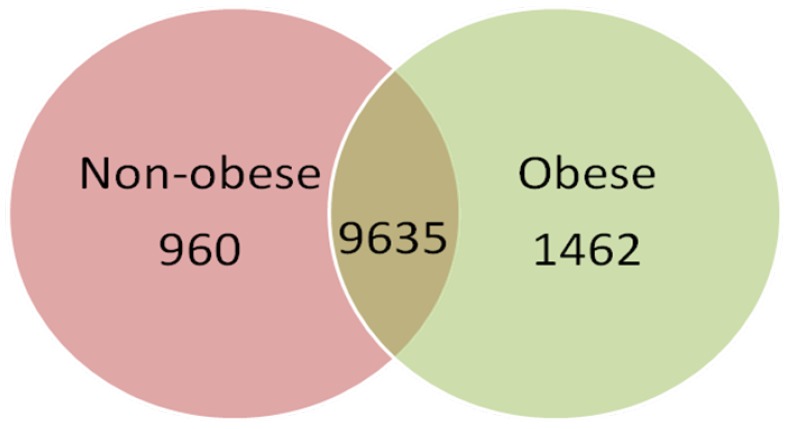
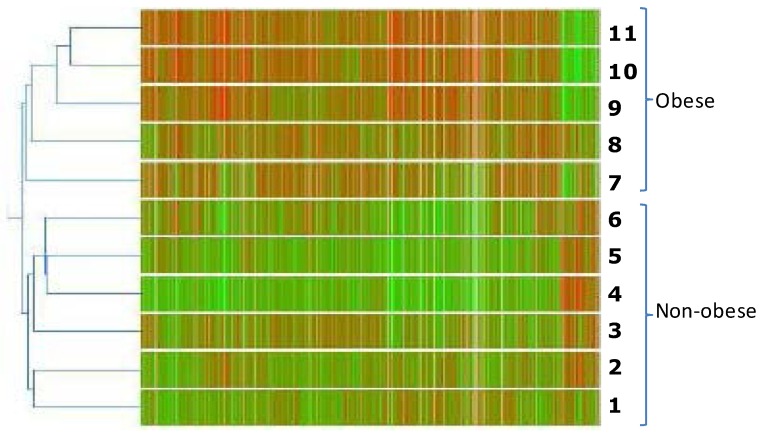
Characterization of the genes expressed in adipose tissue (AT) is key to understanding the pathogenesis of obesity and to developing treatments for this condition. Our objective was to compare the gene expression in visceral AT (VAT) between obese and normal-weight prepubertal children. A total of fifteen obese and sixteen normal-weight children undergoing abdominal elective surgery were selected. RNA was extracted from VAT biopsies. Microarray experiments were independently performed for each sample (six obese and five normal-weight samples). Validation by quantitative PCR (qPCR) was performed on an additional 10 obese and 10 normal-weight VAT samples. Of 1276 differentially expressed genes (p < 0.05), 245 were more than two-fold higher in obese children than in normal-weight children. As validated by qPCR, expression was upregulated in genes involved in lipid and amino acid metabolism (CES1, NPRR3 and BHMT2), oxidative stress and extracellular matrix regulation (TNMD and NQO1), adipogenesis (CRYAB and AFF1) and inflammation (ANXA1); by contrast, only CALCRL gene expression was confirmed to be downregulated. In conclusion, this study in prepubertal children demonstrates the up- and down-regulation of genes that encode molecules that were previously proposed to influence the pathogenesis of adulthood obesity, as well as previously unreported dysregulated genes that may be candidate genes in the aetiology of obesity.
Figures
References
-
- Alligier M., Meugnier E., Debard C., Lambert-Porcheron S., Chanseaume E., Sothier M., Loizon E., Hssain A.A., Brozek J., Scoazec J.Y., et al. Subcutaneous adipose tissue remodeling during the initial phase of weight gain induced by overfeeding in humans. J. Clin. Endocrinol. Metab. 2012;97:E183–E192. - PubMed
-
- Kershaw EE, Flier JS. Adipose tissue as an endocrine organ. J. Clin. Endocrinol. Metab. 2004;89:2548–2556. - PubMed
Publication types
MeSH terms
Substances
LinkOut - more resources
Full Text Sources
Other Literature Sources
Medical
Molecular Biology Databases
Research Materials
Miscellaneous
