. 2015 Apr 10;348(6231):1250834.
doi: 10.1126/science.1250834.

Substrate degradation by the proteasome: a single-molecule kinetic analysis

Affiliations

Substrate degradation by the proteasome: a single-molecule kinetic analysis

Ying Lu et al. Science. .

Abstract

To address how the configuration of conjugated ubiquitins determines the recognition of substrates by the proteasome, we analyzed the degradation kinetics of substrates with chemically defined ubiquitin configurations. Contrary to the view that a tetraubiquitin chain is the minimal signal for efficient degradation, we find that distributing the ubiquitins as diubiquitin chains provides a more efficient signal. To understand how the proteasome actually discriminates among ubiquitin configurations, we developed single-molecule assays that distinguished intermediate steps of degradation kinetically. The level of ubiquitin on a substrate drives proteasome-substrate interaction, whereas the chain structure of ubiquitin affects translocation into the axial channel on the proteasome. Together these two features largely determine the susceptibility of substrates for proteasomal degradation.


Figures

Figure 1
Figure 1. Quantitative degradation assay
A. The assay strategy. Preformed, methylated ubiquitin chains were conjugated to PKA-labeled securin using purified APC and E2 UbcH10. After reaction, the product was subject to degradation by purified 26S human proteasome. The decay constant for each ubiquitylated species, separated on a gel, was measured from a time series. Signal from unmodified substrates (Ub0) was used as a control for loading and nonspecific dephosphorylation which is the main reason for the decrease of Ub0 signals(Methods). B–D. 160nM geminin, securin, cyclinB-NT(Xenopus) were ubiquitylated using indicated constructs of ubiquitin. Their rates of degradation by 3nM purified human 26S proteasome were measured, and shown as a function of total ubiquitins per substrate molecule. Errorbars represent the standard deviation of three experimental replicates. ‘*’ the rate for this species is 1.4. The lack of data for certain species is either due to these species not having been tested or to their signals being too weak to quantify. E–F. Human cyclinB-NT mutants carrying lysines only at indicated positions were ubiquitylated with either methylated ubiquitin (M-Ub) or wt-Ub, and tested in a quantitative degradation assay. Original autoradiography for retrieving the rate information is compiled in Fig. S8. In E, the inset shows the location of D-box on cyclinB-NT and relevant ubiquitylatable lysine residues identified by mass spectrometry.
Figure 2
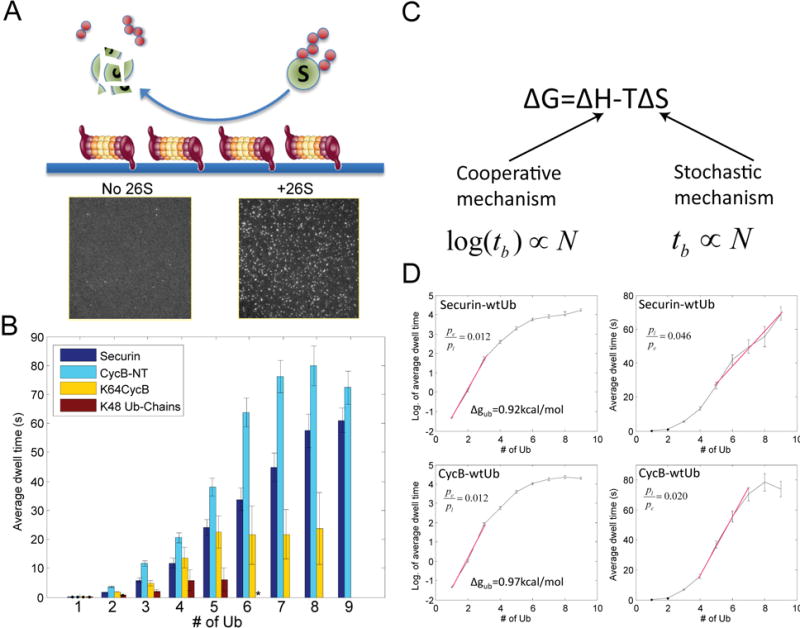
Figure 2. Proteasome-substrate interaction kinetics by the SM method
A. Schematics showing the experimental design, where purified 26S proteasome was immobilized on passivated coverslip using anti-20S antibody. Ubiquitin was fluorescently labeled and conjugated to substrates in solution. Sample pictures capture ubiquitin signals on the surface with either 26S proteasome (+26S) or antibody only (no 26S). B. The average dwell time on the proteasome for different substrates (or free ub-chain) with X-number of conjugated ubiquitin, measured by the SM method. The distributions of individual dwell times are shown in Fig. S15. Errorbars represent standard deviation of the mean. ‘*’: data for Ub-chain from 6~9 is not shown due to insufficient events. C. Cooperative and stochastic mechanisms affect binding enthalpy and entropy respectively. By each mechanism, the expected relationship between dwell time tb and the number of ubiquitins N is shown below. D. Dwell time on the proteasome(right), or its logarithm(left), for securin and cyclinB vs. the number of conjugated ubiquitins. The red line shows a linear fitting. The ratio of p-values by fitting the red segment (in linear scale) with either a linear model (pl) or an exponential model (pe) is shown. Δgub is the binding free energy per ubiquitin on the proteasome, calculated from the slope of the binding curve.
Figure 3
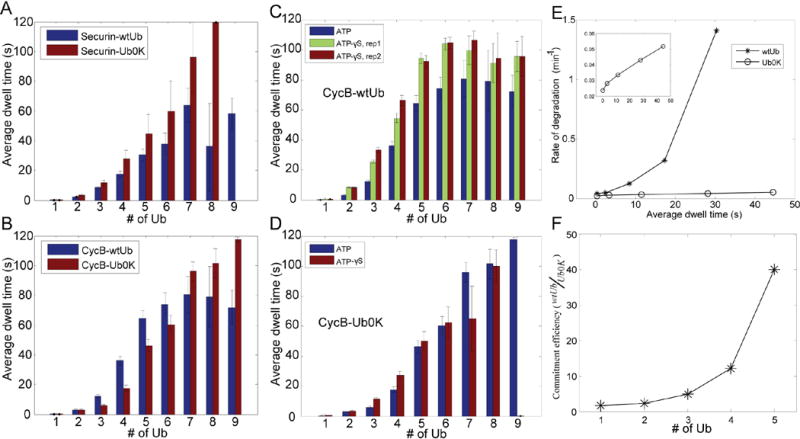
Figure 3. Interaction with the proteasome is mainly determined by the total number of ubiquitins on a substrate, insensitive to Ub-chain structures
A–B. Securin or cyclinB-NT was ubiquitylated by APC with either wtUb or Ub0K, and tested for interaction with the proteasome as in Fig. 2B. C–D. Interaction of wtUb- or Ub0K-conjugated cyclinB with the proteasome in the presence of ATP or ATP-γS. ‘rep1’ & ‘rep2’ are two experimental replicates. The data for ATP-proteasome is plotted for comparison as is identical to B. CyclinB-ATP data in C is identical to that in B. E. Degradation rate and proteasomal dwell time relationship, for wtUb- and Ub0K-conjugated securin. Degradation rates were measured in the quantitative degradation assay (Fig. 1C), and dwell time on the proteasome was measured using the SM method. Inset shows the Ub0K result on a smaller Y-axis. F. the ratio of “commitment efficiency” for securin-wtUb over securin-Ub0K, as a function of total conjugated ubiquitins. “Commitment efficiency” is defined as the degradation rate divided by the dwell time.
Figure 4
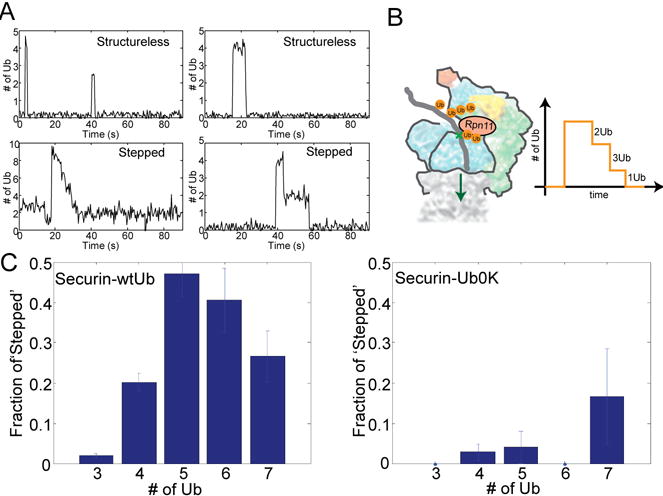
Figure 4. Ubiquitin chains on substrates promote translocation initiation
A. Examples of ‘structureless’ and ‘stepped’ traces from a SM experiment on wtUb-conjugated securin. ‘Stepped’ traces are due to progressive deubiquitylation by Rpn11 as illustrated in B. C. The fraction of ‘stepped’ traces, as a function of Ub#, for wtUb-(N=663) or Ub0K-conjugated(N=133) securin. Errorbars represent standard deviation of the mean.
Figure 5
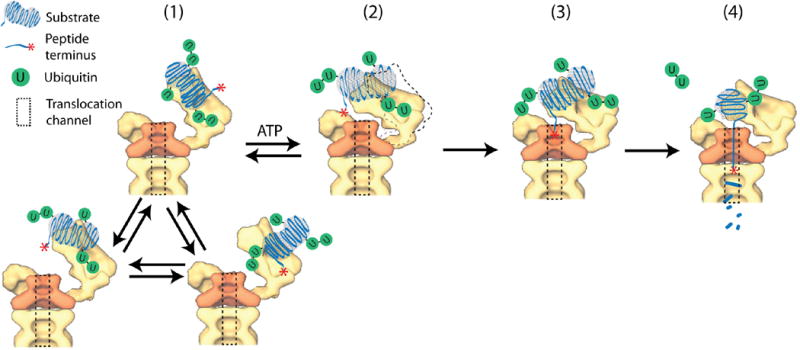
Figure 5. An integrated model for the degradation of ubiquitylated substrates by the 26S proteasome
Polyubiquitylated substrates could simultaneously interact with multiple ubiquitin receptors on the proteasome. While remaining bound, a substrate molecule explores multiple configurations on the proteasome through intramolecular diffusion (1). Rearrangements of proteasomal subunits, fueled by the ATPases in response to binding and hydrolysis of ATP, expose or activate a deeper ubiquitin chain receptor, and facilitate the transfer of ubiquitylated substrates from initial binding to a deeper engagement (2,3). In this engagement, the substrate or its terminus is closer to the substrate entry port, which expedites translocation initiation (3) and ensuing degradation (4).

Comment in

References

    1. Pickart CM, Eddins MJ. Ubiquitin: structures, functions, mechanisms. Biochim Biophys Acta. 2004 Nov 29;1695:55. - PubMed
    1. Wilkinson KD. Regulation of ubiquitin-dependent processes by deubiquitinating enzymes. FASEB J. 1997 Dec;11:1245. - PubMed
    1. Kirkpatrick DS, et al. Quantitative analysis of in vitro ubiquitinated cyclin B1 reveals complex chain topology. Nat Cell Biol. 2006 Jul;8:700. - PubMed
    1. Finley D. Recognition and processing of ubiquitin-protein conjugates by the proteasome. Annu Rev Biochem. 2009;78:477. - PMC - PubMed
    1. Thrower JS, Hoffman L, Rechsteiner M, Pickart CM. Recognition of the polyubiquitin proteolytic signal. EMBO J. 2000 Jan 4;19:94. - PMC - PubMed

Publication types

LinkOut - more resources