


Antiproliferative, antibacterial and antifungal activity of the lichen Xanthoria parietina and its secondary metabolite parietin
- PMID: 25860944
- PMCID: PMC4425054
- DOI: 10.3390/ijms16047861
Antiproliferative, antibacterial and antifungal activity of the lichen Xanthoria parietina and its secondary metabolite parietin
Abstract
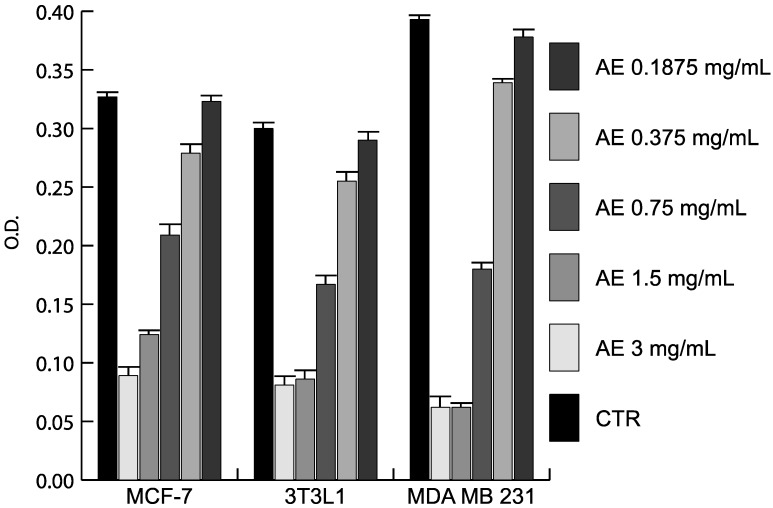
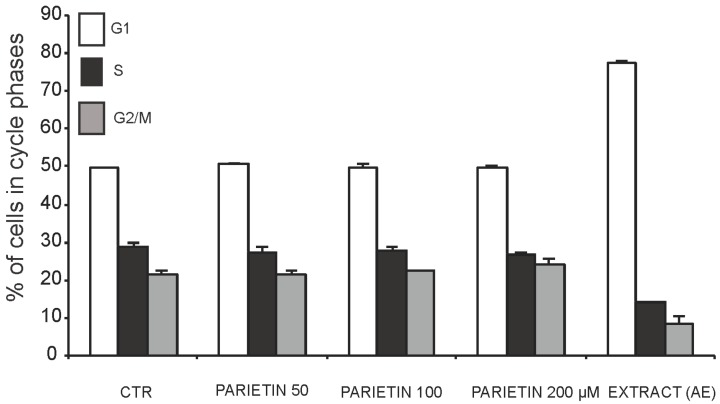
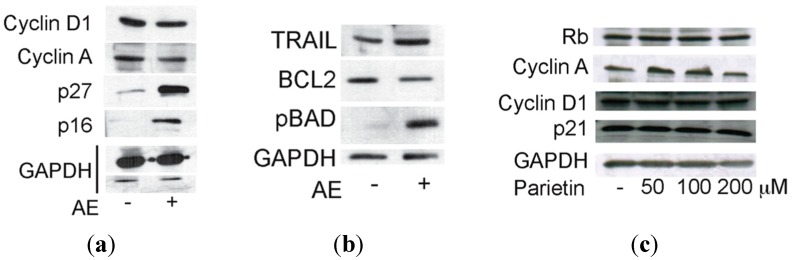
Lichens are valuable natural resources used for centuries throughout the world as medicine, food, fodder, perfume, spices and dyes, as well as for other miscellaneous purposes. This study investigates the antiproliferative, antibacterial and antifungal activity of the acetone extract of the lichen Xanthoria parietina (Linnaeus) Theodor Fries and its major secondary metabolite, parietin. The extract and parietin were tested for antimicrobial activity against nine American Type Culture Collection standard and clinically isolated bacterial strains, and three fungal strains. Both showed strong antibacterial activity against all bacterial strains and matched clinical isolates, particularly against Staphylococcus aureus from standard and clinical sources. Among the fungi tested, Rhizoctonia solani was the most sensitive. The antiproliferative effects of the extract and parietin were also investigated in human breast cancer cells. The extract inhibited proliferation and induced apoptosis, both effects being accompanied by modulation of expression of cell cycle regulating genes such as p16, p27, cyclin D1 and cyclin A. It also mediated apoptosis by activating extrinsic and intrinsic cell death pathways, modulating Tumor Necrosis Factor-related apoptosis-inducing ligand (TRAIL) and B-cell lymphoma 2 (Bcl-2), and inducing Bcl-2-associated agonist of cell death (BAD) phosphorylation. Our results indicate that Xanthoria parietina is a major potential source of antimicrobial and anticancer substances.
Figures
References
-
- Nash T.H. Lichen Biology. 2nd ed. Cambridge University Press; Cambridge, UK: 2008.
-
- Dayan F.E., Romagini J.G. Structural diversity of lichen metabolites and their potential for use. Adv. Microb. Toxin Res. Biotechnol. Explor. 2002:151–169. doi: 10.1007/978-1-4757-4439-2_11. - DOI
-
- Lawrey J.D. Biological role of lichen substances. Byrologist. 1986;89:111–122. doi: 10.2307/3242751. - DOI
-
- Boustie J., Grube M. Lichens—A promising source of bioactive secondary metabolites. Plant Genet. Resour. 2005;3:273–278. doi: 10.1079/PGR200572. - DOI
-
- Shrestha G., St. Clair L.L. Lichens: A promising source of antibiotic and anticancer drugs. Phytochem. Rev. 2013;12:229–244. doi: 10.1007/s11101-013-9283-7. - DOI
Publication types
MeSH terms
Substances
LinkOut - more resources
Full Text Sources
Other Literature Sources
Medical
Molecular Biology Databases
Research Materials
