


Posttraumatic inflammation as a key to neuroregeneration after traumatic spinal cord injury
- PMID: 25860946
- PMCID: PMC4425057
- DOI: 10.3390/ijms16047900
Posttraumatic inflammation as a key to neuroregeneration after traumatic spinal cord injury
Abstract
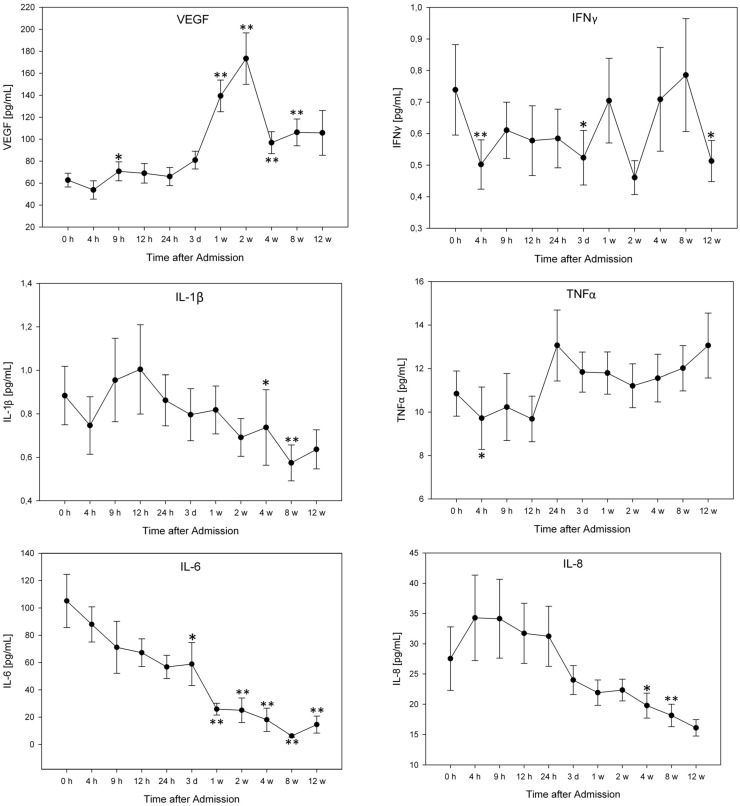
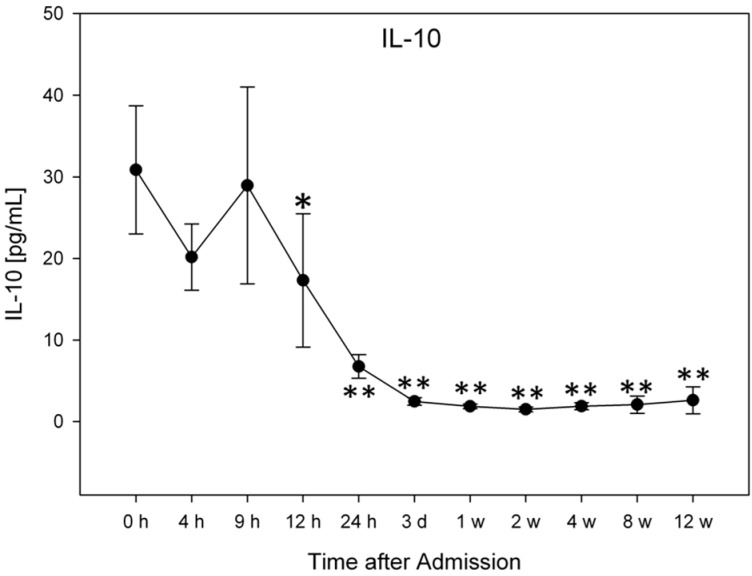
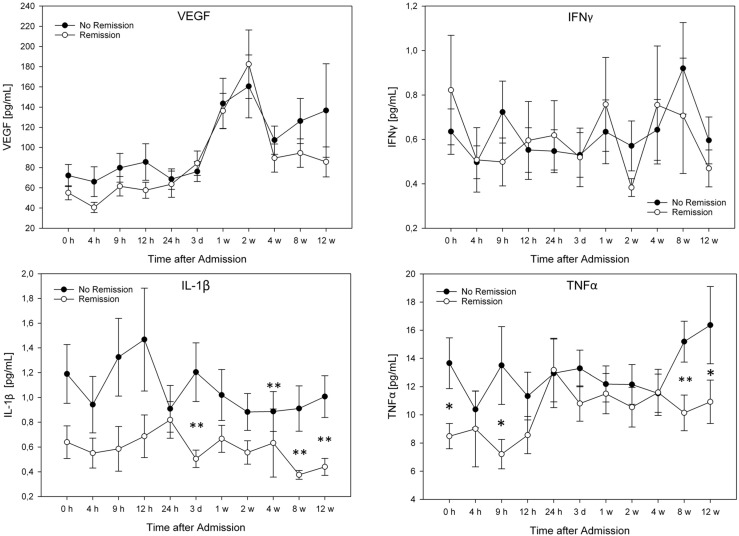
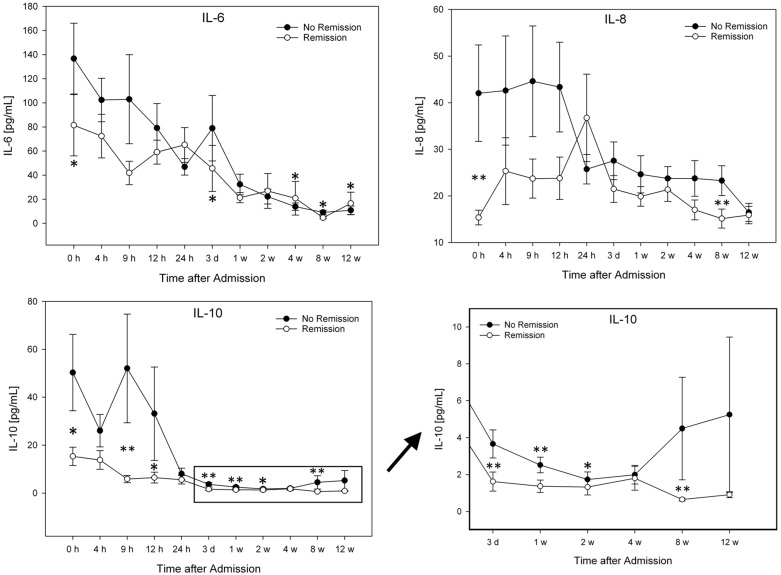
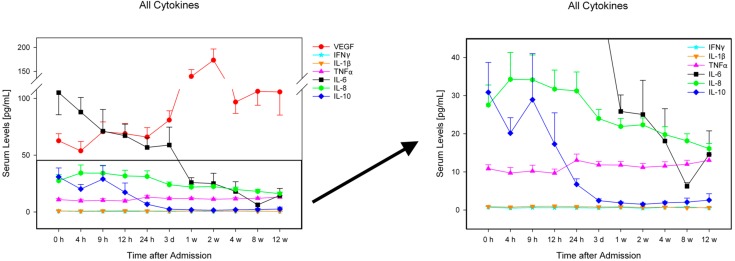
Pro- and anti-inflammatory cytokines might have a large impact on the secondary phase and on the neurological outcome of patients with acute spinal cord injury (SCI). We measured the serum levels of different cytokines (Interferon-γ, Tumor Necrosis Factor-α, Interleukin-1β, IL-6, IL-8, IL-10, and Vascular Endothelial Growth Factor) over a 12-week period in 40 acute traumatic SCI patients: at admission on average one hour after initial trauma; at four, nine, 12, and 24 h; Three, and seven days after admission; and two, four, eight, and twelve weeks after admission. This was done using a Luminex Performance Human High Sensitivity Cytokine Panel. SCI was classified using the American Spinal Injury Association (ASIA) Impairment Scale (AIS) at time of admission and after 12 weeks. TNFα, IL-1β, IL-6, IL-8, and IL-10 concentrations were significantly higher in patients without neurological remission and in patients with an initial AIS A (p < 0.05). This study shows significant differences in cytokine concentrations shown in traumatic SCI patients with different neurological impairments and within a 12-week period. IL-8 and IL-10 are potential peripheral markers for neurological remission and rehabilitation after traumatic SCI. Furthermore our cytokine expression pattern of the acute, subacute, and intermediate phase of SCI establishes a possible basis for future studies to develop standardized monitoring, prognostic, and tracking techniques.
Figures
References
-
- Boakye M., Leigh B.C., Skelly A.C. Quality of life in persons with spinal cord injury: Comparisons with other populations. J. Neurosurg. Spine. 2012;17:29–37. - PubMed
-
- Kwon B.K., Stammers A.M., Belanger L.M., Bernardo A., Chan D., Bishop C.M., Slobogean G.P., Zhang H., Umedaly H., Giffin M., et al. Cerebrospinal fluid inflammatory cytokines and biomarkers of injury severity in acute human spinal cord injury. J. Neurotrauma. 2010;27:669–682. doi: 10.1089/neu.2009.1080. - DOI - PubMed
MeSH terms
Substances
LinkOut - more resources
Full Text Sources
Other Literature Sources
Medical
