


The fitness costs of antibiotic resistance mutations
- PMID: 25861385
- PMCID: PMC4380921
- DOI: 10.1111/eva.12196
The fitness costs of antibiotic resistance mutations
Abstract
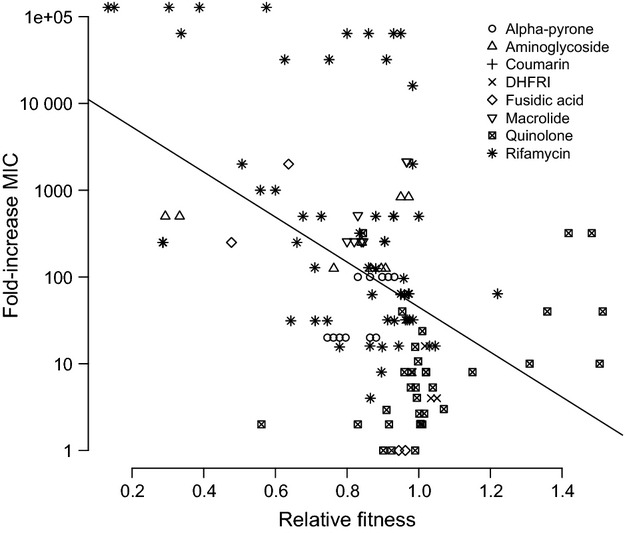
Antibiotic resistance is increasing in pathogenic microbial populations and is thus a major threat to public health. The fate of a resistance mutation in pathogen populations is determined in part by its fitness. Mutations that suffer little or no fitness cost are more likely to persist in the absence of antibiotic treatment. In this review, we performed a meta-analysis to investigate the fitness costs associated with single mutational events that confer resistance. Generally, these mutations were costly, although several drug classes and species of bacteria on average did not show a cost. Further investigations into the rate and fitness values of compensatory mutations that alleviate the costs of resistance will help us to better understand both the emergence and management of antibiotic resistance in clinical settings.
Keywords: adaptation; antibiotic resistance; fitness.
Figures
References
-
- Andersson DI. Persistence of antibiotic resistant bacteria. Current Opinion in Microbiology. 2003;6:452–456. - PubMed
-
- Andersson DI. The biological cost of mutational antibiotic resistance: any practical conclusions? Current Opinion in Microbiology. 2006;9:461–465. - PubMed
-
- Andersson DI. Hughes D. Antibiotic resistance and its cost: is it possible to reverse resistance? Nature Reviews Microbiology. 2010;8:260–271. - PubMed
-
- Arason V, Gunnlaugsson A, Sigurdsson J, Erlendsdottir H, Gudmundsson S. Kristinsson KG. Clonal spread of resistant Pneumococci despite diminished antimicrobial use. Microbial Drug Resistance. 2002;8:187–192. - PubMed
Publication types
LinkOut - more resources
Full Text Sources
Other Literature Sources
