


Depressive Rumination, the Default-Mode Network, and the Dark Matter of Clinical Neuroscience
- PMID: 25861700
- PMCID: PMC4524294
- DOI: 10.1016/j.biopsych.2015.02.020
Depressive Rumination, the Default-Mode Network, and the Dark Matter of Clinical Neuroscience
Abstract
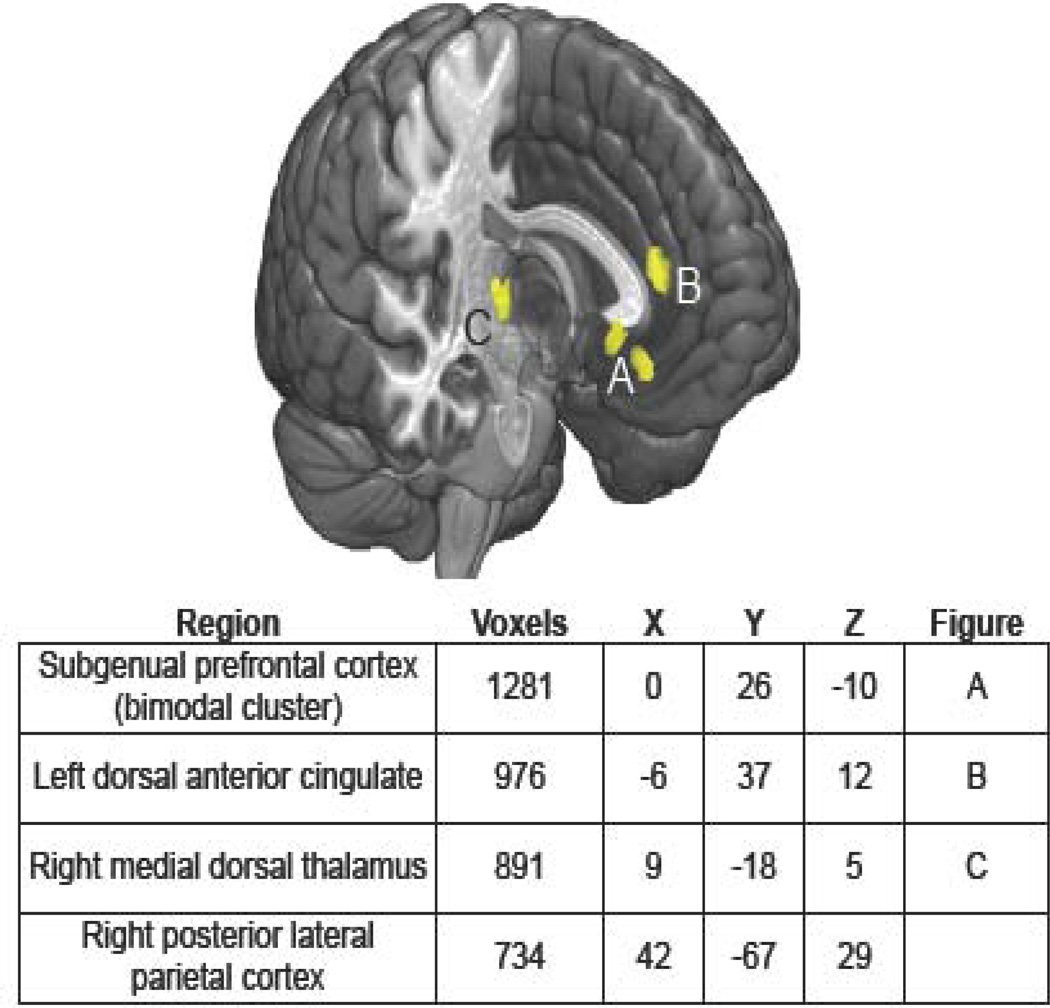
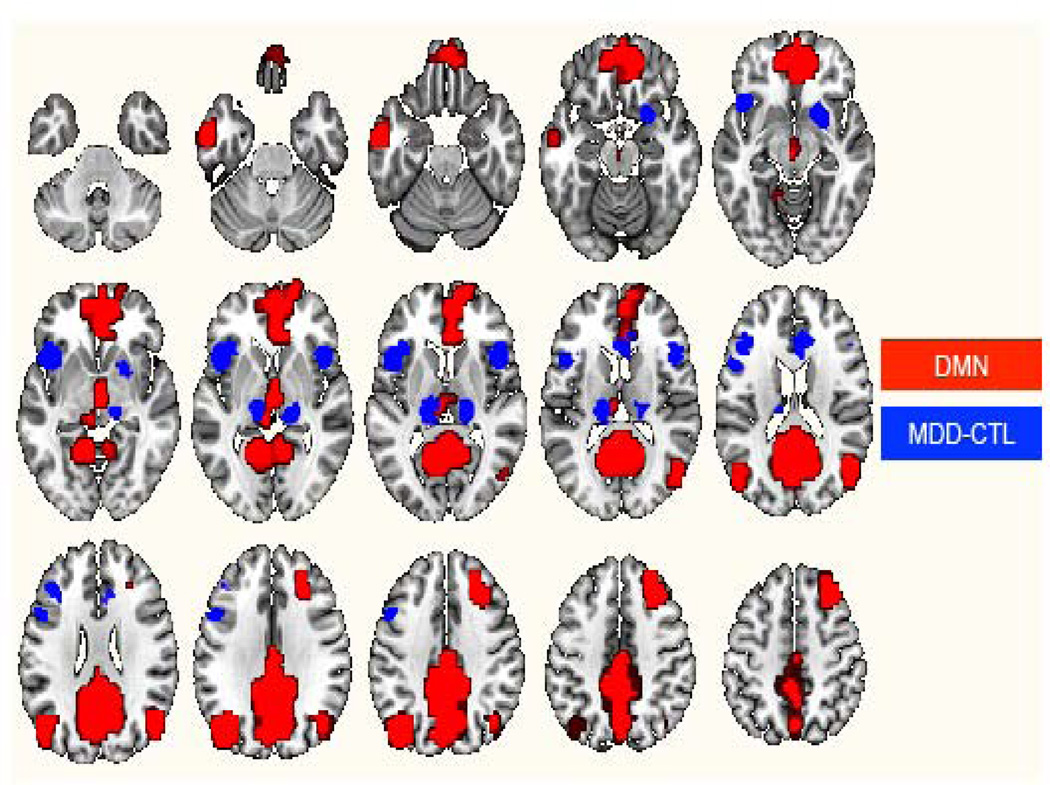
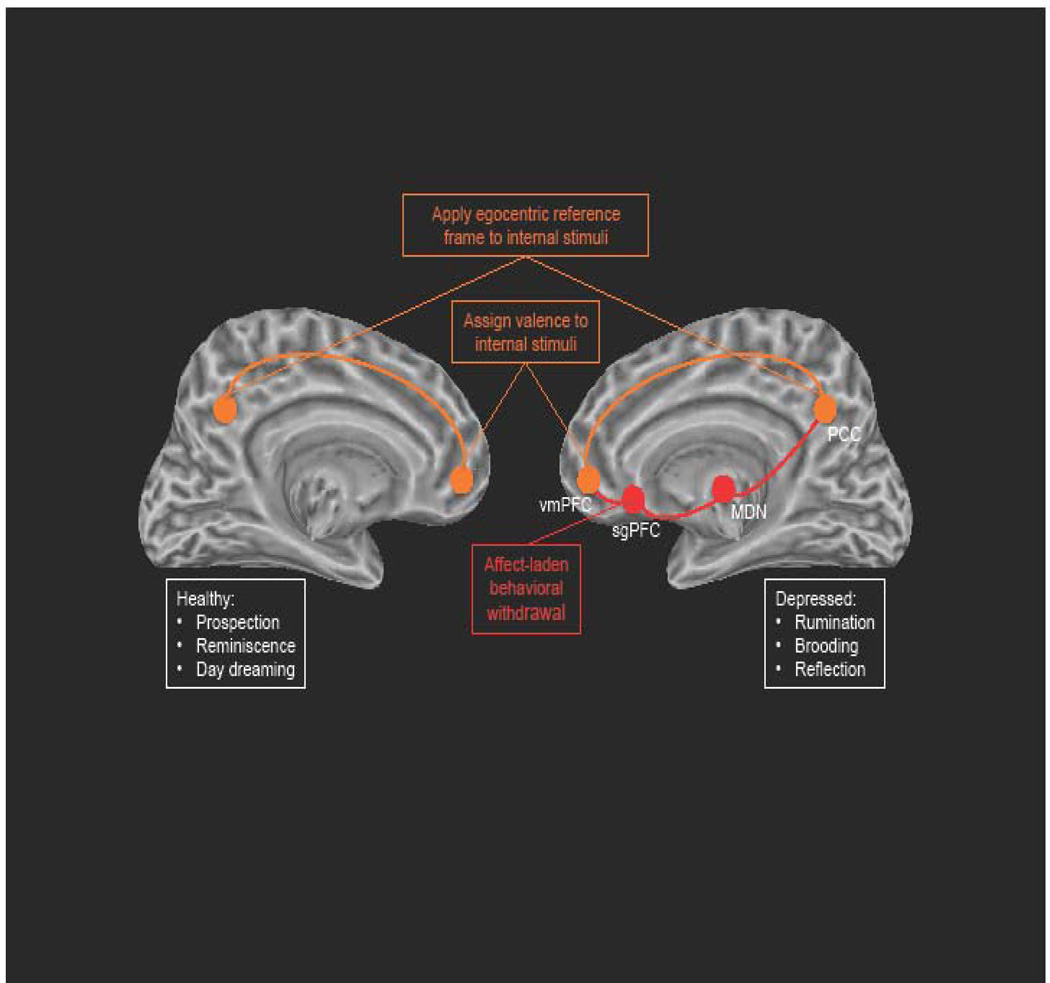
The intuitive association between self-focused rumination in major depressive disorder (MDD) and the self-referential operations performed by the brain's default-mode network (DMN) has prompted interest in examining the role of the DMN in MDD. In this article, we present meta-analytic findings showing reliably increased functional connectivity between the DMN and subgenual prefrontal cortex (sgPFC)-connectivity that often predicts levels of depressive rumination. We also present meta-analytic findings that, while there is reliably increased regional cerebral blood flow in sgPFC in MDD, no such abnormality has been reliably observed in nodes of the DMN. We then detail a model that integrates the body of research presented. In this model, we propose that increased functional connectivity between sgPFC and the DMN in MDD represents an integration of the self-referential processes supported by the DMN with the affectively laden, behavioral withdrawal processes associated with sgPFC-an integration that produces a functional neural ensemble well suited for depressive rumination and that, in MDD, abnormally taxes only sgPFC and not the DMN. This synthesis explains a broad array of existing data concerning the neural substrates of depressive rumination and provides an explicit account of functional abnormalities in sgPFC in MDD.
Keywords: Default-mode network; Intrinsic functional connectivity; Major depressive disorder; Medial-dorsal thalamus; Rumination; Subgenual prefrontal cortex.
Copyright © 2015 Society of Biological Psychiatry. Published by Elsevier Inc. All rights reserved.
Conflict of interest statement
Financial Disclosure
Dr. Hamilton, Ms. Farmer, Ms. Fogelman, and Dr. Gotlib have no biomedical financial interests or potential conflicts of interest to report.
Figures
References
-
- Morrow J, Nolen-Hoeksema S. Effects of responses to depression on the remediation of depressive affect. Journal of Personality and Social Psychology. 1990;58:519–527. - PubMed
-
- Nolenhoeksema S. RESPONSES TO DEPRESSION AND THEIR EFFECTS ON THE DURATION OF DEPRESSIVE EPISODES. Journal of Abnormal Psychology. 1991;100:569–582. - PubMed
-
- Kuehner C, Weber I. Responses to depression in unipolar depressed patients: an investigation of Nolen-Hoeksema's response styles theory. Psychological Medicine. 1999;29:1323–1333. - PubMed
-
- Nolen-Hoeksema S, Wisco BE, Lyubomirsky S. Rethinking Rumination. Perspectives on Psychological Science. 2008;3:400–424. - PubMed
Publication types
MeSH terms
Grants and funding
LinkOut - more resources
Full Text Sources
Other Literature Sources
Medical
