


Assessment of ecological quality of the Tajan River in Iran using a multimetric macroinvertebrate index and species traits
- PMID: 25861910
- PMCID: PMC4451864
- DOI: 10.1007/s00267-015-0489-x
Assessment of ecological quality of the Tajan River in Iran using a multimetric macroinvertebrate index and species traits
Abstract
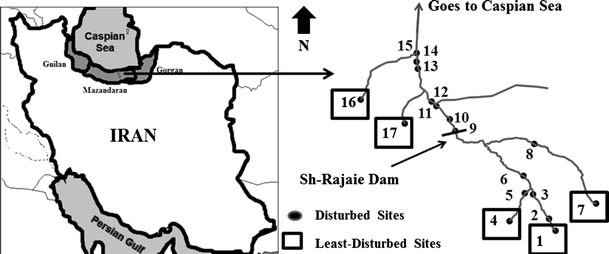
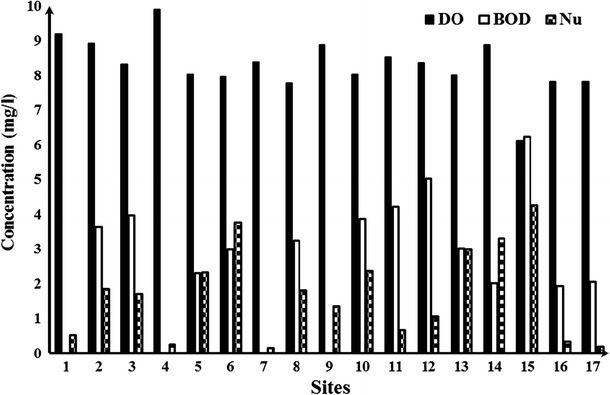
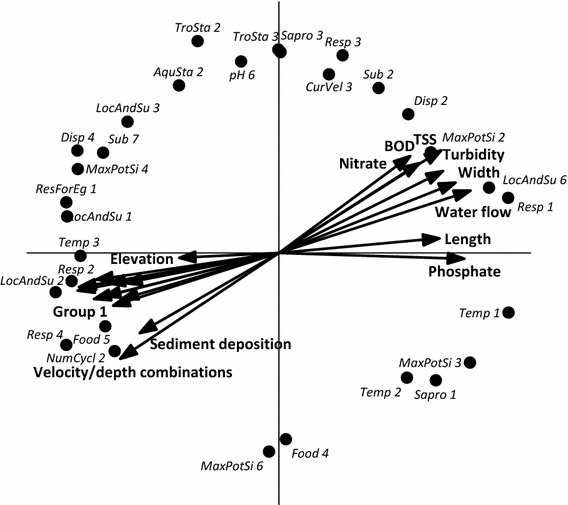
The objectives of this study were to assess the biological water of the Iranian Tajan River using different metrics, i.e., a Multimetric Macroinvertebrate Index (MMI) and a traits-based method. Twenty-eight physico-chemical parameters, 10 habitat factors, and abundance of macroinvertebrates were obtained for 17 sites. The Shahid-Rajaie dam divides the Tajan River into an up- and downstream part, with different land uses. Eighteen metrics were used to represent four components of ecosystem quality, including tolerance (Hilsenhoff, SIGNAL), diversity (Margalef, Shannon-Wiener, Simpson, and Evenness), abundance (total number of taxa, individuals, Ephemeroptera, Plecoptera, Trichoptera, EPT, and Insects), and composition of assemblages (% Ephemeroptera, % Plecoptera, % Trichoptera, and % EPT Taxa). The integrated MMI was calculated by averaging the obtained scores of all indices. In the next step, we gathered information on 22 biological traits of macroinvertebrates to evaluate whether (group of) traits could be identified that are indicative for specific or general stress. Result showed a decrease in MMI from upstream (very good water quality) to downstream (bad) due to human activities. Industrial activities like pulping and papermaking operations or sand mining in the downstream part had more effects than agriculture and fish ponds in the upstream part. A redundancy analysis biplot showed the variation between the modalities of trait of macroinvertebrates and their correlation with physico-chemical parameters in Tajan River. The findings show that traits can be indicative for different kind of stress but that more effort has to be put in gathering data sets to disentangle the effect of habitat quality, pollution, and the physico-chemical properties of high- versus lowland rivers.
Figures
References
-
- Abbasian H, Ashayeri A, Meigooni HG, Hosseinmarzeh S. Aquatic ecosystem pollution and ecological impacts of agricultural sewage in the Caspian Sea watershed. J Ecol Nat Environ. 2012;4:241–246.
-
- Ahmadi-Mamaqani Y, Khorasani N, Talebi K, Hashemi SH, Rafiee G, Bahadori-Khosroshahi F. Diazinon Fate and Toxicity in the Tajan River (Iran) Ecosystem. Environ Eng Sci. 2011;28:859–868. doi: 10.1089/ees.2010.0293. - DOI
-
- Barbour MT, Gerritsen J, Snyder BD, Stribling JB (1999) Rapid bioassessment protocols for use in streams and wadeable rivers: periphyton, benthic macroinvertebrates and fish, 2nd edn. EPA 841-B-99-002. U.S. Environmental Protection Agency; Office of Water, Washington, DC
Publication types
MeSH terms
LinkOut - more resources
Full Text Sources
Other Literature Sources
Research Materials
