


Mobility Is a Key Predictor of Change in Well-Being Among Older Adults Who Experience Falls: Evidence From the Vancouver Falls Prevention Clinic Cohort
- PMID: 25862255
- PMCID: PMC4554765
- DOI: 10.1016/j.apmr.2015.02.033
Mobility Is a Key Predictor of Change in Well-Being Among Older Adults Who Experience Falls: Evidence From the Vancouver Falls Prevention Clinic Cohort
Abstract
Objective: To determine the factors that predict change in well-being over time in older men and women presenting to the falls prevention clinic.
Design: Prospective cohort study.
Setting: Falls prevention clinic.
Participants: Community-dwelling older adults who were referred to the clinic after sustaining a fall (between N=244 and N=255, depending on the analysis).
Interventions: Not applicable.
Main outcome measures: The ICEpop CAPability measure for Older people, a measure of well-being or quality of life, was administered at baseline, 6 months, and 12 months. We constructed linear mixed models to determine whether baseline predictor variables were related to baseline well-being and/or changes in well-being over time. In addition, we included interactions with sex to investigate the difference between men and women. Baseline predictors included 2 measures of mobility--Short Performance Physical Battery and timed Up and Go test--and a measure of global cognitive function--Montreal Cognitive Assessment.
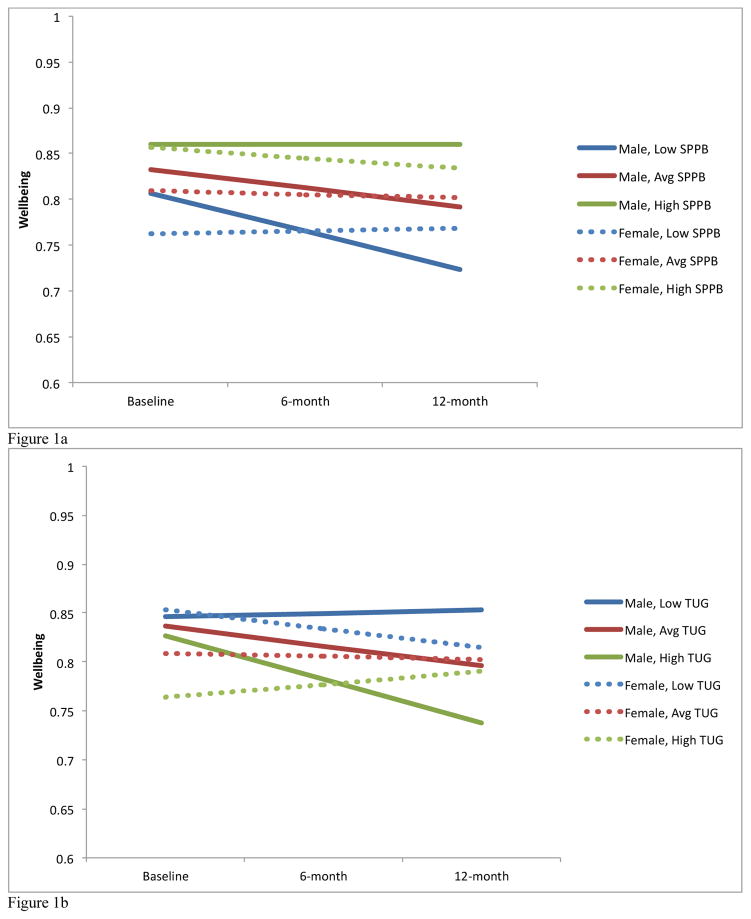
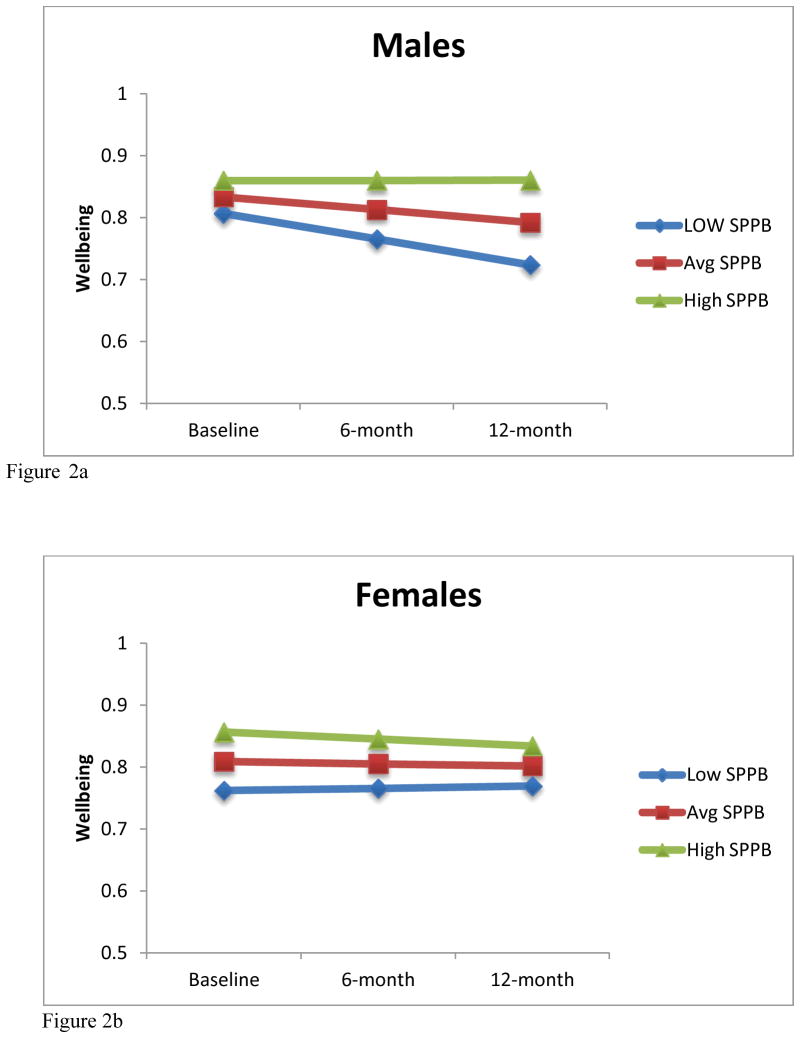
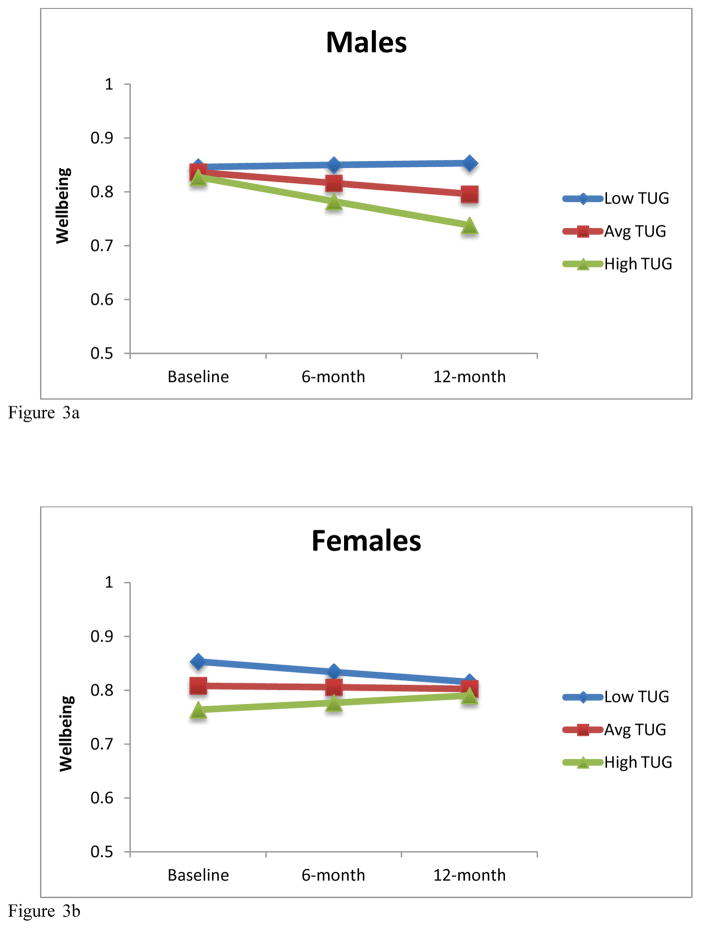
Results: All 3 predictors were associated with well-being at baseline (P<.05). Furthermore, both the Short Performance Physical Battery and the timed Up and Go test interacted with sex (P<.05) to predict changes in well-being over time. Follow-up analyses suggested that better mobility was protective against decline in well-being in men but was generally unrelated to changes in well-being in women.
Conclusions: We found that 2 valid and reliable measures of mobility interacted with sex to predict changes in well-being over time. This is a critical research area to develop in order to appropriately tailor future intervention strategies targeting well-being in older fallers, a population at high risk of functional decline.
Trial registration: ClinicalTrials.gov NCT01022866.
Keywords: Accidental falls; Frail older adults; Quality of life; Rehabilitation.
Copyright © 2015 American Congress of Rehabilitation Medicine. Published by Elsevier Inc. All rights reserved.
Conflict of interest statement
The authors declare that they have no competing interests.
Figures
References
-
- Tinetti ME, Williams CS. Falls, injuries due to falls, and the risk of admission to a nursing home. N Engl J Med. 1997;337(18):1279–1284. - PubMed
-
- Tinetti ME, Speechley M, Ginter SF. Risk factors for falls among elderly persons living in the community. N Engl J Med. 1988;319(26):1701–1707. - PubMed
-
- Woolcott JC, Khan KM, Mitrovic S, Anis AH, Marra CA. The cost of fall related presentations to the ED: a prospective, in-person, patient-tracking analysis of health resource utilization. Osteoporos Int. 2012;23(5):1513–1519. - PubMed
-
- Makai P, Looman W, Adang E, Melis R, Stolk E, Fabbricotti I. Cost-effectiveness of integrated care in frail elderly using the ICECAP-O and EQ-5D: does choice of instrument matter? Eur J Health Econ 2014 - PubMed
Publication types
MeSH terms
Associated data
Grants and funding
LinkOut - more resources
Full Text Sources
Other Literature Sources
Medical
