


Diagnostic value of plasma and urinary 2-hydroxyglutarate to identify patients with isocitrate dehydrogenase-mutated glioma
- PMID: 25862748
- PMCID: PMC4425377
- DOI: 10.1634/theoncologist.2014-0266
Diagnostic value of plasma and urinary 2-hydroxyglutarate to identify patients with isocitrate dehydrogenase-mutated glioma
Abstract
Background: Mutant isocitrate dehydrogenase (IDH) 1/2 enzymes can convert α-ketoglutarate into 2-hydroxyglutarate (2HG). The aim of the present study was to explore whether 2HG in plasma and urine could predict the presence of IDH1/2 mutations in patients with glioma.
Materials and methods: All patients had histological confirmation of glioma and a recent brain magnetic resonance imaging scan showing the neoplastic lesion. Plasma and urine samples were taken from all patients, and the 2HG concentrations were determined using liquid chromatography tandem mass spectrometry.
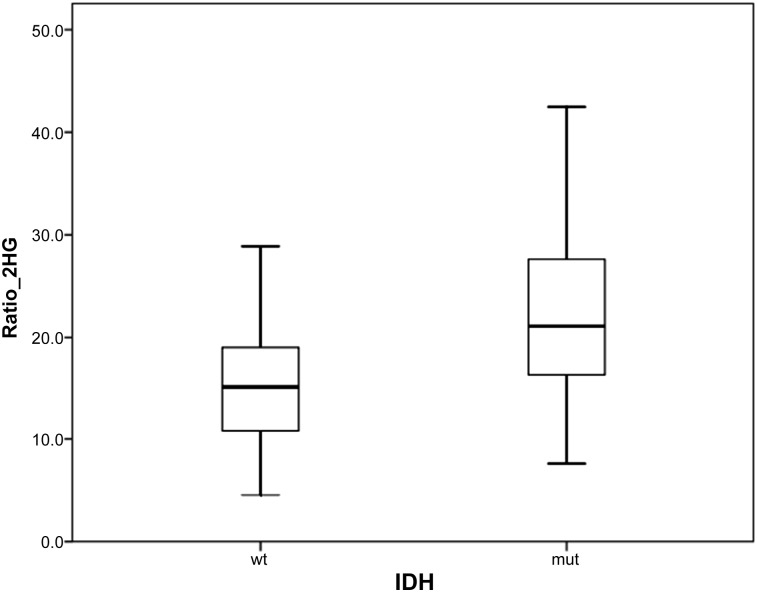
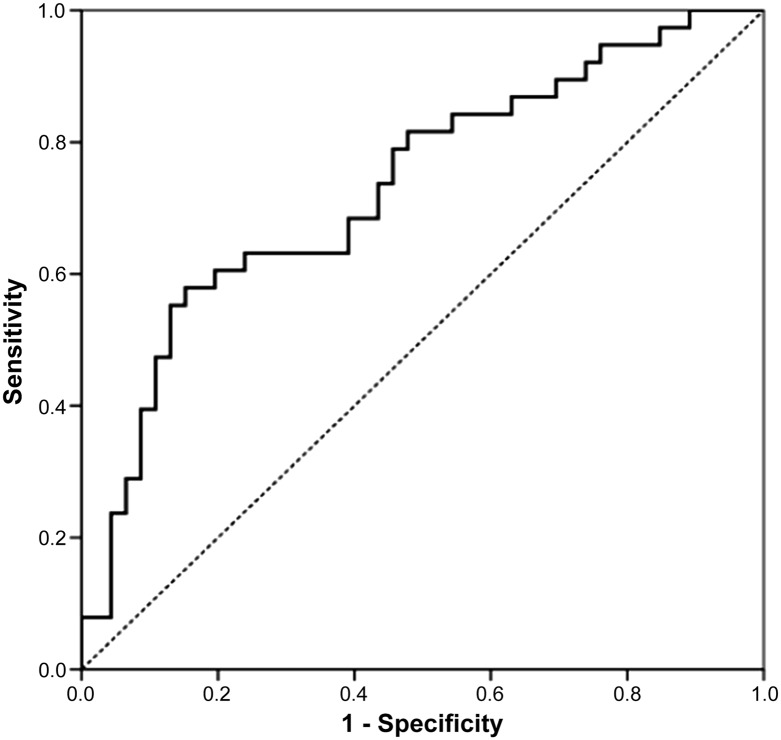
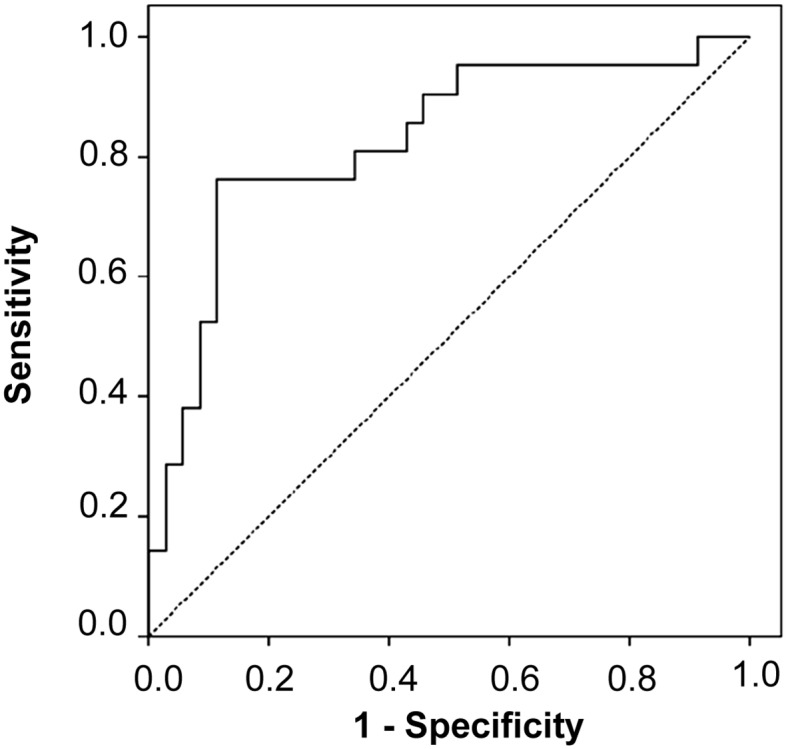
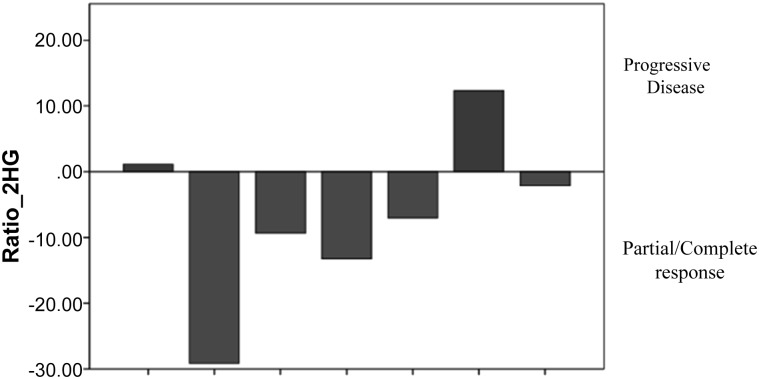
Results: A total of 84 patients were enrolled: 38 with R132H-IDH1 mutated and 46 with wild type. Among the 38 patients with mutant IDH1, 21 had high-grade glioma and 17 had low-grade glioma. Among the 46 patients with IDH1 wild-type glioma, 35 and 11 had high- and low-grade glioma, respectively. In all patients, we analyzed the mean 2HG concentration in the plasma, urine, and plasma/urine ratio (Ratio_2HG). We found a significant difference in the Ratio_2HG between patients with and without an IDH1 mutation (22.2 ± 8.7 vs. 15.6 ± 6.8; p < .0001). The optimal cutoff value for Ratio_2HG to identify IDH1 mutation was 19 (sensitivity, 63%; specificity, 76%; accuracy, 70%). In the patients with high-grade glioma only, the optimal cutoff value was 20 (sensitivity, 76%; specificity, 89%; accuracy, 84%; positive predictive value, 80%; negative predictive value, 86%). In 7 of 7 patients with high-grade glioma, we found a correlation between the Ratio_2HG value and the response to treatment.
Conclusion: Ratio_2HG might be a predictor of the presence of IDH1 mutation. The measurement of 2HG could be useful for disease monitoring and also to assess the treatment effects in these patients.
Keywords: 2-Hydroxyglutarate; Biomarker; Glioma; Isocitrate dehydrogenase; Plasma; Urine.
©AlphaMed Press.
Conflict of interest statement
Disclosures of potential conflicts of interest may be found at the end of this article.
Figures
References
-
- Pusch S, Sahm F, Meyer J, et al. Glioma IDH1 mutation patterns off the beaten track. Neuropathol Appl Neurobiol. 2011;37:428–430. - PubMed
MeSH terms
Substances
LinkOut - more resources
Full Text Sources
Other Literature Sources
Miscellaneous
