


Exposure to medium and high ambient levels of ozone causes adverse systemic inflammatory and cardiac autonomic effects
- PMID: 25862833
- PMCID: PMC4469877
- DOI: 10.1152/ajpheart.00849.2014
Exposure to medium and high ambient levels of ozone causes adverse systemic inflammatory and cardiac autonomic effects
Abstract
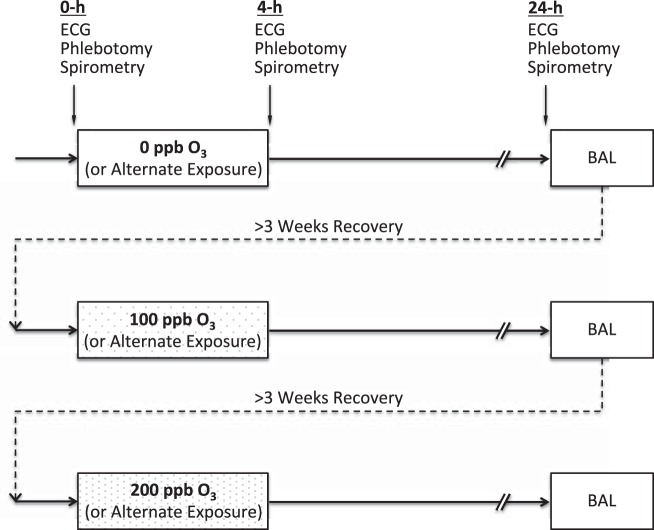
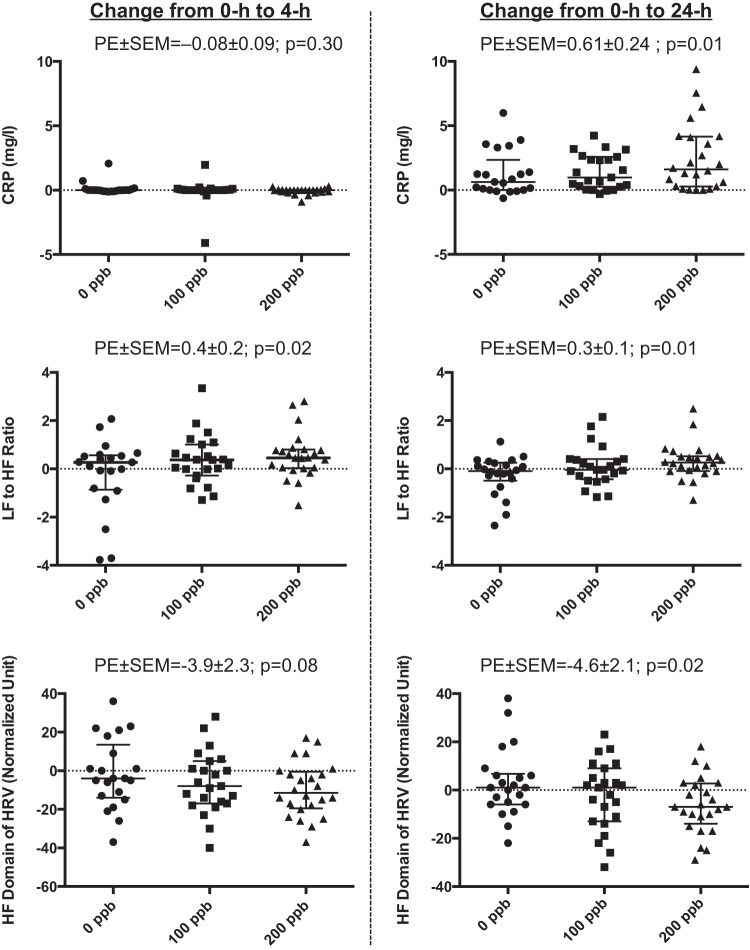
Epidemiological evidence suggests that exposure to ozone increases cardiovascular morbidity. However, the specific biological mechanisms mediating ozone-associated cardiovascular effects are unknown. To determine whether short-term exposure to ambient levels of ozone causes changes in biomarkers of cardiovascular disease including heart rate variability (HRV), systemic inflammation, and coagulability, 26 subjects were exposed to 0, 100, and 200 ppb ozone in random order for 4 h with intermittent exercise. HRV was measured and blood samples were obtained immediately before (0 h), immediately after (4 h), and 20 h after (24 h) each exposure. Bronchoscopy with bronchoalveolar lavage (BAL) was performed 20 h after exposure. Regression modeling was used to examine dose-response trends between the endpoints and ozone exposure. Inhalation of ozone induced dose-dependent adverse changes in the frequency domains of HRV across exposures consistent with increased sympathetic tone [increase of (parameter estimate ± SE) 0.4 ± 0.2 and 0.3 ± 0.1 in low- to high-frequency domain HRV ratio per 100 ppb increase in ozone at 4 h and 24 h, respectively (P = 0.02 and P = 0.01)] and a dose-dependent increase in serum C-reactive protein (CRP) across exposures at 24 h [increase of 0.61 ± 0.24 mg/l in CRP per 100 ppb increase in ozone (P = 0.01)]. Changes in HRV and CRP did not correlate with ozone-induced local lung inflammatory responses (BAL granulocytes, IL-6, or IL-8), but changes in HRV and CRP were associated with each other after adjustment for age and ozone level. Inhalation of ozone causes adverse systemic inflammatory and cardiac autonomic effects that may contribute to the cardiovascular mortality associated with short-term exposure.
Keywords: airway inflammation; heart rate variability; inhalational exposure; ozone; systemic inflammation.
Copyright © 2015 the American Physiological Society.
Figures
References
-
- Ahmadizad S, El-Sayed MS. The acute effects of resistance exercise on the main determinants of blood rheology. J Sports Sci 23: 243–249, 2005. - PubMed
-
- Anon. Heart rate variability: standards of measurement, physiological interpretation, and clinical use. Task Force of the European Society of Cardiology and the North American Society of Pacing and Electrophysiology. Circulation 93: 1043–1065, 1996. - PubMed
-
- Anon. Standardization of Spirometry, 1994 Update. American Thoracic Society. Am J Respir Crit Care Med 152: 1107–1136, 1995. - PubMed
-
- Arjomandi M, Schmidlin I, Girling P, Boylen K, Ferrando R, Balmes J. Sputum induction and bronchoscopy for assessment of ozone-induced airway inflammation in asthma. Chest 128: 416–423, 2005. - PubMed
Publication types
MeSH terms
Substances
Grants and funding
LinkOut - more resources
Full Text Sources
Other Literature Sources
Medical
Research Materials
Miscellaneous
