


miR-222 is necessary for exercise-induced cardiac growth and protects against pathological cardiac remodeling
- PMID: 25863248
- PMCID: PMC4393846
- DOI: 10.1016/j.cmet.2015.02.014
miR-222 is necessary for exercise-induced cardiac growth and protects against pathological cardiac remodeling
Abstract
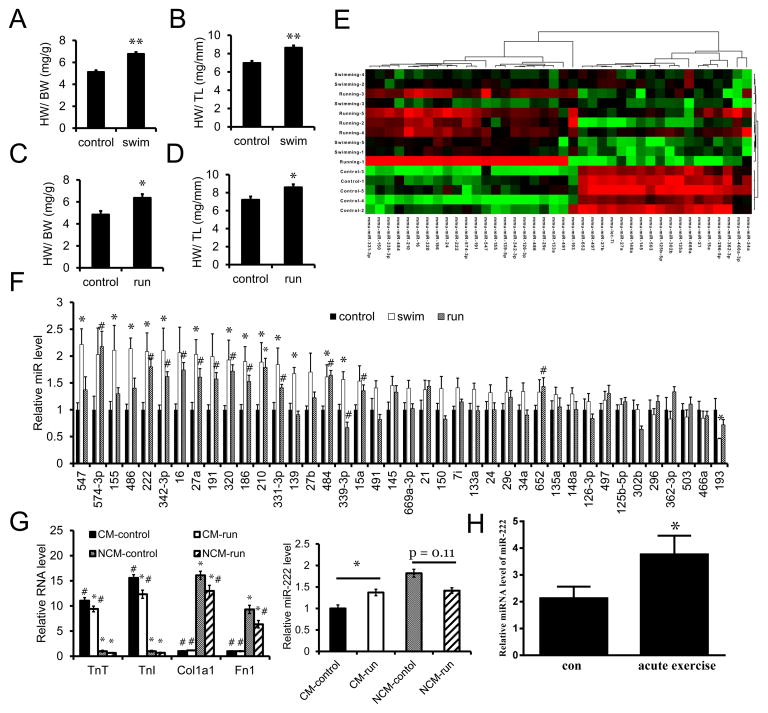
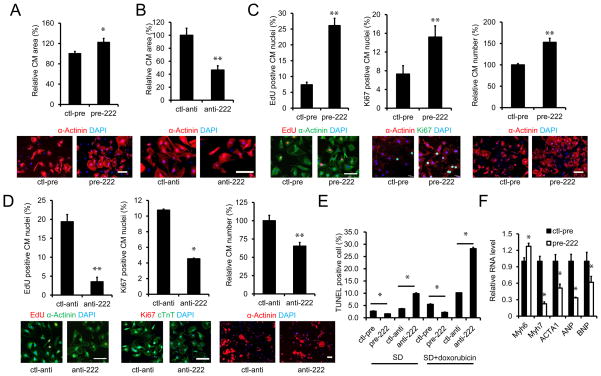
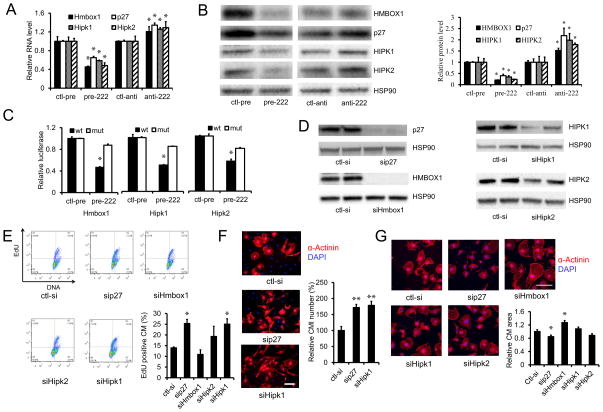
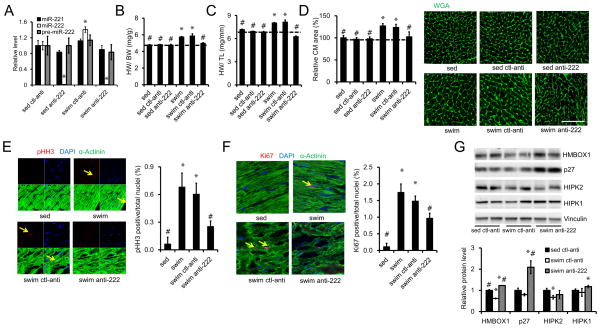
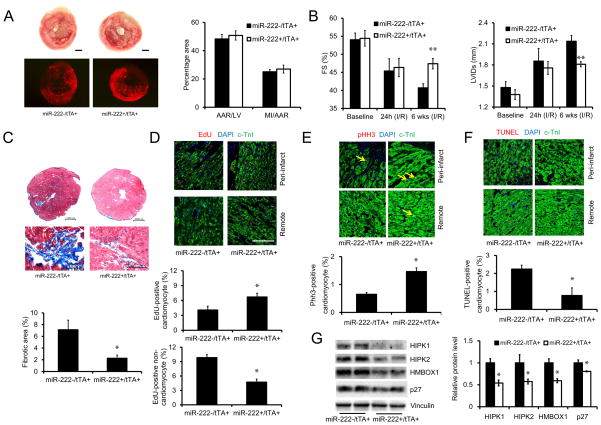
Exercise induces physiological cardiac growth and protects the heart against pathological remodeling. Recent work suggests exercise also enhances the heart's capacity for repair, which could be important for regenerative therapies. While microRNAs are important in certain cardiac pathologies, less is known about their functional roles in exercise-induced cardiac phenotypes. We profiled cardiac microRNA expression in two distinct models of exercise and found microRNA-222 (miR-222) was upregulated in both. Downstream miR-222 targets modulating cardiomyocyte phenotypes were identified, including HIPK1 and HMBOX1. Inhibition of miR-222 in vivo completely blocked cardiac and cardiomyocyte growth in response to exercise while reducing markers of cardiomyocyte proliferation. Importantly, mice with inducible cardiomyocyte miR-222 expression were resistant to adverse cardiac remodeling and dysfunction after ischemic injury. These studies implicate miR-222 as necessary for exercise-induced cardiomyocyte growth and proliferation in the adult mammalian heart and show that it is sufficient to protect the heart against adverse remodeling.
Copyright © 2015 Elsevier Inc. All rights reserved.
Figures
Comment in
-
Exercise controls non-coding RNAs.Cell Metab. 2015 Apr 7;21(4):511-2. doi: 10.1016/j.cmet.2015.03.014. Cell Metab. 2015. PMID: 25863242
References
-
- Bersell K, Arab S, Haring B, Kuhn B. Neuregulin1/ErbB4 signaling induces cardiomyocyte proliferation and repair of heart injury. Cell. 2009;138:257–270. - PubMed
-
- Bostrom P, Mann N, Wu J, Quintero PA, Plovie ER, kova DP, Gupta RK, Xiao C, MacRae CA, Rosenzweig A, et al. C/EBPbeta Controls Exercise-Induced Cardiac Growth and Protects against Pathological Cardiac Remodeling. Cell. 2010;143:1072–1083. (*co-senior, co-corresponding, equal contributing authors) - PMC - PubMed
Publication types
MeSH terms
Substances
Grants and funding
- T32 GM007226/GM/NIGMS NIH HHS/United States
- 1UH2TR000901/TR/NCATS NIH HHS/United States
- R01 DK054477/DK/NIDDK NIH HHS/United States
- R01 HL110733/HL/NHLBI NIH HHS/United States
- T32 HL007572/HL/NHLBI NIH HHS/United States
- T32HL007572-27A1/HL/NHLBI NIH HHS/United States
- R21 HL114352/HL/NHLBI NIH HHS/United States
- R21HL114352/HL/NHLBI NIH HHS/United States
- UH3 TR000901/TR/NCATS NIH HHS/United States
- T32 HL007374/HL/NHLBI NIH HHS/United States
- UH2 TR000901/TR/NCATS NIH HHS/United States
- R01HL110733/HL/NHLBI NIH HHS/United States
- T32GM007226/GM/NIGMS NIH HHS/United States
- T32HL073734/HL/NHLBI NIH HHS/United States
- R01 HL122987/HL/NHLBI NIH HHS/United States
- R01 HL135886/HL/NHLBI NIH HHS/United States
LinkOut - more resources
Full Text Sources
Other Literature Sources
Molecular Biology Databases
