


Techniques and applications of in vivo diffusion imaging of articular cartilage
- PMID: 25865215
- PMCID: PMC4439325
- DOI: 10.1002/jmri.24767
Techniques and applications of in vivo diffusion imaging of articular cartilage
Abstract
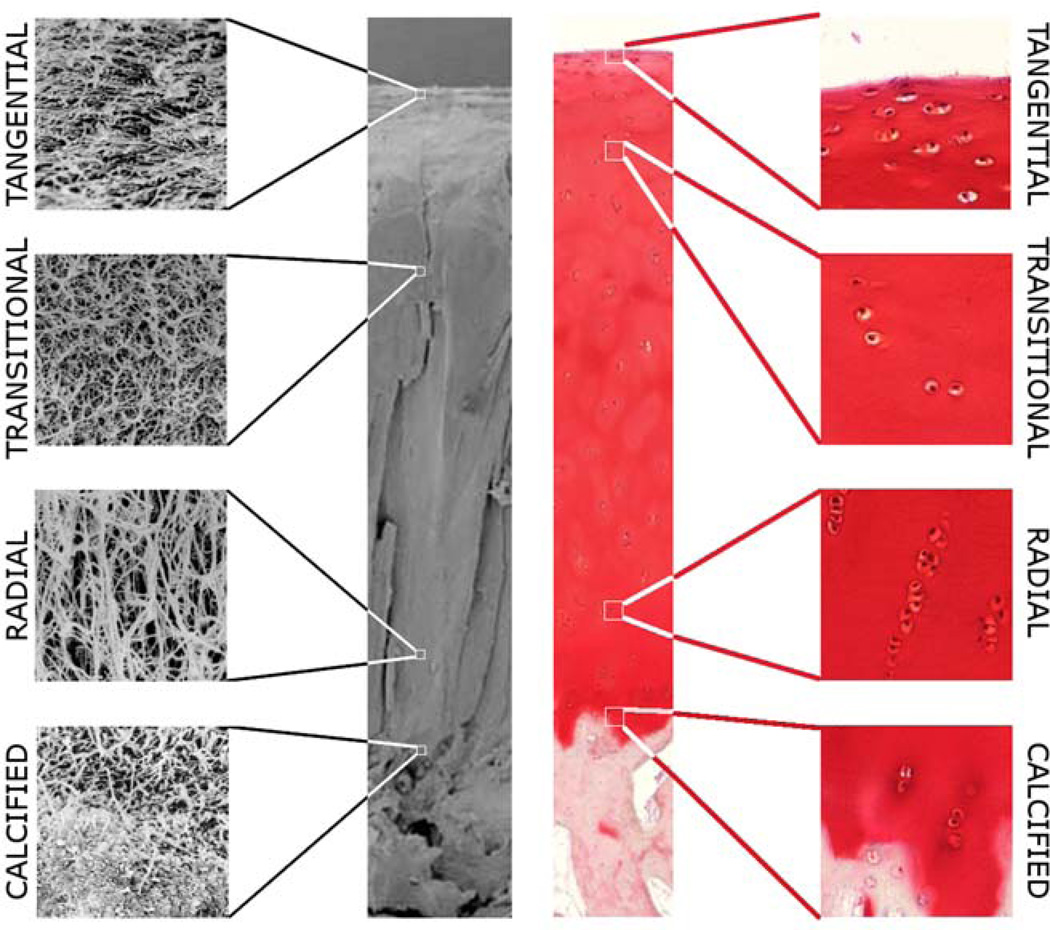
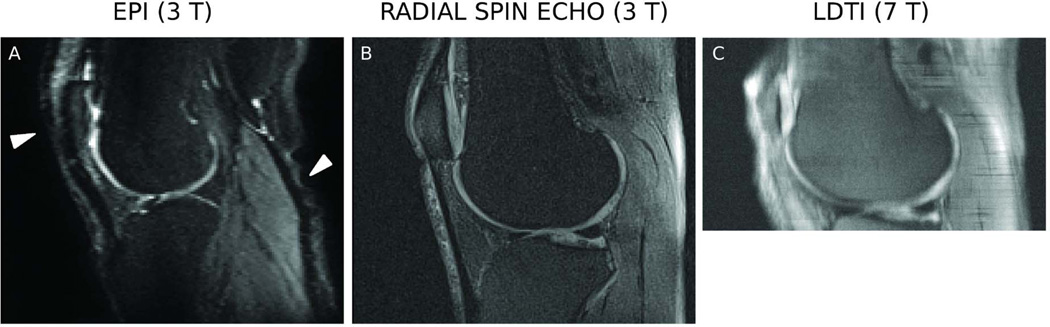
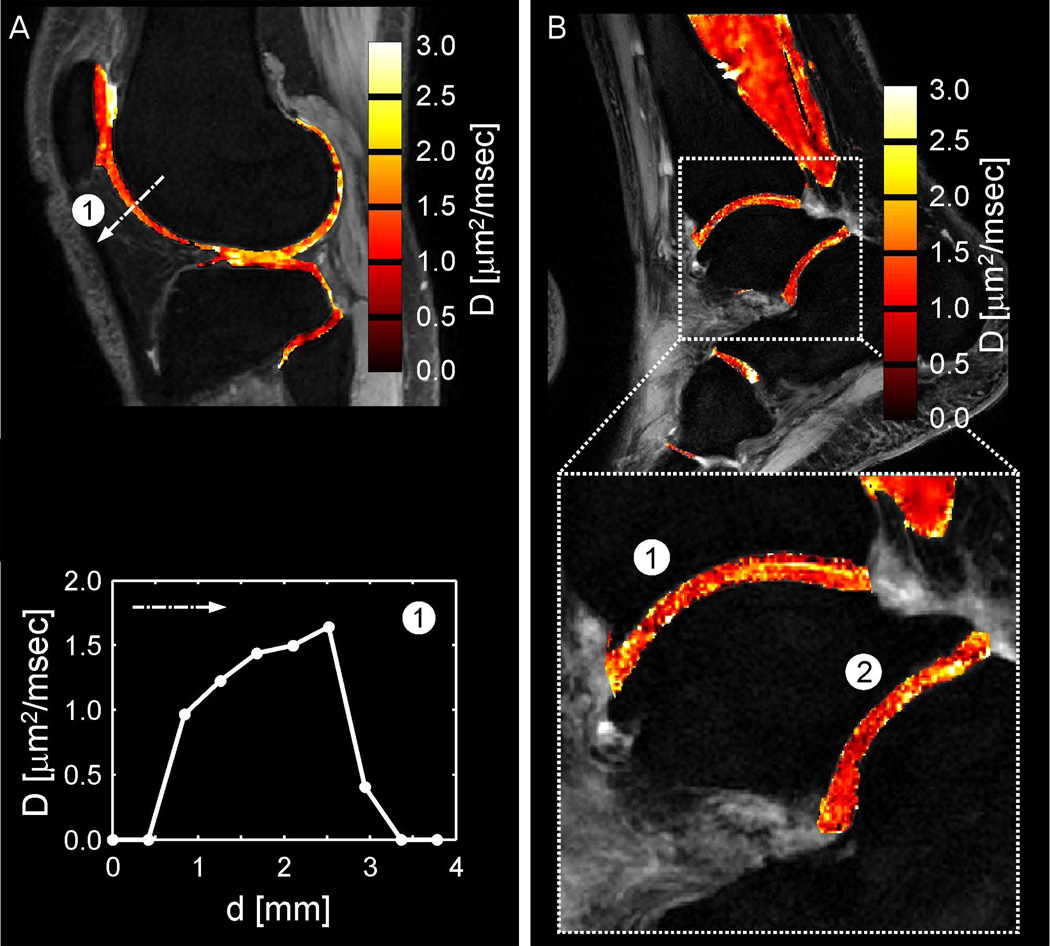
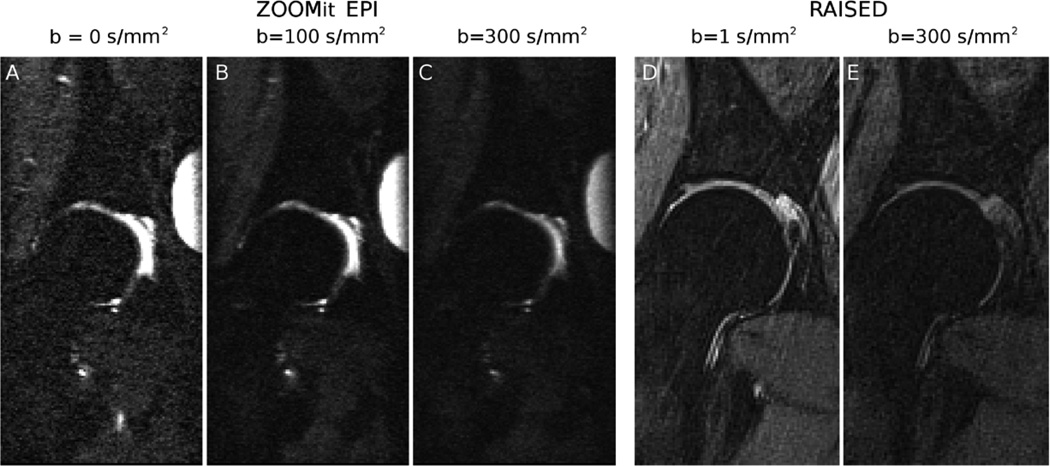
Early in the process of osteoarthritis (OA) the composition (water, proteoglycan [PG], and collagen) and structure of articular cartilage is altered leading to changes in its mechanical properties. A technique that can assess the composition and structure of the cartilage in vivo can provide insight in the mechanical integrity of articular cartilage and become a powerful tool for the early diagnosis of OA. Diffusion tensor imaging (DTI) has been proposed as a biomarker for cartilage composition and structure. DTI is sensitive to the PG content through the mean diffusivity and to the collagen architecture through the fractional anisotropy. However, the acquisition of DTI of articular cartilage in vivo is challenging due to the short T2 of articular cartilage (∼40 ms at 3 Tesla) and the high resolution needed (0.5-0.7 mm in plane) to depict the cartilage anatomy. We describe the pulse sequences used for in vivo DTI of articular cartilage and discus general strategies for protocol optimization. We provide a comprehensive review of measurements of DTI of articular cartilage from ex vivo validation experiments to its recent clinical applications.
Keywords: articular cartilage; diffusion tensor imaging; diffusion-weighted imaging; knee injury; osteoarthritis.
© 2015 Wiley Periodicals, Inc.
Figures
References
-
- Mox VC, Gu WY, Chen FH. Structure and function of articular cartilage. In: Mow VC, Huiskes R, editors. Basic Orthopedics biomechanics and mechano-biology. 3rd ed. Philadelphia, PA, US: Lippincott Willians & Wilkins; 2005. pp. 123–180.
-
- Maroudas AI. Balance between swelling pressure and collagen tension in normal and degenerate cartilage. Nature. 1976;260(5554):808–809. - PubMed
-
- Maroudas A, Baylissb MT, Uchitel-Kaushanskya N, Schneidermana R, Gilav E. Aggrecan turnover in human articular cartilage: Use of aspartic acid racemization as a marker of molecular age. Arch Biochem Biophys. 1998;350:61–71. - PubMed
Publication types
MeSH terms
Substances
Grants and funding
LinkOut - more resources
Full Text Sources
Other Literature Sources
Medical
