


Entosis allows timely elimination of the luminal epithelial barrier for embryo implantation
- PMID: 25865893
- PMCID: PMC5089169
- DOI: 10.1016/j.celrep.2015.03.035
Entosis allows timely elimination of the luminal epithelial barrier for embryo implantation
Abstract
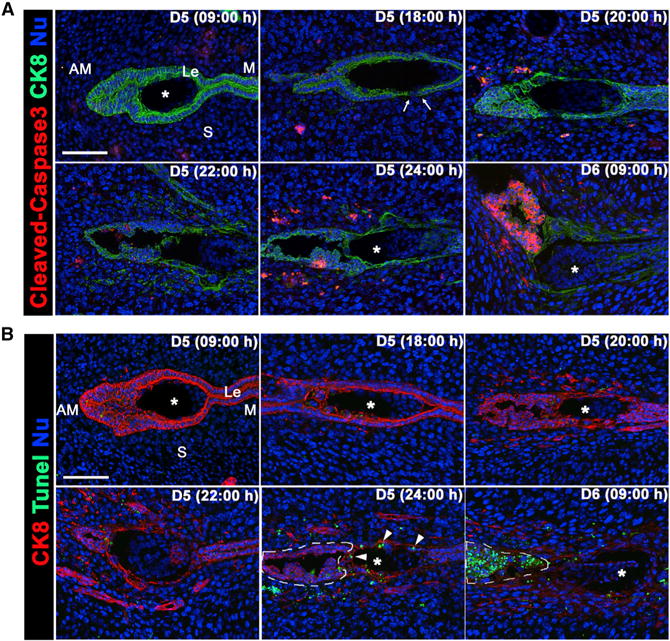
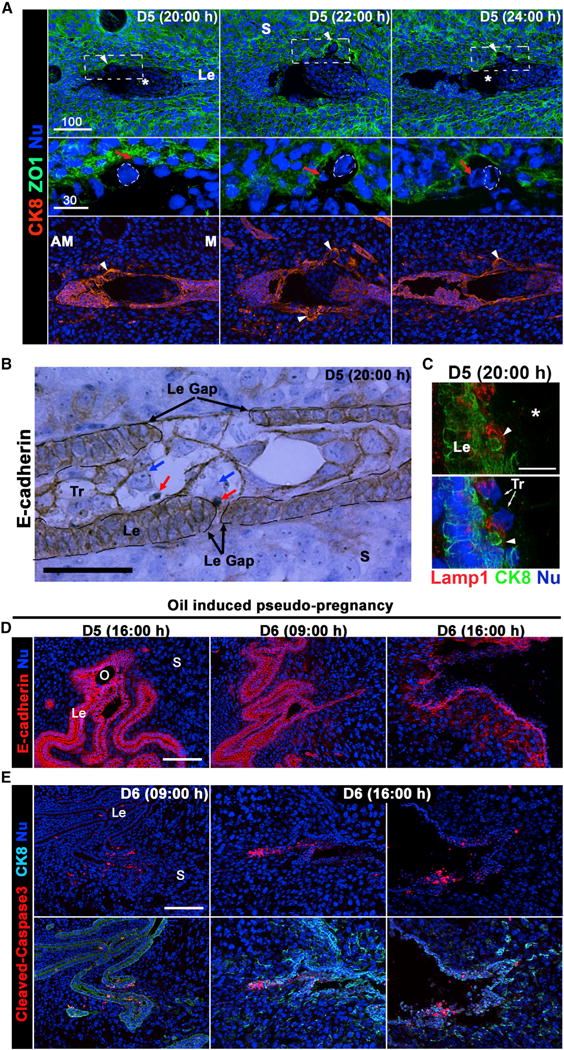
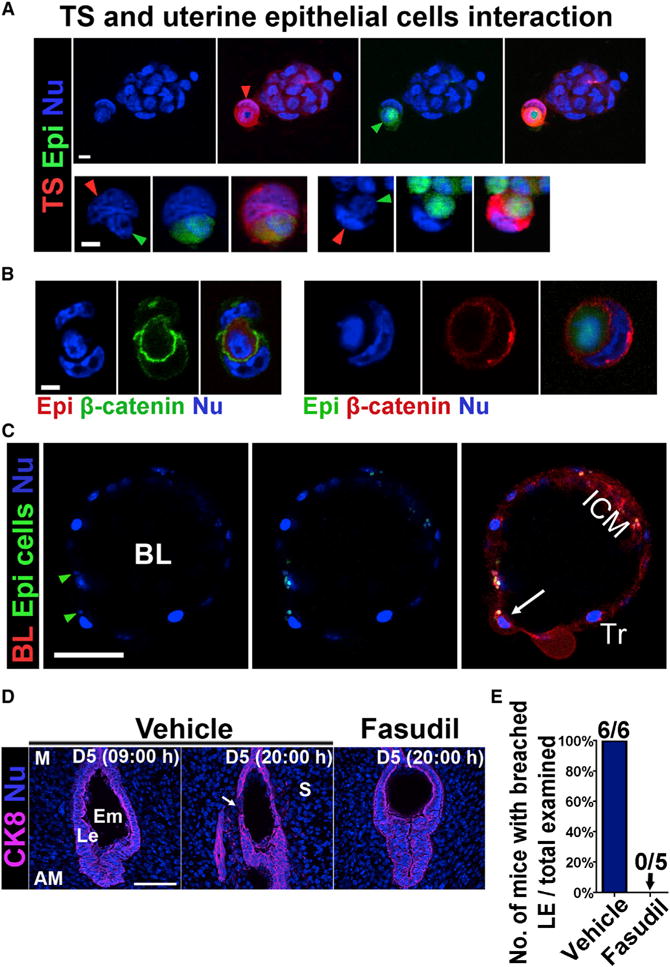
During implantation, uterine luminal epithelial (LE) cells first interact with the blastocyst trophectoderm. Within 30 hr after the initiation of attachment, LE cells surrounding the blastocyst in the implantation chamber (crypt) disappear, allowing trophoblast cells to make direct physical contact with the underneath stroma for successful implantation. The mechanism for the extraction of LE cells was thought to be mediated by apoptosis. Here, we show that LE cells in direct contact with the blastocyst are endocytosed by trophoblast cells by adopting the nonapoptotic cell-in-cell invasion process (entosis) in the absence of caspase 3 activation. Our in vivo observations were reinforced by the results of co-culture experiments with primary uterine epithelial cells with trophoblast stem cells or blastocysts showing internalization of epithelial cells by trophoblasts. We have identified entosis as a mechanism to remove LE cells by trophoblast cells in implantation, conferring a role for entosis in an important physiological process.
Copyright © 2015 The Authors. Published by Elsevier Inc. All rights reserved.
Figures

References
-
- Das SK, Wang XN, Paria BC, Damm D, Abraham JA, Klagsbrun M, Andrews GK, Dey SK. Heparin-binding EGF-like growth factor gene is induced in the mouse uterus temporally by the blastocyst solely at the site of its apposition: a possible ligand for interaction with blastocyst EGF-receptor in implantation. Development. 1994;120:1071–1083. - PubMed
Publication types
MeSH terms
Grants and funding
LinkOut - more resources
Full Text Sources
Other Literature Sources
Research Materials
