


Do Patients of Subspecialist Physicians Benefit from Written Asthma Action Plans?
- PMID: 25867075
- PMCID: PMC4476559
- DOI: 10.1164/rccm.201407-1338OC
Do Patients of Subspecialist Physicians Benefit from Written Asthma Action Plans?
Abstract
Rationale: Asthma clinical guidelines suggest written asthma action plans are essential for improving self-management and outcomes.
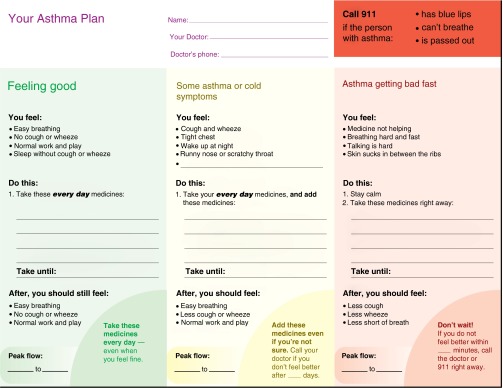
Objectives: To assess the efficacy of written instructions in the form of a written asthma action plan provided by subspecialist physicians as part of usual asthma care during office visits.
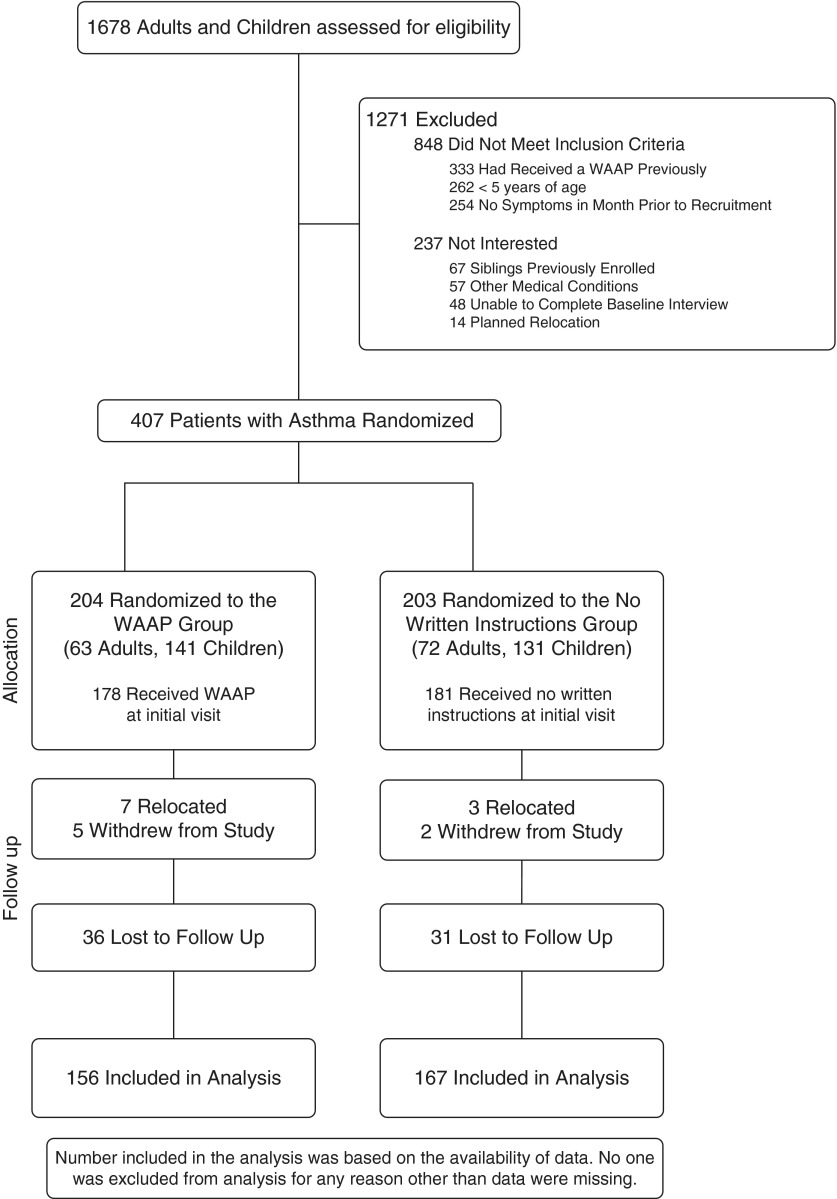
Methods: A total of 407 children and adults with persistent asthma receiving first-time care in pulmonary and allergy practices at 4 urban medical centers were randomized to receive either written instructions (n = 204) or no written instructions other than prescriptions (n = 203) from physicians.
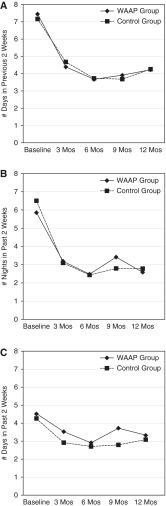
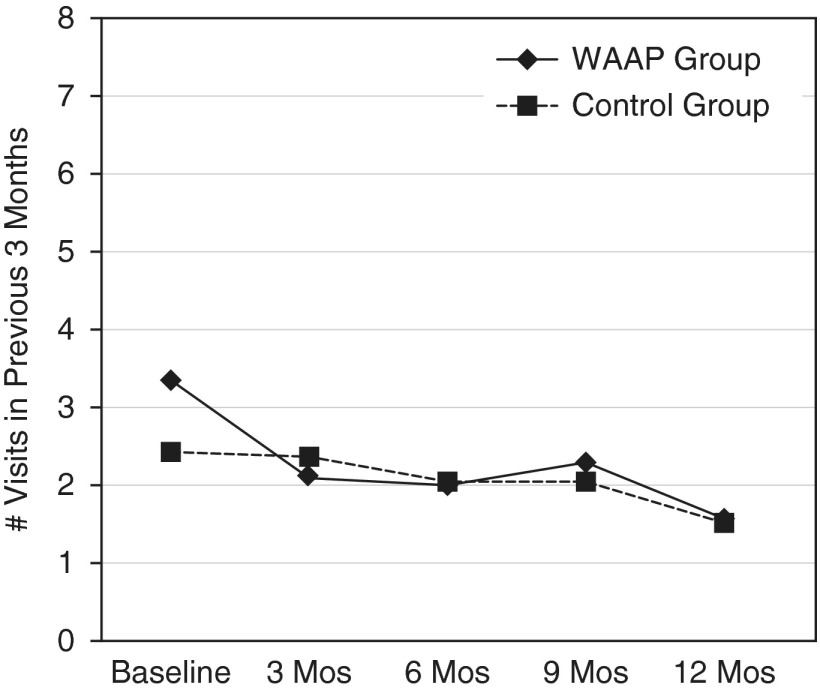
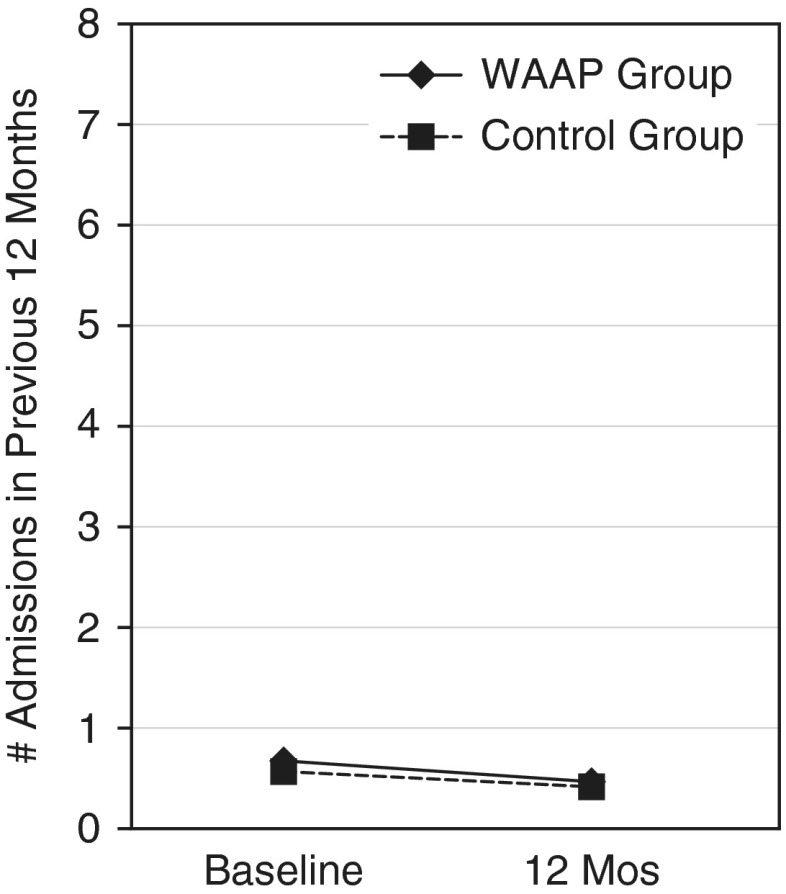
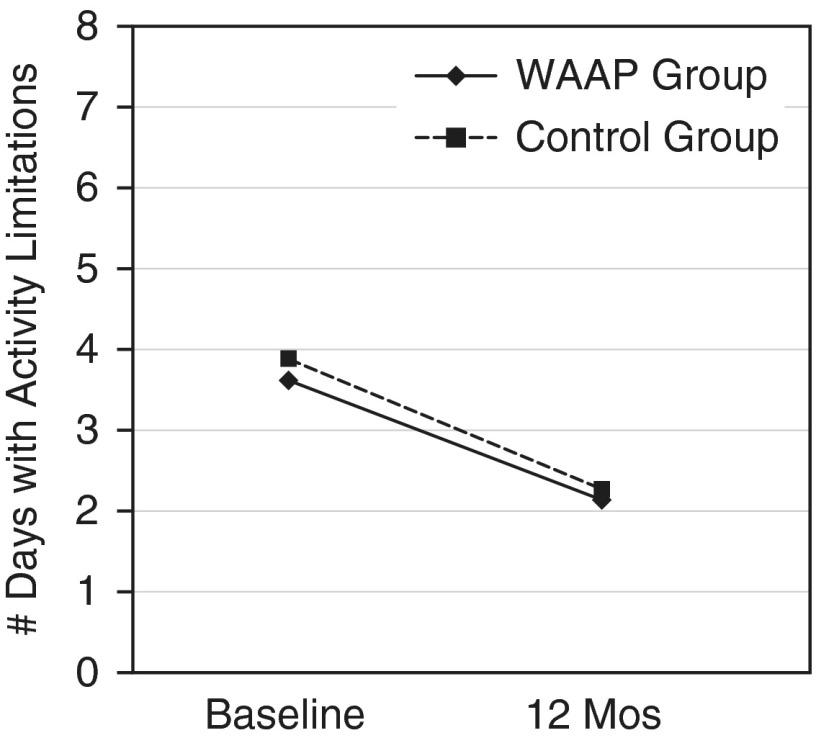
Measurements and main results: Using written asthma action plan forms as a vehicle for providing self-management instructions did not have a significant effect on any of the primary outcomes: (1) asthma symptom frequency, (2) emergency visits, or (3) asthma quality of life from baseline to 12-month follow-up. Both groups showed similar and significant reductions in asthma symptom frequency (daytime symptoms [P < 0.0001], nocturnal symptoms [P < 0.0001], β-agonist use [P < 0.0001]). There was also a significant reduction in emergency visits for the intervention (P < 0.0001) and control (P < 0.0006) groups. There was significant improvement in asthma quality-of-life scores for adults (P < 0.0001) and pediatric caregivers (P < 0.0001).
Conclusions: Our results suggest that using a written asthma action plan form as a vehicle for providing asthma management instructions to patients with persistent asthma who are receiving subspecialty care for the first time confers no added benefit beyond subspecialty-based medical care and education for asthma. Clinical trial registered with www.clinicaltrials.gov (NCT 00149461).
Trial registration: ClinicalTrials.gov NCT00149461.
Keywords: action plans; asthma; minority; physicians; self-management.
Figures
Comment in
-
Precision Medicine. Personalizing Guidelines to the Provider as Well as the Patient: Making the Juice Worth the Squeeze.Am J Respir Crit Care Med. 2015 Jun 15;191(12):1345-6. doi: 10.1164/rccm.201504-0809ED. Am J Respir Crit Care Med. 2015. PMID: 26075416 No abstract available.
-
Written Asthma Action Plans: The Devil's in the Details.Am J Respir Crit Care Med. 2016 Jan 15;193(2):220-1. doi: 10.1164/rccm.201506-1224LE. Am J Respir Crit Care Med. 2016. PMID: 26771418 No abstract available.
-
Written Action Asthma Plans: Not Such a Simple Issue in Subspecialist Care?Am J Respir Crit Care Med. 2016 Jan 15;193(2):221-2. doi: 10.1164/rccm.201508-1690LE. Am J Respir Crit Care Med. 2016. PMID: 26771419 No abstract available.
-
Reply: "Written Asthma Action Plans: The Devil's in the Details" and "Written Action Asthma Plans: Not Such a Simple Issue in Subspecialist Care?".Am J Respir Crit Care Med. 2016 Jan 15;193(2):222-3. doi: 10.1164/rccm.201507-1478LE. Am J Respir Crit Care Med. 2016. PMID: 26771420 Free PMC article. No abstract available.
References
-
- National Asthma Education Prevention Program. Expert panel report 3 (EPR-3): guidelines for the diagnosis and management of asthma—summary report 2007. J Allergy Clin Immunol. 2007;120(5 Suppl):S94–S138. [Published erratum appears in J Allergy Clin Immunol 2008;121:1330.] - PubMed
-
- Bateman ED, Hurd SS, Barnes PJ, Bousquet J, Drazen JM, FitzGerald M, Gibson P, Ohta K, O’Byrne P, Pedersen SE, et al. Global strategy for asthma management and prevention: GINA executive summary. Eur Respir J. 2008;31:143–178. - PubMed
-
- Lougheed MD, Lemière C, Dell SD, Ducharme FM, Fitzgerald JM, Leigh R, Licskai C, Rowe BH, Bowie D, Becker A, et al. Canadian Thoracic Society Asthma Committee. Canadian Thoracic Society Asthma Management Continuum—2010 Consensus Summary for children six years of age and over, and adults. Can Respir J. 2010;17:15–24. - PMC - PubMed
-
- Lefevre F, Piper M, Weiss K, Mark D, Clark N, Aronson N. Do written action plans improve patient outcomes in asthma? An evidence-based analysis. J Fam Pract. 2002;51:842–848. - PubMed
-
- Sheares BJ, Vazquez TL, Evans D. Assessing physician barriers to the use of written treatment plans in asthma [abstract] Proc Am Thoracic Soc. 2005;2:A906.
