Inhibition of β-catenin signaling suppresses pancreatic tumor growth by disrupting nuclear β-catenin/TCF-1 complex: critical role of STAT-3
- PMID: 25869100
- PMCID: PMC4484476
- DOI: 10.18632/oncotarget.3427
Inhibition of β-catenin signaling suppresses pancreatic tumor growth by disrupting nuclear β-catenin/TCF-1 complex: critical role of STAT-3
Abstract
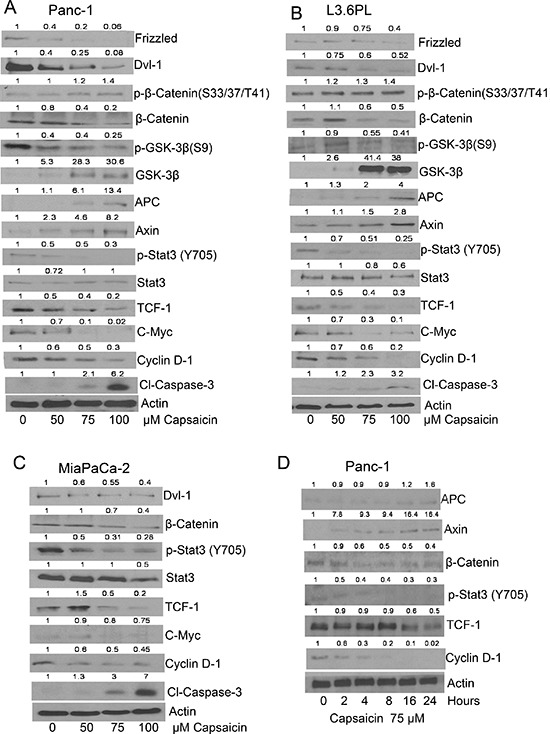
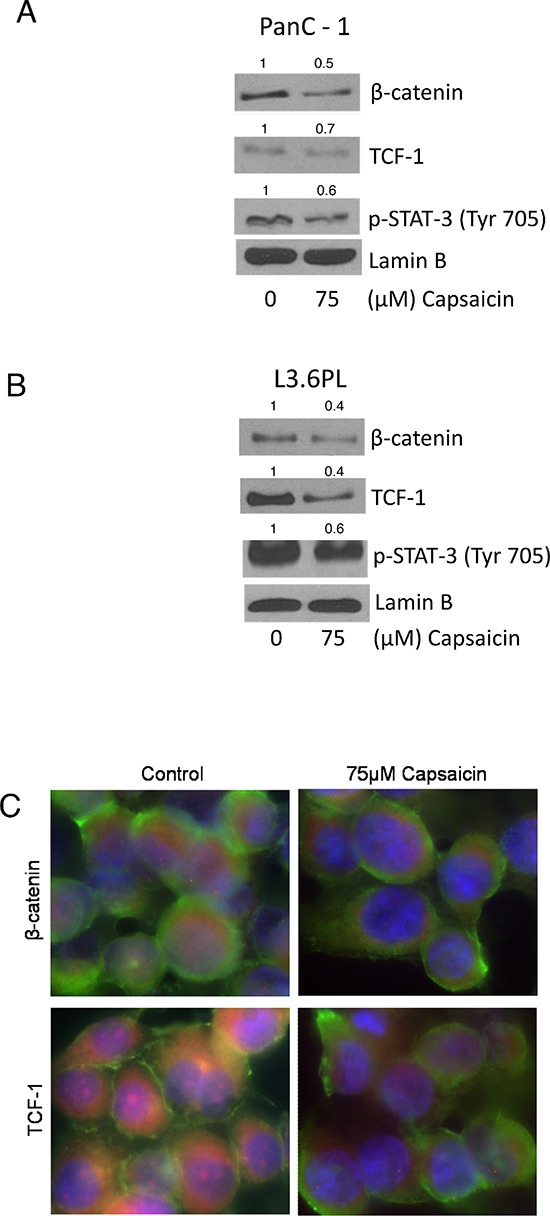
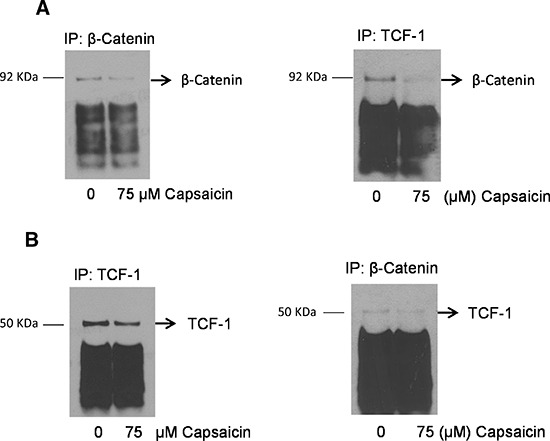
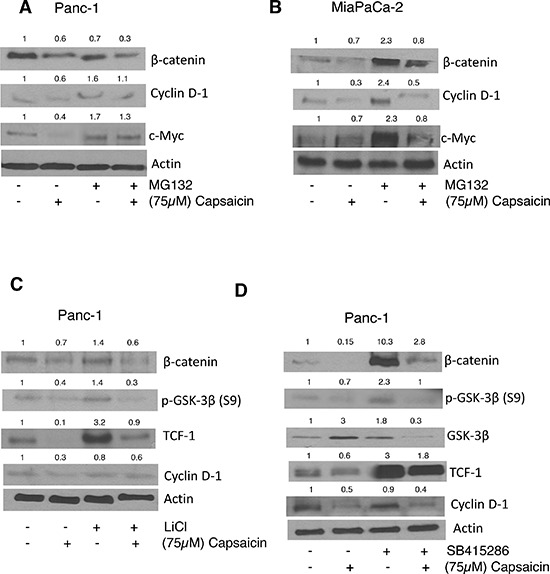
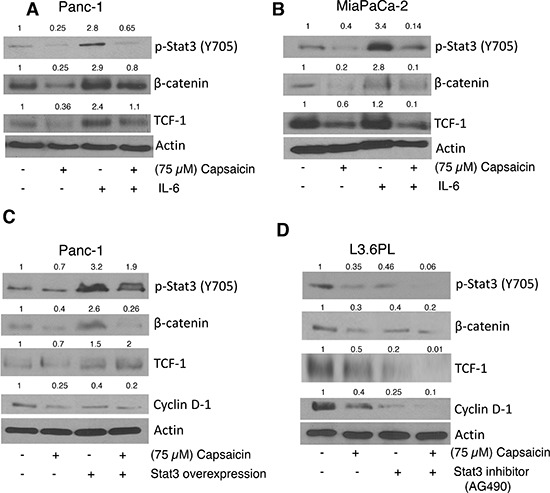
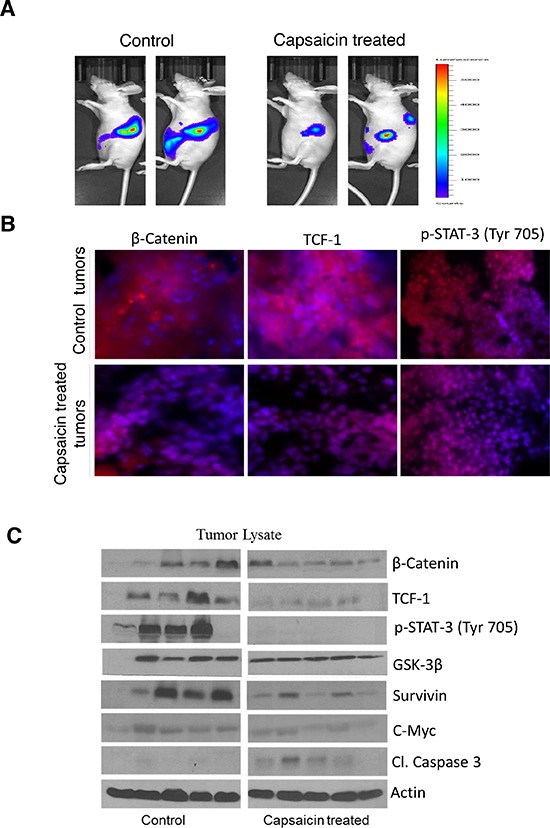
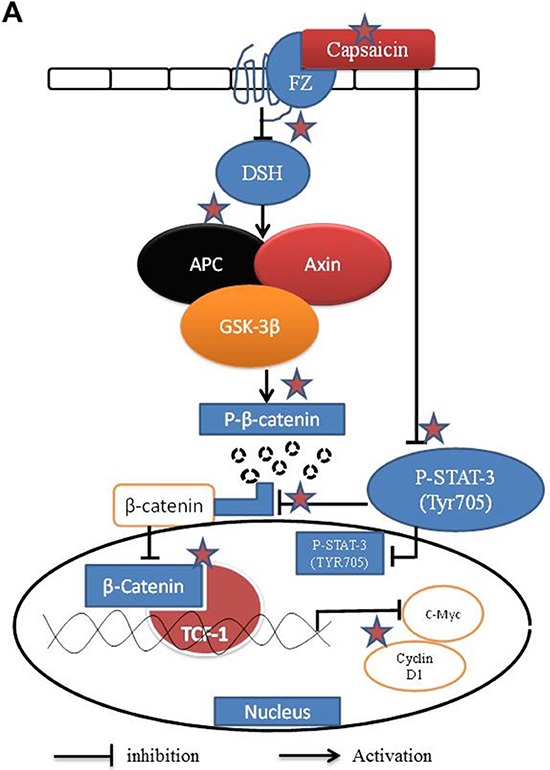
Aberrant activation of β-catenin/TCF signaling is related to the invasiveness of pancreatic cancer. In the present study, we evaluated the effect of capsaicin on β-catenin/TCF signaling. In a concentration and time-dependent study, we observed that capsaicin treatment inhibits the activation of dishevelled (Dsh) protein DvI-1 in L3.6PL, PanC-1 and MiaPaCa-2 pancreatic cancer cells. Capsaicin treatment induced GSK-3β by inhibiting its phosphorylation and further activated APC and Axin multicomplex, leading to the proteasomal degradation of β-catenin. Expression of TCF-1 and β-catenin-responsive proteins, c-Myc and cyclin D1 also decreased in response to capsaicin treatment. Pre-treatment of cells with MG-132 blocked capsaicin-mediated proteasomal degradation of β-catenin. To establish the involvement of β-catenin in capsaicin-induced apoptosis, cells were treated with LiCl or SB415286, inhibitors of GSK-3β. Our results reveal that capsaicin treatment suppressed LiCl or SB415286-mediated activation of β-catenin signaling. Our results further showed that capsaicin blocked nuclear translocation of β-catenin, TCF-1 and p-STAT-3 (Tyr705). The immunoprecipitation results indicated that capsaicin treatment reduced the interaction of β-catenin and TCF-1 in the nucleus. Moreover, capsaicin treatment significantly decreased the phosphorylation of STAT-3 at Tyr705. Interestingly, STAT-3 over expression or STAT-3 activation by IL-6, significantly increased the levels of β-catenin and attenuated the effects of capsaicin in inhibiting β-catenin signaling. Finally, capsaicin mediated inhibition of orthotopic tumor growth was associated with inhibition of β-catenin/TCF-1 signaling. Taken together, our results suggest that capsaicin-induced apoptosis in pancreatic cancer cells was associated with inhibition of β-catenin signaling due to the dissociation of β-catenin/TCF-1 complex and the process was orchestrated by STAT-3.
Keywords: GSK-3β; STAT3; orthotopic tumor; pancreatic cancer; β-catenin.
Conflict of interest statement
Authors declare no conflict of interest.
Figures
References
-
- Polakis P. Wnt signaling and cancer. Genes & development. 2000;14:1837–1851. - PubMed
Publication types
MeSH terms
Substances
Grants and funding
LinkOut - more resources
Full Text Sources
Other Literature Sources
Medical
Molecular Biology Databases
Research Materials
Miscellaneous