. 2015 Jun 15;75(12):2489-500.
doi: 10.1158/0008-5472.CAN-14-3167. Epub 2015 Apr 13.

Acquired Resistance to the Mutant-Selective EGFR Inhibitor AZD9291 Is Associated with Increased Dependence on RAS Signaling in Preclinical Models

Affiliations

Acquired Resistance to the Mutant-Selective EGFR Inhibitor AZD9291 Is Associated with Increased Dependence on RAS Signaling in Preclinical Models

Catherine A Eberlein et al. Cancer Res. .

Abstract

Resistance to targeted EGFR inhibitors is likely to develop in EGFR-mutant lung cancers. Early identification of innate or acquired resistance mechanisms to these agents is essential to direct development of future therapies. We describe the detection of heterogeneous mechanisms of resistance within populations of EGFR-mutant cells (PC9 and/or NCI-H1975) with acquired resistance to current and newly developed EGFR tyrosine kinase inhibitors, including AZD9291. We report the detection of NRAS mutations, including a novel E63K mutation, and a gain of copy number of WT NRAS or WT KRAS in cell populations resistant to gefitinib, afatinib, WZ4002, or AZD9291. Compared with parental cells, a number of resistant cell populations were more sensitive to inhibition by the MEK inhibitor selumetinib (AZD6244; ARRY-142886) when treated in combination with the originating EGFR inhibitor. In vitro, a combination of AZD9291 with selumetinib prevented emergence of resistance in PC9 cells and delayed resistance in NCI-H1975 cells. In vivo, concomitant dosing of AZD9291 with selumetinib caused regression of AZD9291-resistant tumors in an EGFRm/T790M transgenic model. Our data support the use of a combination of AZD9291 with a MEK inhibitor to delay or prevent resistance to AZD9291 in EGFRm and/or EGFRm/T790M tumors. Furthermore, these findings suggest that NRAS modifications in tumor samples from patients who have progressed on current or EGFR inhibitors in development may support subsequent treatment with a combination of EGFR and MEK inhibition.


Conflict of interest statement

Disclosure of Potential Conflicts of Interest

A patent relating to EGFR T790M mutation testing was licensed on behalf of William Pao and others by Memorial Sloan-Kettering Cancer Center to MolecularMD. William Pao received research funding from AstraZeneca. C.A. Eberlein, D Stetson, A.A Markovets, Z Lai, K.J Al-Kadhimi, S.J Ross, M.J Ahdesmaki, A Ahmed, C.H Barnes, H Brown, P.D Smith, J.R Dry, G Beran, K.S Thress, B Dougherty, D.A.E. Cross are employees of AstraZeneca.

Figures
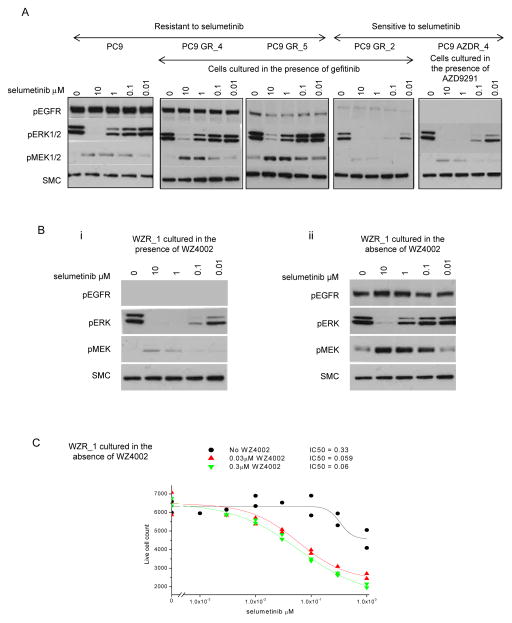
Figure 1
Figure 1. RAS-MAPK signaling inhibition by selumetinib in EGFR inhibitor resistant cell lines
(A, B) Cells cultured in the presence or absence of originating EGFR inhibitor as indicated were dosed with titrations of selumetinib for 6 hours. Lysates were analysed by immunoblotting. Data is representative of 2 separate experiments. (C) WZR_1 cells cultured in the absence of WZ4002 prior to the experiment were treated with titrations of selumetinib over 96 hours with no added WZ4002, 0.03 μM or 0.3 μM WZ4002. Data is representative of two separate experiments.
Figure 2
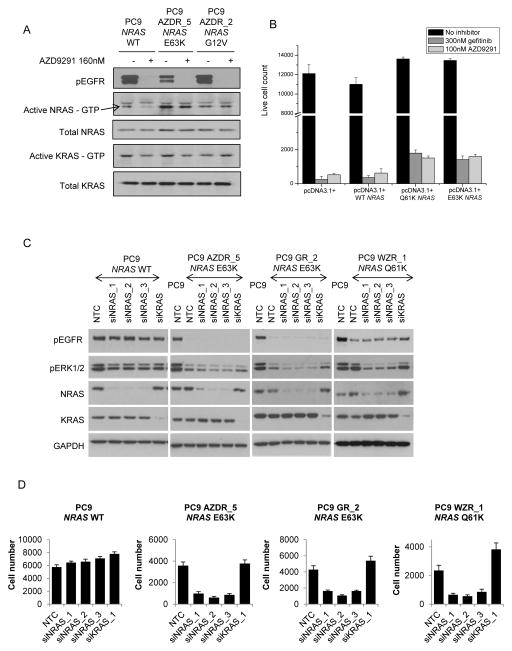
Figure 2. Determining the functional role of NRAS modifications in acquired resistance to EGFR inhibitors
(A) Resistant populations were cultured in media without EGFR inhibitor for 5 days prior to carrying out the assay. Lysates were prepared from parental and resistant cells serum starved overnight and treated for 6 hours +/− 160nM AZD9291. RAS activity was measured using RAS GTPase-specific pulldown assays. (B) PC9 cells transfected with NRAS and control pcDNA 3.1+ constructs for 48 hours were treated with 100nM AZD9291 or 300nM gefitinib for a further 96 hours. Live cell number was determined by nuclei count. The data is representative of three separate experiments. Error bars are standard deviation. (C) Resistant populations were cultured in media supplemented with EGFR inhibitor for all siRNA experiments. Lysates from cells treated with 20nM NTC, NRAS or KRAS siRNA for 48 hours were anlaysed by immunoblotting. (D) Cells treated for 72 hours with 20nM NTC, NRAS or KRAS siRNA were fixed and cell number determined by nuclei count. Data is representative of 3 replicate experiments. Error bars are standard deviation.
Figure 3
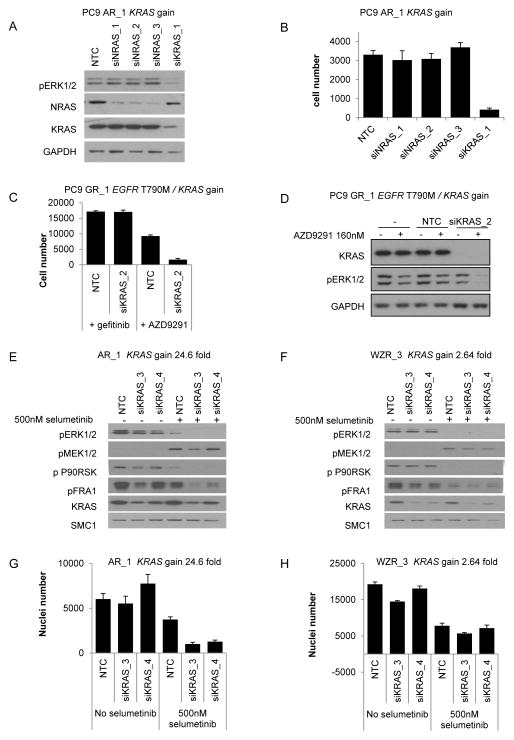
Figure 3. Determining the functional role of KRAS gain in acquired resistance to EGFR inhibitors
(A) Immunoblotting of PC9 AR_1 (KRAS gain) cells grown in 1.5μM afatinib transfected with 20nM of NRAS, KRAS or control siRNA for 48 hours. (B) PC9 AR_1 (KRAS gain) cells grown in 1.5μM afatinib treated for 96 hours with 20nM of NRAS, KRAS or control siRNA. Cell number was determined by nuclei count. (C) PC9 GR_1 (EGFR T790M / KRAS gain) cells grown in 1.5μM gefitinib were transfected with 20nM of KRAS or control siRNA −/+ 160nM AZD9291. After 4 days cell number was determined by nuclei count. Data shown is representative data. Error bars are standard deviation. (D) Immunoblotting of PC9 GR_1 cells, grown in media containing gefitinib, transfected with 20nM of KRAS or NTC siRNA for 5 days and then treated with 160nM of AZD9291 for 2 hours. (E) Immunoblotting of PC9 AR_1 (KRAS gain) cells grown in 1.5μM afatinib and (F) WZR_3 (KRAS gain) cells grown in 1.5μM WZ4002 transfected with 20nM of KRAS or control siRNA for 48 hours and then treated for 4 hours +/− 500nM selumetinib. (G) PC9 AR_1 (KRAS gain) cells grown in 1.5μM afatinib and (H) WZR_3 (KRAS gain) cells grown in 1.5μM WZ4002 treated for 96 hours with 20nM of KRAS or control siRNA +/− 500 nM selumetinib. Cell number was determined by nuclei count.
Figure 4
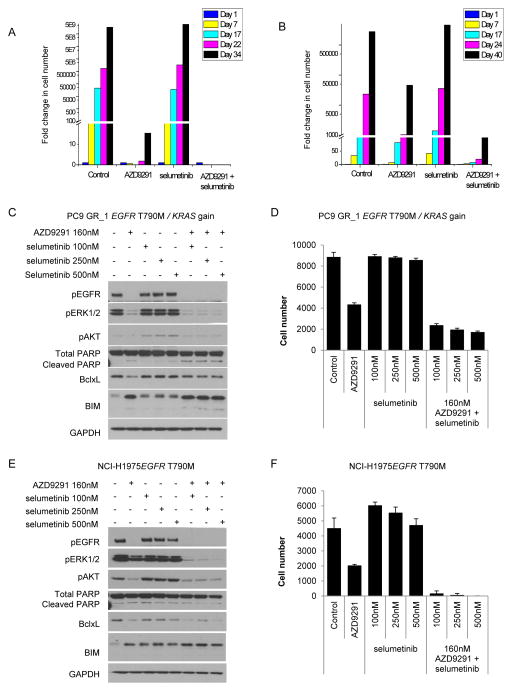
Figure 4. In vitro combination of AZD9291 with selumetinib induces more profound phenotype inhibition
(A) PC9 and (B) NCI-H1975 cells were chronically treated for 34 days with DMSO, AZD9291, selumetinib or a combination of AZD9291 with selumetinib. Fold increase in cell number was monitored over time. Lysates from PC9 GR_1 (C) or NCI-H1975 (E) cells treated with AZD9291 and selumetinib alone or in combination for 48 hours were analysed by immunoblotting. PC9 GR_1 (D) or NCI-H1975 (F) cells were treated over 12 days with AZD9291 and selumetinib alone or in combination. Cells were fixed and cell number determined from nuclei count. Error bars represent standard deviation.
Figure 5
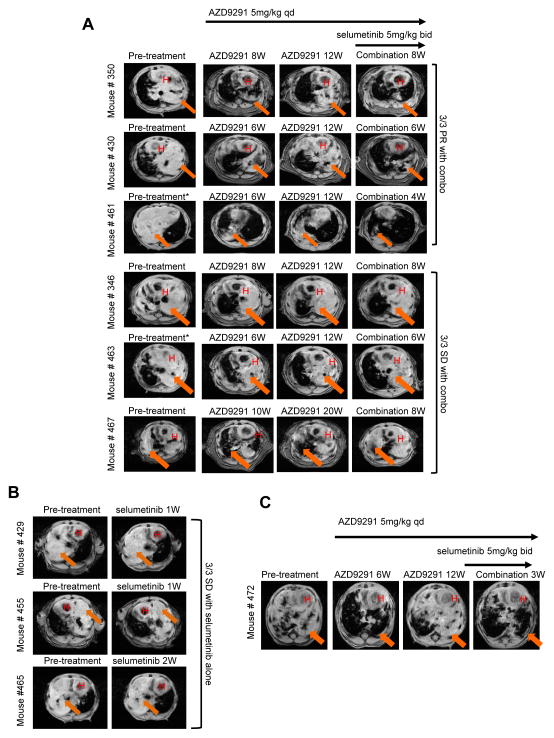
Figure 5. In vivo combination of AZD9291 and selumetinib can overcome acquired resistance to AZD9291 in mutant EGFR trangenic models of lung cancer
(A) MR images of lungs from tumour-bearing EGFRL858R + T790M transgenic mice pretreatment, after treatment with AZD9291 for 6–20 weeks (W) until progressive disease, and subsequently with the combination of AZD9291/selumetinib for 4–8 weeks. (B) MR images of lung from tumour-bearing EGFRL858R + T790M mice pre- and post- treatment with selumetinib for 1–2 weeks (1W/2W). Combo, AZD9291/selumetinib; H, heart; arrow denotes tumour. (C) MR images of lung from a tumour-bearing EGFRL858R transgenic mouse pretreatment, after treatment with AZD9291 for 6–12 weeks (W) until disease progression, and subsequently with the combination of AZD9291/selumetinib for 3 weeks (3W). *Pretreatment images for mouse #461 and #463 were obtained after these mice received 4 weeks of low dose (1–2.5mg/kg) AZD9291 with no response, before being switched to 5mg/kg dosing.

References

    1. Gazdar AF. Activating and resistance mutations of EGFR in non-small-cell lung cancer: Role in clinical response to EGFR tyrosine kinase inhibitors. Oncogene. 2009;28 (Suppl 1):S24–31. - PMC - PubMed
    1. Pao W, Chmielecki J. Rational, biologically based treatment of EGFR-mutant non-small-cell lung cancer. Nat Rev Cancer. 2010;10(11):760–74. - PMC - PubMed
    1. Mok TS, Wu YL, Thongprasert S, et al. Gefitinib or carboplatin-paclitaxel in pulmonary adenocarcinoma. N Engl J Med. 2009;361(10):947–57. - PubMed
    1. Rosell R, Carcereny E, Gervais R, et al. Erlotinib versus standard chemotherapy as first-line treatment for european patients with advanced EGFR mutation-positive non-small-cell lung cancer (EURTAC): A multicentre, open-label, randomised phase 3 trial. Lancet Oncol. 2012;13(3):239–46. - PubMed
    1. Pao W, Miller VA, Politi KA, et al. Acquired resistance of lung adenocarcinomas to gefitinib or erlotinib is associated with a second mutation in the EGFR kinase domain. PLoS Med. 2005;2(3):e73. - PMC - PubMed

Publication types

MeSH terms