


Agricultural insecticides threaten surface waters at the global scale
- PMID: 25870271
- PMCID: PMC4426442
- DOI: 10.1073/pnas.1500232112
Agricultural insecticides threaten surface waters at the global scale
Abstract
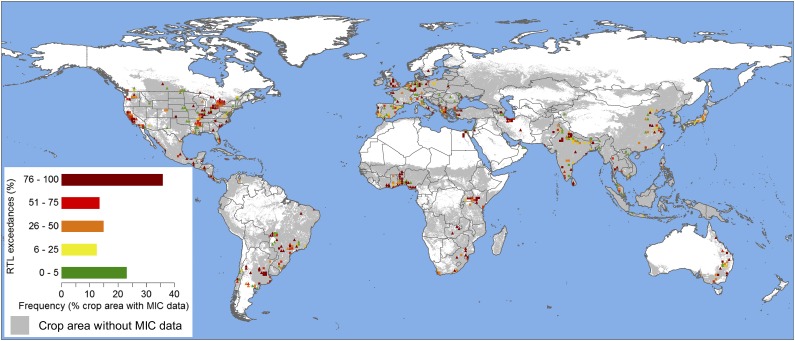
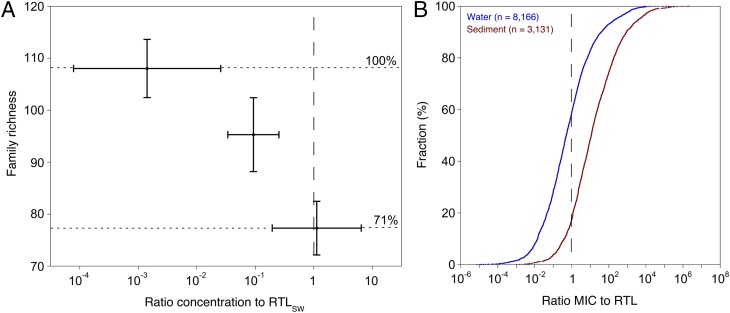
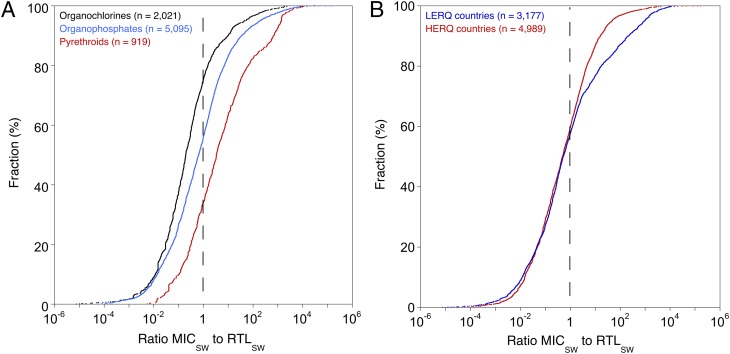
Compared with nutrient levels and habitat degradation, the importance of agricultural pesticides in surface water may have been underestimated due to a lack of comprehensive quantitative analysis. Increasing pesticide contamination results in decreasing regional aquatic biodiversity, i.e., macroinvertebrate family richness is reduced by ∼30% at pesticide concentrations equaling the legally accepted regulatory threshold levels (RTLs). This study provides a comprehensive metaanalysis of 838 peer-reviewed studies (>2,500 sites in 73 countries) that evaluates, for the first time to our knowledge on a global scale, the exposure of surface waters to particularly toxic agricultural insecticides. We tested whether measured insecticide concentrations (MICs; i.e., quantified insecticide concentrations) exceed their RTLs and how risks depend on insecticide development over time and stringency of environmental regulation. Our analysis reveals that MICs occur rarely (i.e., an estimated 97.4% of analyses conducted found no MICs) and there is a complete lack of scientific monitoring data for ∼90% of global cropland. Most importantly, of the 11,300 MICs, 52.4% (5,915 cases; 68.5% of the sites) exceeded the RTL for either surface water (RTLSW) or sediments. Thus, the biological integrity of global water resources is at a substantial risk. RTLSW exceedances depend on the catchment size, sampling regime, and sampling date; are significantly higher for newer-generation insecticides (i.e., pyrethroids); and are high even in countries with stringent environmental regulations. These results suggest the need for worldwide improvements to current pesticide regulations and agricultural pesticide application practices and for intensified research efforts on the presence and effects of pesticides under real-world conditions.
Keywords: agriculture; biodiversity; global surface waters; insecticide contamination; regulatory risk assessment.
Conflict of interest statement
The authors declare no conflict of interest.
Figures
References
-
- Foley JA, et al. Solutions for a cultivated planet. Nature. 2011;478(7369):337–342. - PubMed
-
- Tilman D, et al. Forecasting agriculturally driven global environmental change. Science. 2001;292(5515):281–284. - PubMed
-
- Specialists in Business Information (November 24, 2008) Record increase in global pesticides market to accelerate into 2013. Available at www.sbireports.com/about/release.asp?id=1249. Accessed February 12, 2013.
-
- Schulz R. Field studies on exposure, effects, and risk mitigation of aquatic nonpoint-source insecticide pollution: A review. J Environ Qual. 2004;33(2):419–448. - PubMed
-
- Schwarzenbach RP, et al. The challenge of micropollutants in aquatic systems. Science. 2006;313(5790):1072–1077. - PubMed
Publication types
MeSH terms
Substances
LinkOut - more resources
Full Text Sources
Other Literature Sources
