


Effect of selenium supplementation on CD4+ T-cell recovery, viral suppression and morbidity of HIV-infected patients in Rwanda: a randomized controlled trial
- PMID: 25870994
- PMCID: PMC4444428
- DOI: 10.1097/QAD.0000000000000673
Effect of selenium supplementation on CD4+ T-cell recovery, viral suppression and morbidity of HIV-infected patients in Rwanda: a randomized controlled trial
Abstract
Objective: To examine the effect of selenium supplementation on CD4 T-cell counts, viral suppression, and time to antiretroviral therapy (ART) initiation in ART-naive HIV-infected patients in Rwanda.
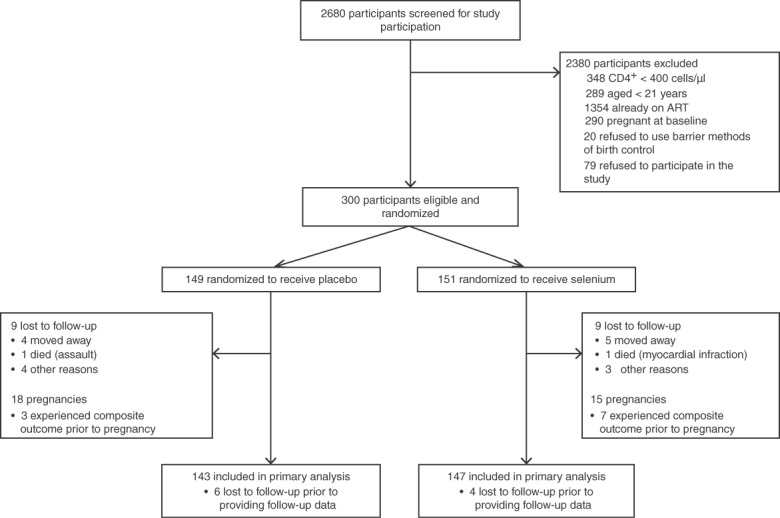
Methods: A multicenter, double-blinded, placebo-controlled, randomized clinical trial was conducted. Eligible patients were HIV-infected adults (≥21 years) who had a CD4 cell count between 400 and 650 cells/μl (ART eligibility was ≤350 cells/μl throughout the trial), and were willing to practice barrier methods of birth control. Patients were randomized to receive once-daily 200 μg selenium tablets or identical placebo. They were followed for 24 months with assessments every 6 months. Declines in CD4 cell counts were modeled using linear regressions with generalized estimating equations and effect modification, and the composite outcome (ART eligible or ART initiation) using Cox proportional-hazards regression, both conducted with intention to treat.
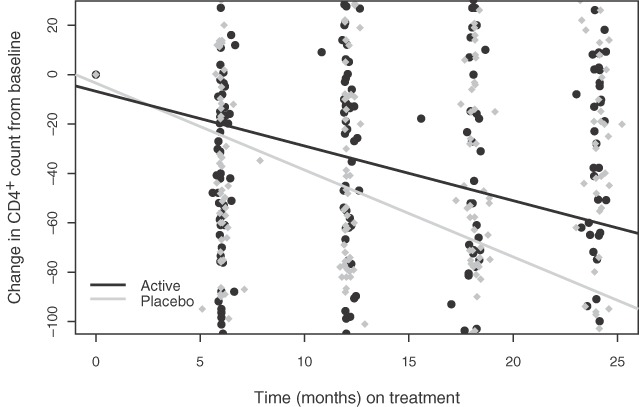
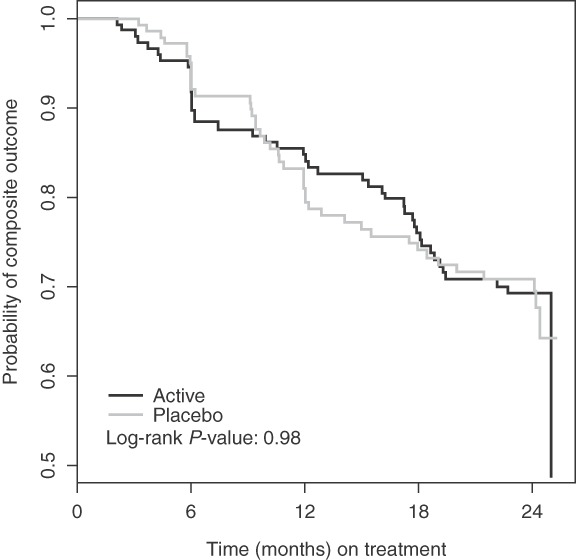
Results: Of the 300 participants, 149 received selenium, 202 (67%) were women, and median age was 33.5 years. The rate of CD4 depletion was reduced by 43.8% [95% confidence interval (CI) 7.8-79.8% decrease] in the treatment arm - from mean 3.97 cells/μl per month to mean 2.23 cells/μl per month. We observed 96 composite outcome events - 45 (47%) in the treatment arm. We found no treatment effect for the composite outcome (hazard ratio 1.00, 95% CI 0.66-1.54) or viral suppression (odds ratio 1.18, 95% CI 0.71-1.94). The trial was underpowered for the composite outcome due to a lower-than-anticipated event rate. Adverse events were comparable throughout.
Conclusions: This randomized clinical trial demonstrated that 24-month selenium supplementation significantly reduces the rate of CD4 cell count decline among ART-naive patients.
Figures
References
-
- Semba RD, Tang AM. Micronutrients and the pathogenesis of human immunodeficiency virus infection. Br J Nutr 1999; 81:181–189. - PubMed
-
- Gross RL, Newberne PM. Role of nutrition in immunologic function. Physiol Rev 1980; 60:188–302. - PubMed
-
- Bendich A. Micronutrients and immune responses. Ann N Y Acad Sci 1990; 587:168–180. - PubMed
-
- Beisel WR. Single nutrients and immunity. Am J Clin Nutr 1982; 35 (suppl):417–468. - PubMed
-
- Beisel WR. Vitamins and the immune system. Ann N Y Acad Sci 1990; 587:5–8. - PubMed
Publication types
MeSH terms
Substances
LinkOut - more resources
Full Text Sources
Medical
Research Materials
