


Reconstitution of a eukaryotic replisome reveals suppression mechanisms that define leading/lagging strand operation
- PMID: 25871847
- PMCID: PMC4413876
- DOI: 10.7554/eLife.04988
Reconstitution of a eukaryotic replisome reveals suppression mechanisms that define leading/lagging strand operation
Abstract
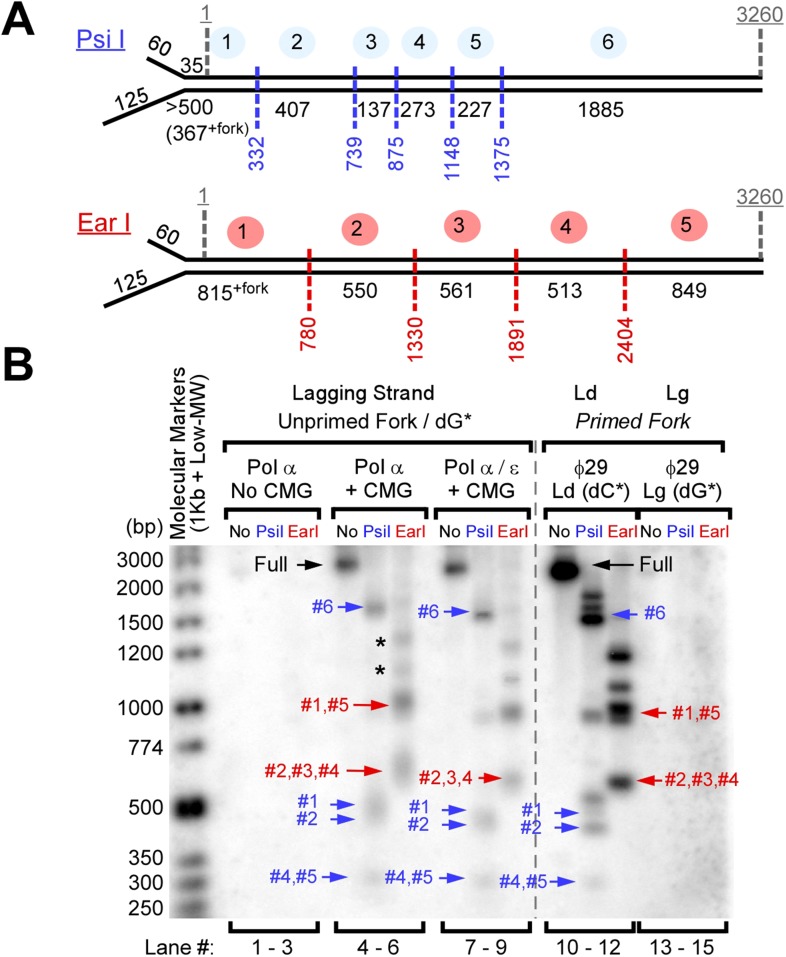
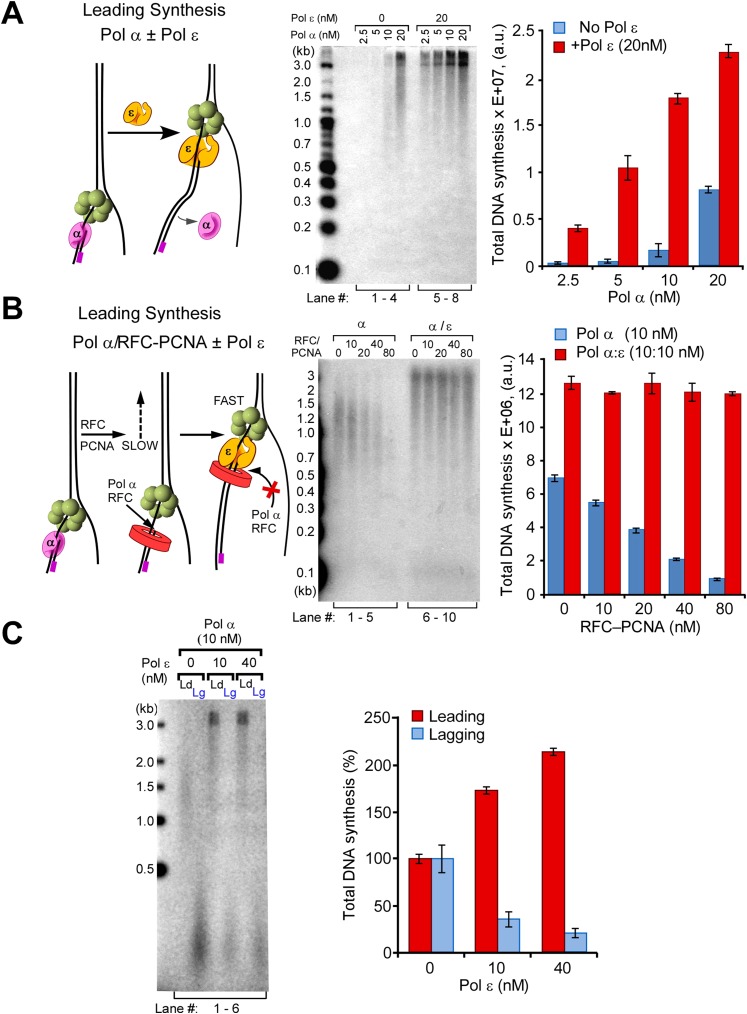
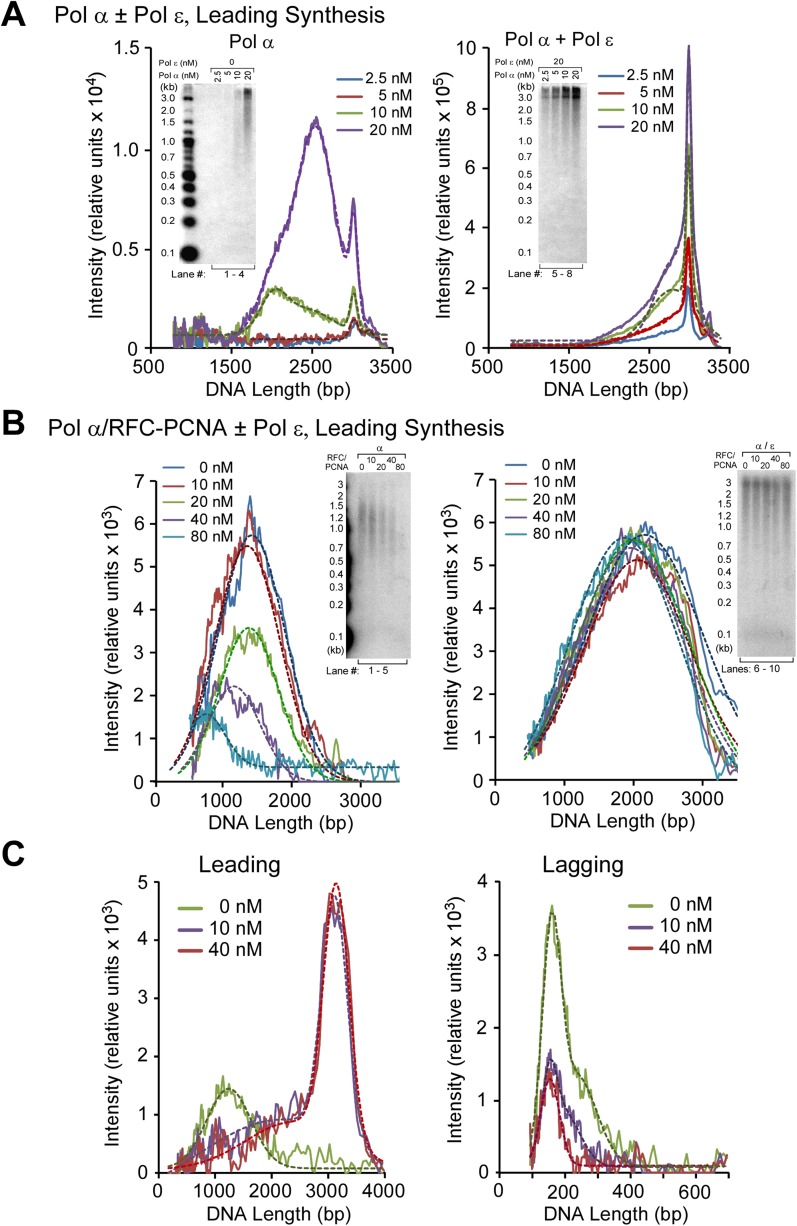
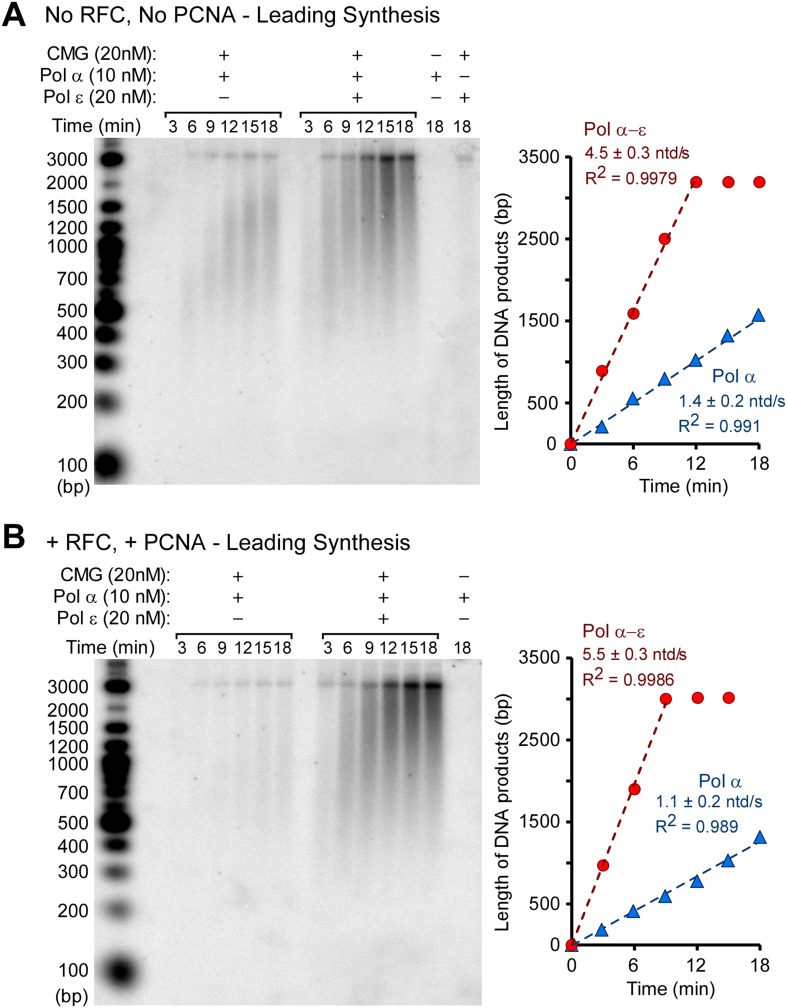
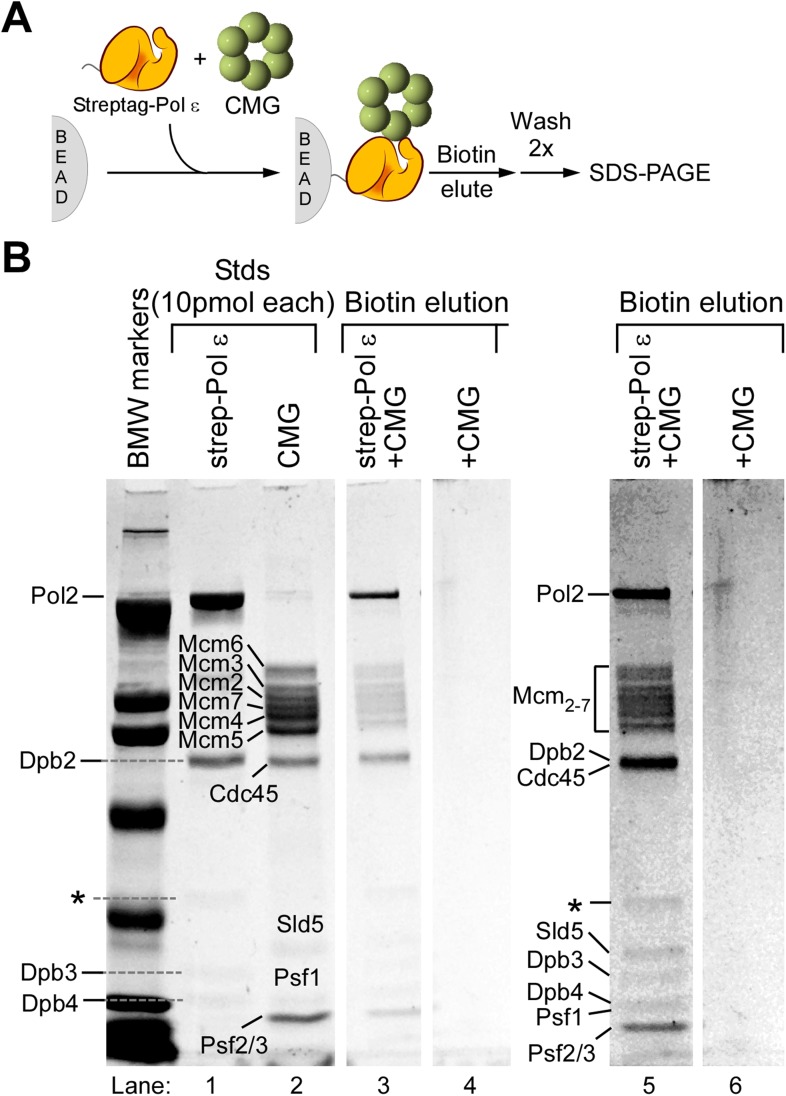
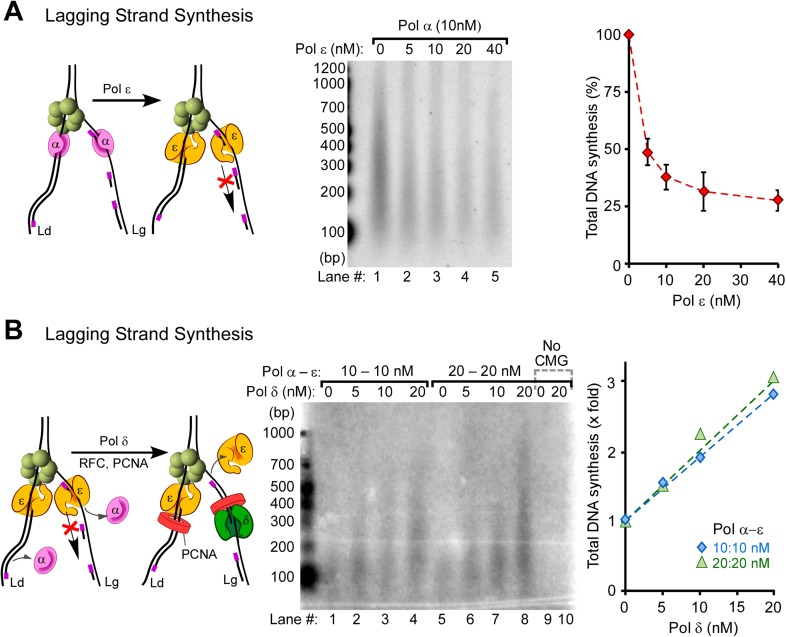
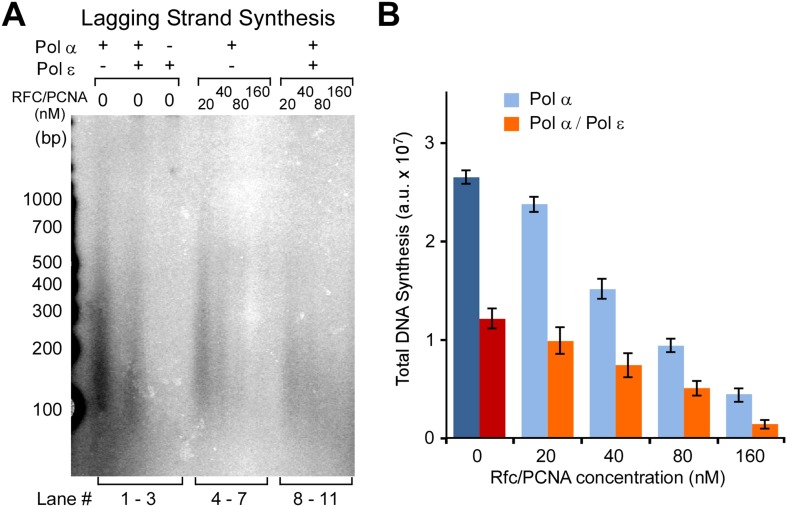
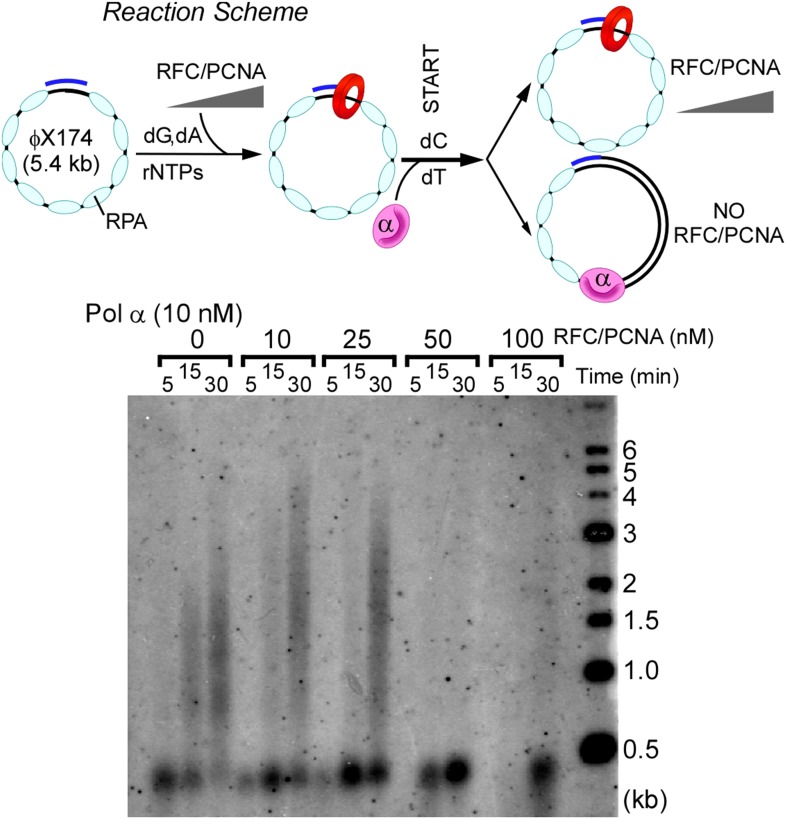
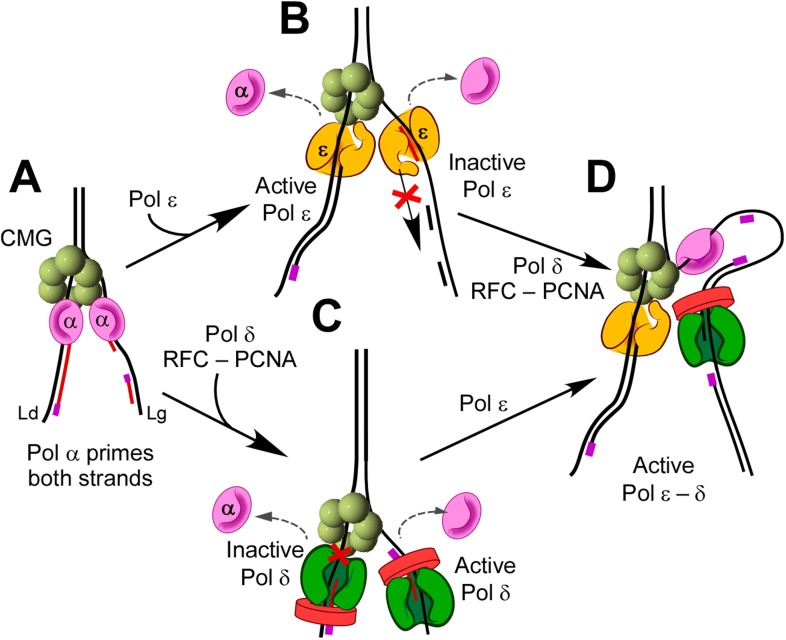
We have reconstituted a eukaryotic leading/lagging strand replisome comprising 31 distinct polypeptides. This study identifies a process unprecedented in bacterial replisomes. While bacteria and phage simply recruit polymerases to the fork, we find that suppression mechanisms are used to position the distinct eukaryotic polymerases on their respective strands. Hence, Pol ε is active with CMG on the leading strand, but it is unable to function on the lagging strand, even when Pol δ is not present. Conversely, Pol δ-PCNA is the only enzyme capable of extending Okazaki fragments in the presence of Pols ε and α. We have shown earlier that Pol δ-PCNA is suppressed on the leading strand with CMG (Georgescu et al., 2014). We propose that CMG, the 11-subunit helicase, is responsible for one or both of these suppression mechanisms that spatially control polymerase occupancy at the fork.
Keywords: CMG; DNA replication; Pol delta; Pol epsilon; S. cerevisiae; biochemistry; biophysics; replication fork; structural biology.
Conflict of interest statement
The authors declare that no competing interests exist.
Figures
References
-
- Blanco L, Bernad A, Lázaro JM, Martín G, Garmendia C, Salas M. Highly efficient DNA synthesis by the phage phi 29 DNA polymerase. Symmetrical mode of DNA replication. The Journal of Biological Chemistry. 1989;264:8935–8940. - PubMed
-
- Chilkova O, Stenlund P, Isoz I, Stith CM, Grabowski P, Lundström EB, Burgers PM, Johansson E. The eukaryotic leading and lagging strand DNA polymerases are loaded onto primer-ends via separate mechanisms but have comparable processivity in the presence of PCNA. Nucleic Acids Research. 2007;35:6588–6597. doi: 10.1093/nar/gkm741. - DOI - PMC - PubMed
Publication types
MeSH terms
Substances
Grants and funding
LinkOut - more resources
Full Text Sources
Molecular Biology Databases
Miscellaneous
