


The neural basis of the abnormal self-referential processing and its impact on cognitive control in depressed patients
- PMID: 25872899
- PMCID: PMC6869596
- DOI: 10.1002/hbm.22807
The neural basis of the abnormal self-referential processing and its impact on cognitive control in depressed patients
Abstract
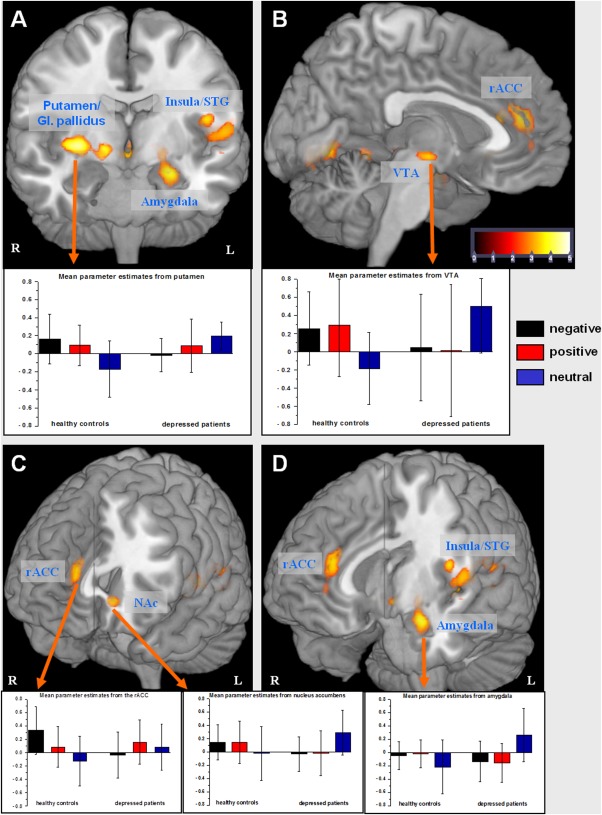
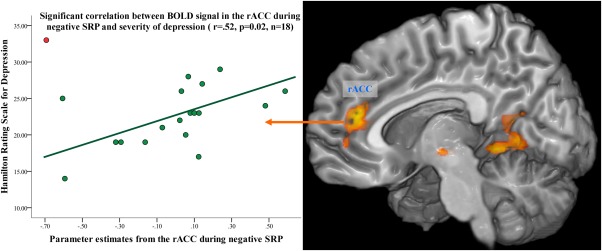
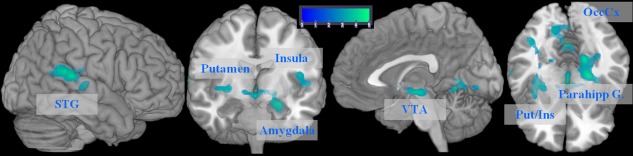
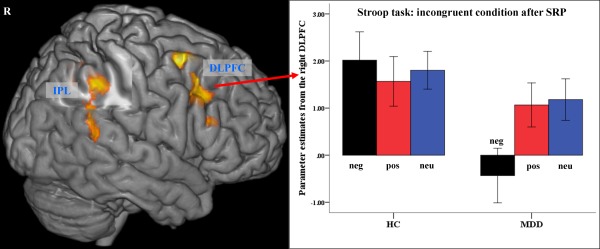
Persistent pondering over negative self-related thoughts is a central feature of depressive psychopathology. In this study, we sought to investigate the neural correlates of abnormal negative self-referential processing (SRP) in patients with Major Depressive Disorder and its impact on subsequent cognitive control-related neuronal activation. We hypothesized aberrant activation dynamics during the period of negative and neutral SRP in the rostral anterior cingulate cortex (rACC) and in the amygdala in patients with major depressive disorder. Additionally, we assumed abnormal activation in the fronto-cingulate network during Stroop task execution. 19 depressed patients and 20 healthy controls participated in the study. Using an event-related functional magnetic resonance imaging (fMRI) design, negative, positive and neutral self-referential statements were displayed for 6.5 s and followed by incongruent or congruent Stroop conditions. The data were analyzed with SPM8. In contrast to controls, patients exhibited no significant valence-dependent rACC activation differences during SRP. A novel finding was the significant activation of the amygdala and the reward-processing network during presentation of neutral self-referential stimuli relative to baseline and to affective stimuli in patients. The fMRI analysis of the Stroop task revealed a reduced BOLD activation in the right fronto-parietal network of patients in the incongruent condition after negative SRP only. Thus, the inflexible activation in the rACC may correspond to the inability of depressed patients to shift their attention away from negative self-related stimuli. The accompanying negative affect and task-irrelevant emotional processing may compete for neuronal resources with cognitive control processes and lead thereby to deficient cognitive performance associated with decreased fronto-parietal activation.
Keywords: amygdala; cognitive control; dorsolateral prefrontal cortex; functional imaging; major depression; nucleus accumbens; rostral anterior cingulate cortex; self-referential processing.
© 2015 Wiley Periodicals, Inc.
Figures
References
-
- Alloy LB, Robinson MS (2003): Negative cognitive styles and stress‐reactive rumination interact to predict depression: A prospective study1. Cogn Therapy Res 27:275–292.
-
- Bradley BP, Mogg K, Millar N, White J (1995): Selective processing of negative information: effects of clinical anxiety, concurrent depression, and awareness. J Abnorm Psychol 104:532–536. - PubMed
-
- Breiter HC, Gollub RL, Weisskoff RM, Kennedy DN, Makris N, Berke JD, Goodman JM, Kantor HL, Gastfriend DR, Riorden JP, Mathew RT, Rosen BR, Hyman SE (1997): Acute effects of cocaine on human brain activity and emotion. Neuron 19:591–611. - PubMed
MeSH terms
LinkOut - more resources
Full Text Sources
Other Literature Sources
