


Screening for an ivermectin slow-release formulation suitable for malaria vector control
- PMID: 25872986
- PMCID: PMC4355127
- DOI: 10.1186/s12936-015-0618-2
Screening for an ivermectin slow-release formulation suitable for malaria vector control
Abstract
Background: The prospect of eliminating malaria is challenged by emerging insecticide resistance and vectors with outdoor and/or crepuscular activity. Ivermectin can simultaneously tackle these issues by killing mosquitoes feeding on treated animals and humans. A single oral dose, however, confers only short-lived mosquitocidal plasma levels.
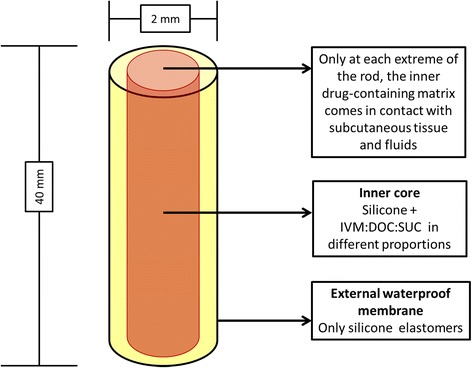
Methods: Three different slow-release formulations of ivermectin were screened for their capacity to sustain mosquito-killing levels of ivermectin for months. Thirty rabbits received a dose of one, two or three silicone implants containing different proportions of ivermectin, deoxycholate and sucrose. Animals were checked for toxicity and ivermectin was quantified periodically in blood. Potential impact of corresponding long-lasting formulation was mathematically modelled.
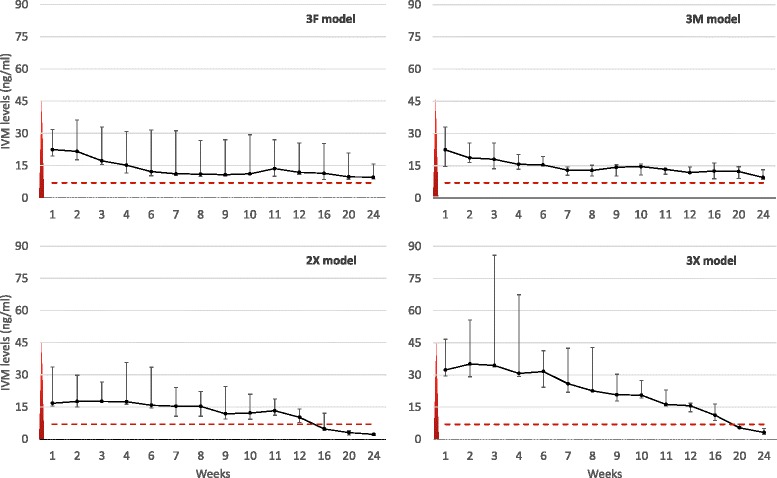
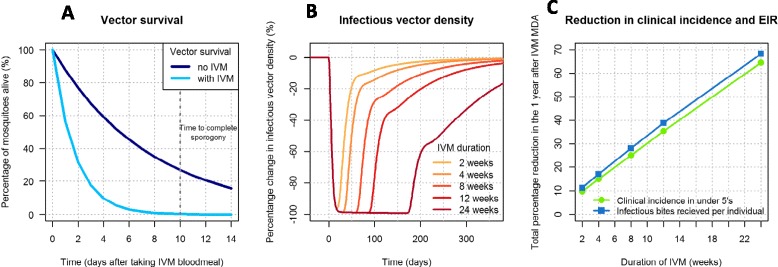
Results: All combinations of formulation and dose released ivermectin for more than 12 weeks; four combinations sustained plasma levels capable of killing 50% of Anopheles gambiae feeding on a treated subject for up to 24 weeks. No major adverse effects attributable to the drug were found. Modelling predicts a 98% reduction in infectious vector density by using an ivermectin formulation with a 12-week duration.
Conclusions: These results indicate that relatively stable mosquitocidal plasma levels of ivermectin can be safely sustained in rabbits for up to six months using a silicone-based subcutaneous formulation. Modifying the formulation of ivermectin promises to be a suitable strategy for malaria vector control.
Figures
References
-
- WHO . World Malaria report 2014. Geneva: World Health Organization; 2014.
-
- Magill A. We can achieve a world free of malaria. In Impatient Optimists. Bill & Melinda Gates Foundation. 2014. http://www.impatientoptimists.org/Posts/2014/04/We-Can-Achieve-a-World-F.... Accessed 17 Feb 2015
Publication types
MeSH terms
Substances
LinkOut - more resources
Full Text Sources
Other Literature Sources
Medical
