


A molecular mechanism of artemisinin resistance in Plasmodium falciparum malaria
- PMID: 25874676
- PMCID: PMC4417027
- DOI: 10.1038/nature14412
A molecular mechanism of artemisinin resistance in Plasmodium falciparum malaria
Abstract
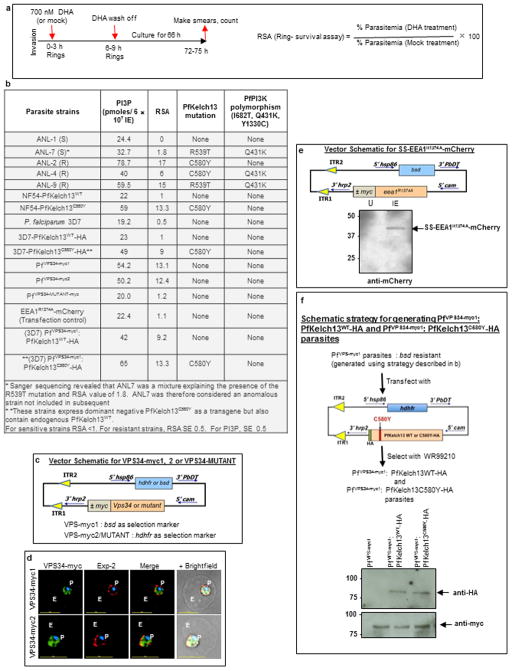
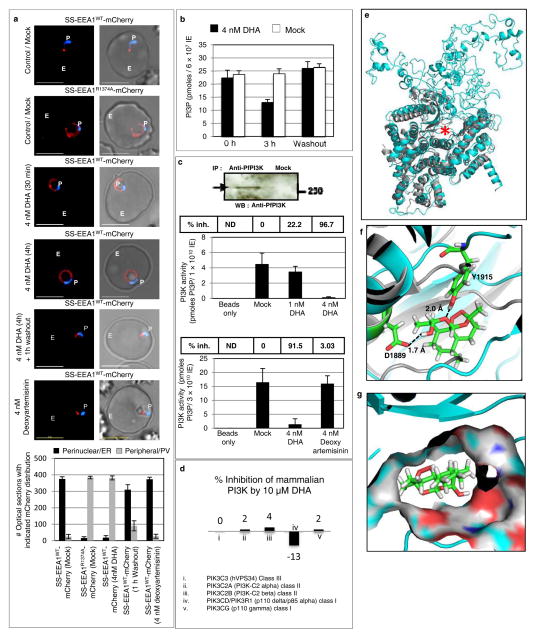
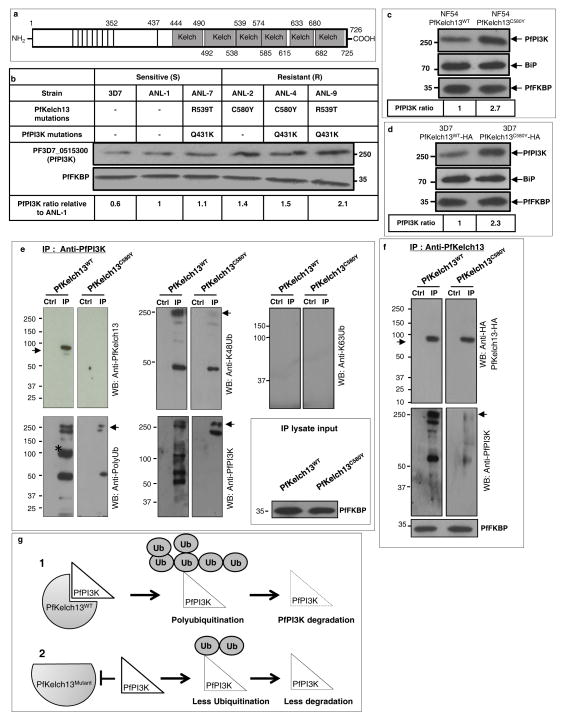
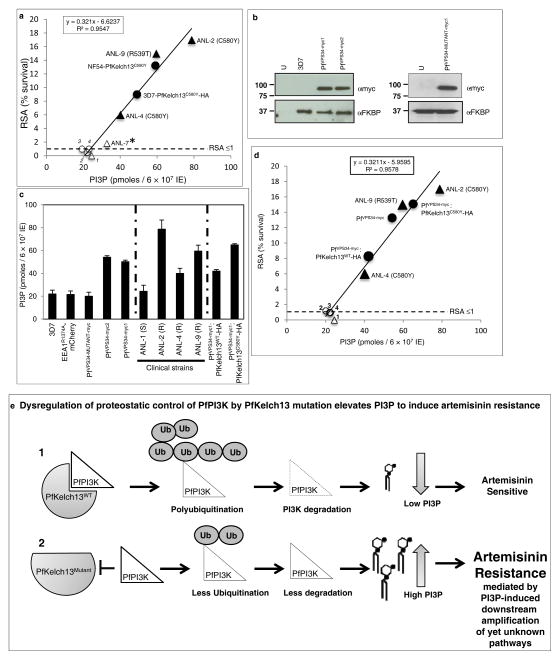
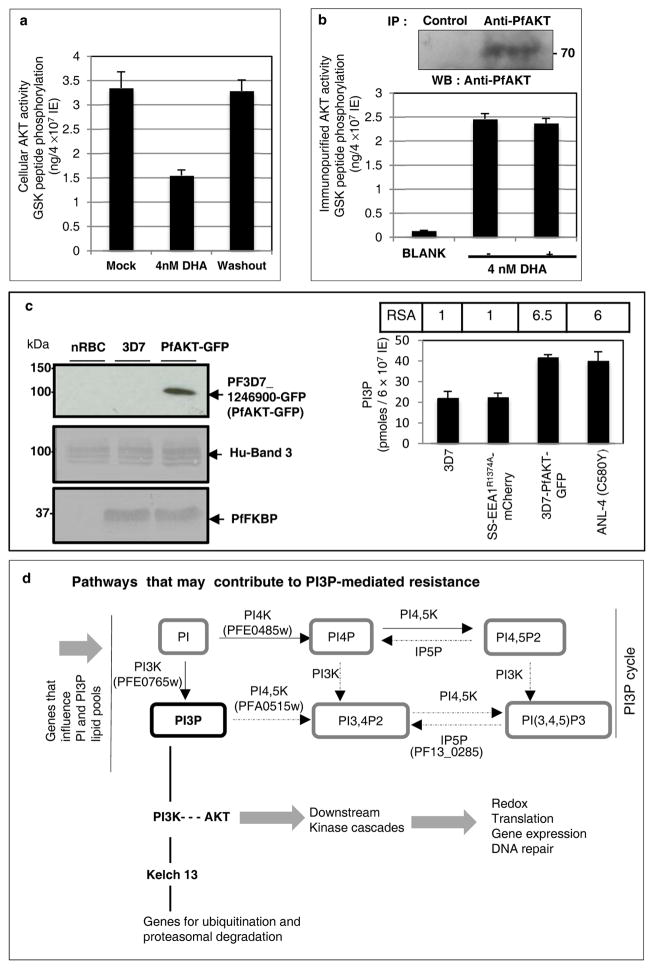
Artemisinins are the cornerstone of anti-malarial drugs. Emergence and spread of resistance to them raises risk of wiping out recent gains achieved in reducing worldwide malaria burden and threatens future malaria control and elimination on a global level. Genome-wide association studies (GWAS) have revealed parasite genetic loci associated with artemisinin resistance. However, there is no consensus on biochemical targets of artemisinin. Whether and how these targets interact with genes identified by GWAS, remains unknown. Here we provide biochemical and cellular evidence that artemisinins are potent inhibitors of Plasmodium falciparum phosphatidylinositol-3-kinase (PfPI3K), revealing an unexpected mechanism of action. In resistant clinical strains, increased PfPI3K was associated with the C580Y mutation in P. falciparum Kelch13 (PfKelch13), a primary marker of artemisinin resistance. Polyubiquitination of PfPI3K and its binding to PfKelch13 were reduced by the PfKelch13 mutation, which limited proteolysis of PfPI3K and thus increased levels of the kinase, as well as its lipid product phosphatidylinositol-3-phosphate (PI3P). We find PI3P levels to be predictive of artemisinin resistance in both clinical and engineered laboratory parasites as well as across non-isogenic strains. Elevated PI3P induced artemisinin resistance in absence of PfKelch13 mutations, but remained responsive to regulation by PfKelch13. Evidence is presented for PI3P-dependent signalling in which transgenic expression of an additional kinase confers resistance. Together these data present PI3P as the key mediator of artemisinin resistance and the sole PfPI3K as an important target for malaria elimination.
Conflict of interest statement
The authors declare no competing financial interests.
Figures
Comment in
-
Microbiology: Malaria runs rings round artemisinin.Nature. 2015 Apr 30;520(7549):628-30. doi: 10.1038/nature14387. Epub 2015 Apr 15. Nature. 2015. PMID: 25874678 No abstract available.
-
Parasite physiology: The missing link in artemisinin resistance.Nat Rev Microbiol. 2015 Jun;13(6):328. doi: 10.1038/nrmicro3487. Epub 2015 Apr 27. Nat Rev Microbiol. 2015. PMID: 25915634 No abstract available.
References
-
- WHO. World malaria report 2012. http://www.who.int/malaria/publications/world_malaria_report_2012/en/
-
- Noedl H, et al. Evidence of artemisinin-resistant malaria in western Cambodia. N Engl J Med. 2008;359:2619–2620. - PubMed
Publication types
MeSH terms
Substances
Grants and funding
LinkOut - more resources
Full Text Sources
Other Literature Sources
Molecular Biology Databases
