


Cognitive demands of lower paleolithic toolmaking
- PMID: 25875283
- PMCID: PMC4398452
- DOI: 10.1371/journal.pone.0121804
Cognitive demands of lower paleolithic toolmaking
Erratum in
-
Correction: Cognitive demands of Lower Paleolithic toolmaking.PLoS One. 2015 May 8;10(5):e0128256. doi: 10.1371/journal.pone.0128256. eCollection 2015. PLoS One. 2015. PMID: 25954933 Free PMC article. No abstract available.
Abstract
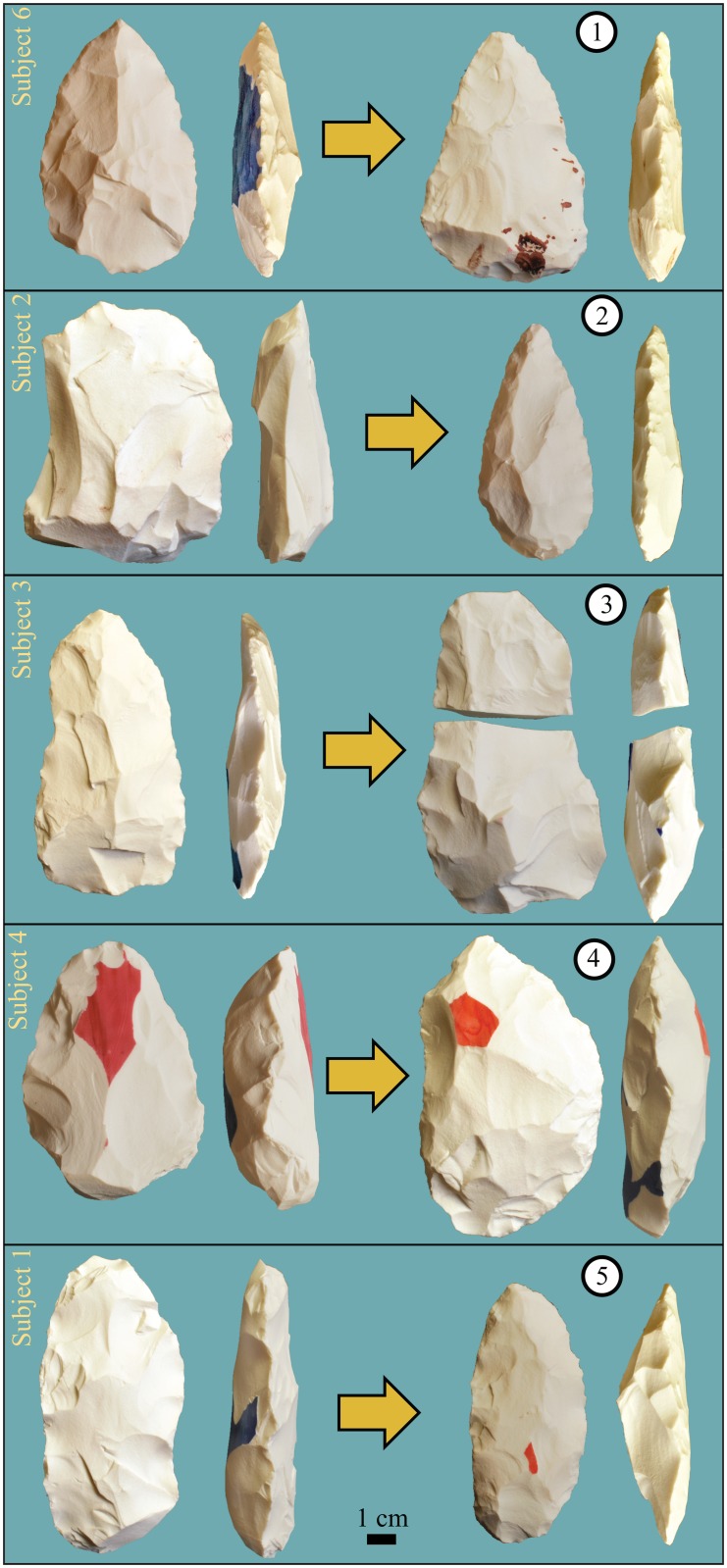
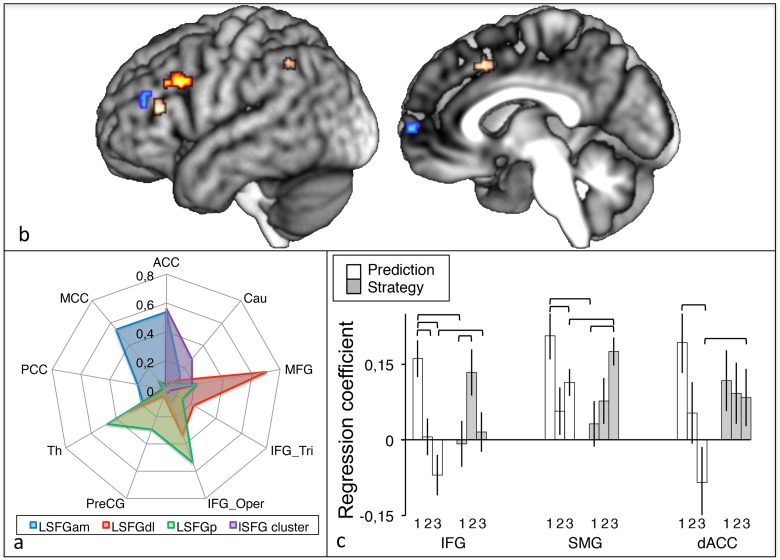
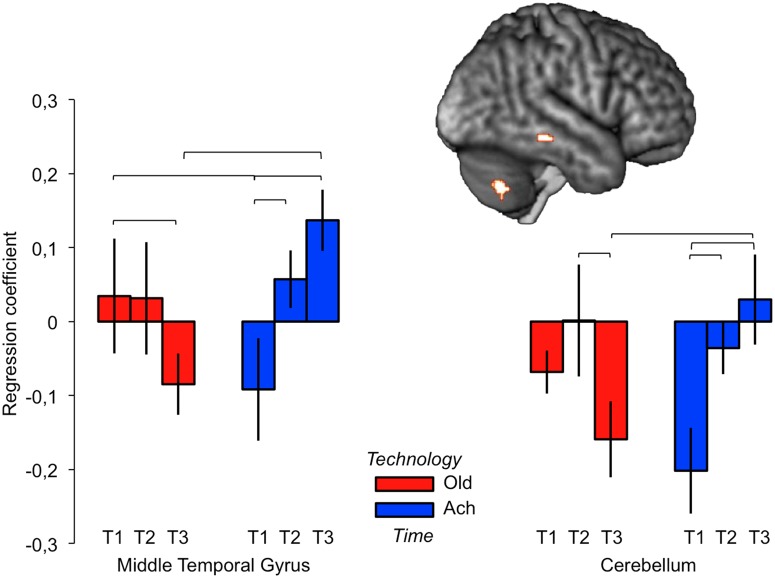
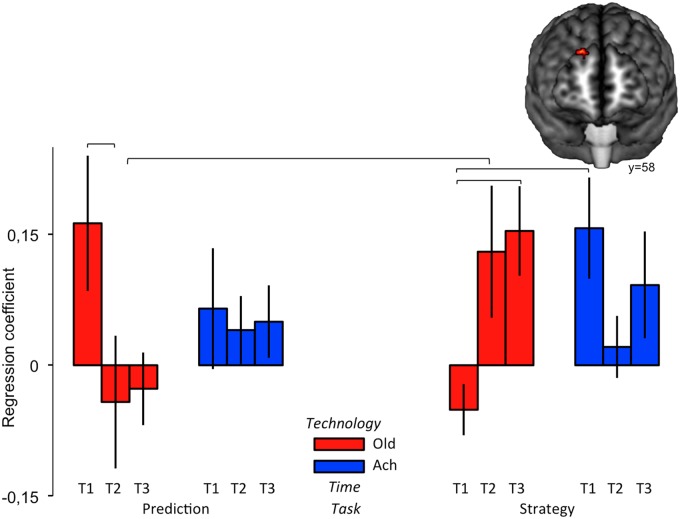
Stone tools provide some of the most abundant, continuous, and high resolution evidence of behavioral change over human evolution, but their implications for cognitive evolution have remained unclear. We investigated the neurophysiological demands of stone toolmaking by training modern subjects in known Paleolithic methods ("Oldowan", "Acheulean") and collecting structural and functional brain imaging data as they made technical judgments (outcome prediction, strategic appropriateness) about planned actions on partially completed tools. Results show that this task affected neural activity and functional connectivity in dorsal prefrontal cortex, that effect magnitude correlated with the frequency of correct strategic judgments, and that the frequency of correct strategic judgments was predictive of success in Acheulean, but not Oldowan, toolmaking. This corroborates hypothesized cognitive control demands of Acheulean toolmaking, specifically including information monitoring and manipulation functions attributed to the "central executive" of working memory. More broadly, it develops empirical methods for assessing the differential cognitive demands of Paleolithic technologies, and expands the scope of evolutionary hypotheses that can be tested using the available archaeological record.
Conflict of interest statement
Figures


References
-
- Coolidge F, Wynn JG. Working Memory, its Executive Functions, and the Emergence of Modern Thinking. Cambridge Archaeological Journal. 2005;15(1):5–26.
-
- Deacon TW. The symbolic species: The co-evolution of language and the brain. New York: W.W. Norton; 1997.
-
- Amati D, Shallice T. On the emergence of modern humans. Cognition. 2007;103(3):358–85. - PubMed
-
- Engels F. The part played by labour in the transition from ape to man In: Scharff RC, Dusek V, editors. Philosophy of Technology. London: Blackwell; 2003. p. 71–7.
Publication types
MeSH terms
LinkOut - more resources
Full Text Sources
Other Literature Sources
