


Improved infrared-sensing running wheel systems with an effective exercise activity indicator
- PMID: 25875841
- PMCID: PMC4395283
- DOI: 10.1371/journal.pone.0122394
Improved infrared-sensing running wheel systems with an effective exercise activity indicator
Abstract
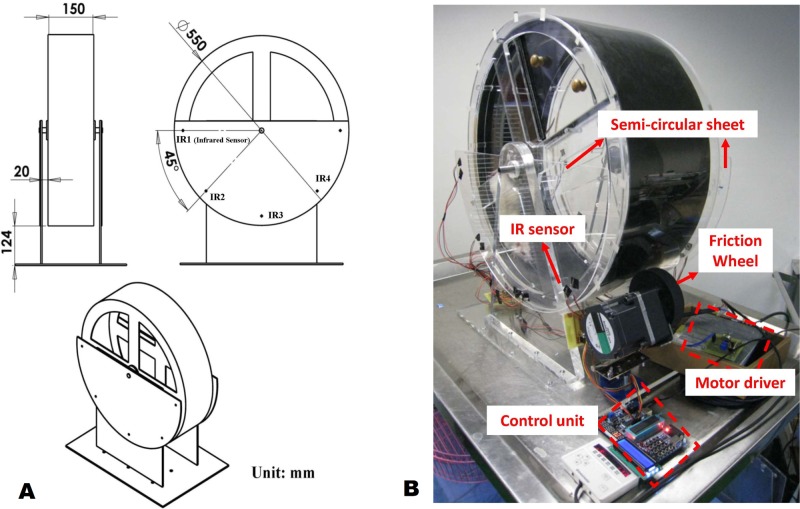
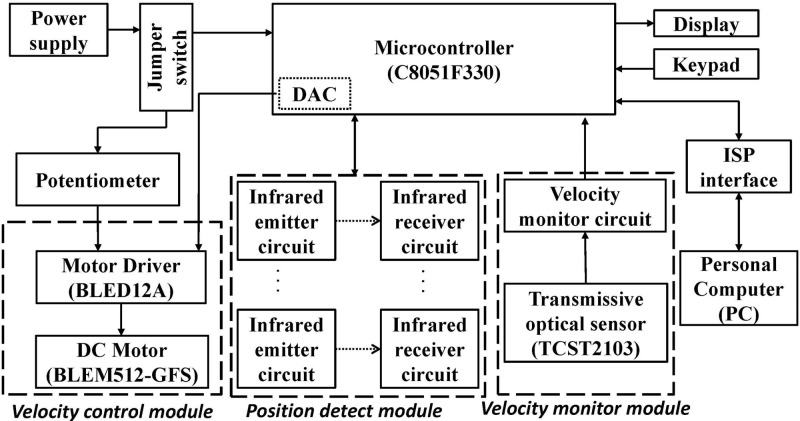
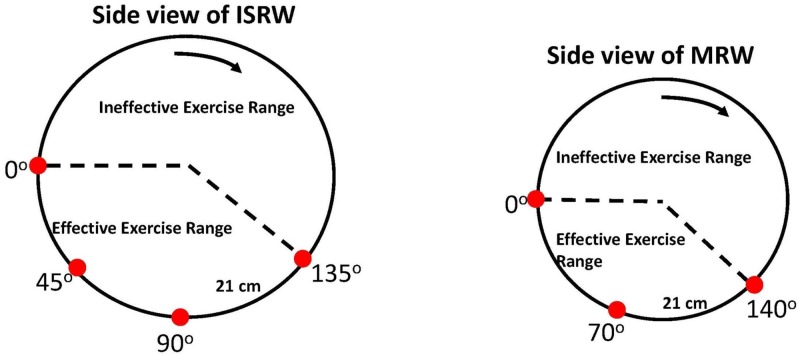
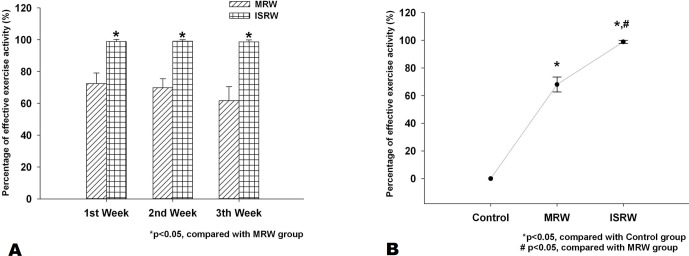
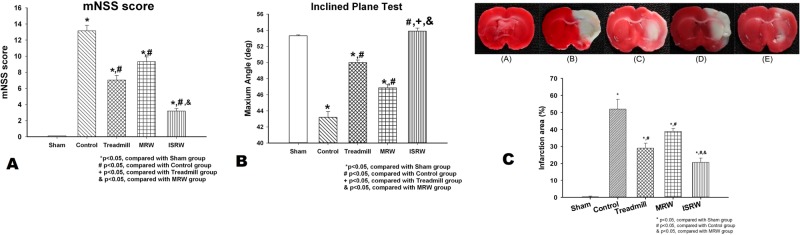
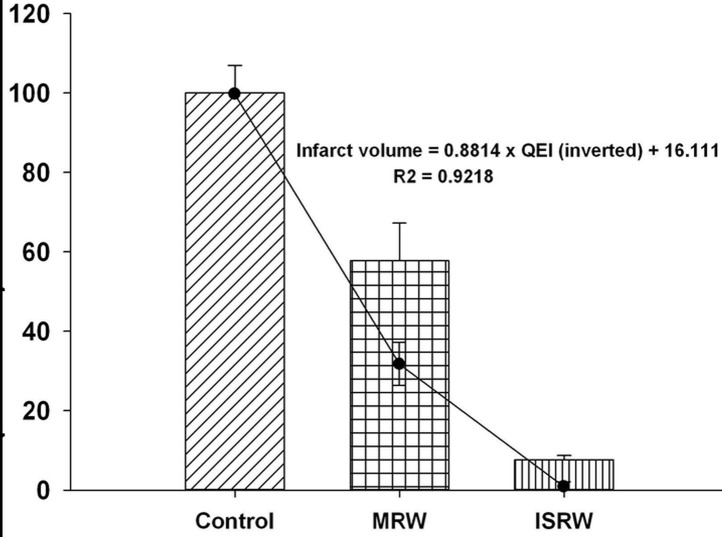
This paper describes an infrared-sensing running wheel (ISRW) system for the quantitative measurement of effective exercise activity in rats. The ISRW system provides superior exercise training compared with commercially available traditional animal running platforms. Four infrared (IR) light-emitting diode/detector pairs embedded around the rim of the wheel detect the rat's real-time position; the acrylic wheel has a diameter of 55 cm and a thickness of 15 cm, that is, it is larger and thicker than traditional exercise wheels, and it is equipped with a rubber track. The acrylic wheel hangs virtually frictionless, and a DC motor with an axially mounted rubber wheel, which has a diameter of 10 cm, drives the acrylic wheel from the outer edge. The system can automatically train rats to run persistently. The proposed system can determine effective exercise activity (EEA), with the IR sensors (which are connected to a conventional PC) recording the rat exercise behavior. A prototype of the system was verified by a hospital research group performing ischemic stroke experiments on rats by considering middle cerebral artery occlusion. The experimental data demonstrated that the proposed system provides greater neuroprotection in an animal stroke model compared with a conventional treadmill and a motorized running wheel for a given exercise intensity. The quantitative exercise effectiveness indicator showed a 92% correlation between an increase in the EEA and a decrease in the infarct volume. This indicator can be used as a noninvasive and objective reference in clinical animal exercise experiments.
Conflict of interest statement
Figures
References
-
- Colcombe SJ, Kramer AF. (2003) Fitness effects on the cognitive function of older adults: a meta-analytic study. Psychol Sci 14: 125–130. - PubMed
-
- Fabel K, Fabel K, Tam B, Kaufer D, Baiker A, Simmons N, Kuo CJ, Palmer TD. (2003) VEGF is necessary for exercise-induced adult hippocampal neurogenesis. Eur J Neurosci 18: 2803–2812. - PubMed
-
- Hillman CH, Erickson KI, Kramer AF. (2008) Be smart, exercise your heart: exe - PubMed
MeSH terms
LinkOut - more resources
Full Text Sources
Other Literature Sources
