


Spontaneous Self-Distancing and Adaptive Self-Reflection Across Adolescence
- PMID: 25876213
- PMCID: PMC4607548
- DOI: 10.1111/cdev.12370
Spontaneous Self-Distancing and Adaptive Self-Reflection Across Adolescence
Abstract
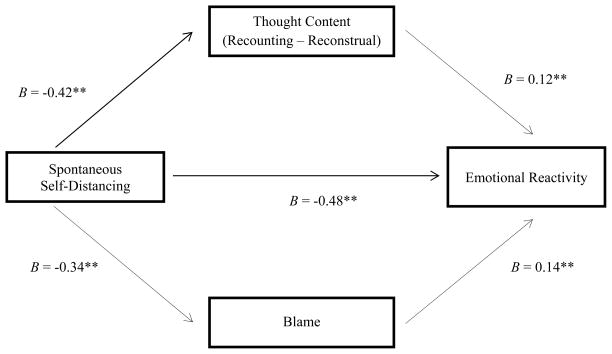
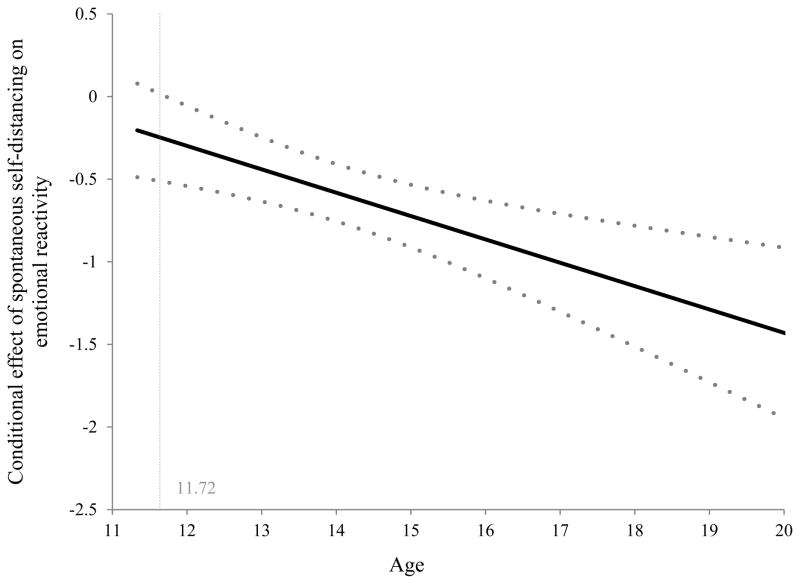
Experiments performed primarily with adults show that self-distancing facilitates adaptive self-reflection. However, no research has investigated whether adolescents spontaneously engage in this process or whether doing so is linked to adaptive outcomes. In this study, 226 African American adolescents, aged 11-20, reflected on an anger-related interpersonal experience. As expected, spontaneous self-distancing during reflection predicted lower levels of emotional reactivity by leading adolescents to reconstrue (rather than recount) their experience and blame their partner less. Moreover, the inverse relation between self-distancing and emotional reactivity strengthened with age. These findings highlight the role that self-distancing plays in fostering adaptive self-reflection in adolescence, and begin to elucidate the role that development plays in enhancing the benefits of engaging in this process.
© 2015 The Authors. Child Development © 2015 Society for Research in Child Development, Inc.
Figures
References
-
- Carlson SM, Zelazo PD. Symbolic thought. In: Haith MM, Benson JB, editors. Encyclopedia of infant and early childhood development. Boston MA: Elsevier/Academic Press; 2008. pp. 288–297.
-
- Cocking RR, Renninger KA. The development and meaning of psychological distance. Hillsdale, NJ: Lawrence Erlbaum; 1993.
Grants and funding
LinkOut - more resources
Full Text Sources
Other Literature Sources
Research Materials
