


Who cares? Implications of care-giving and -receiving by HIV-infected or -affected older people on functional disability and emotional wellbeing
- PMID: 25878367
- PMCID: PMC4301198
- DOI: 10.1017/S0144686X13000615
Who cares? Implications of care-giving and -receiving by HIV-infected or -affected older people on functional disability and emotional wellbeing
Abstract
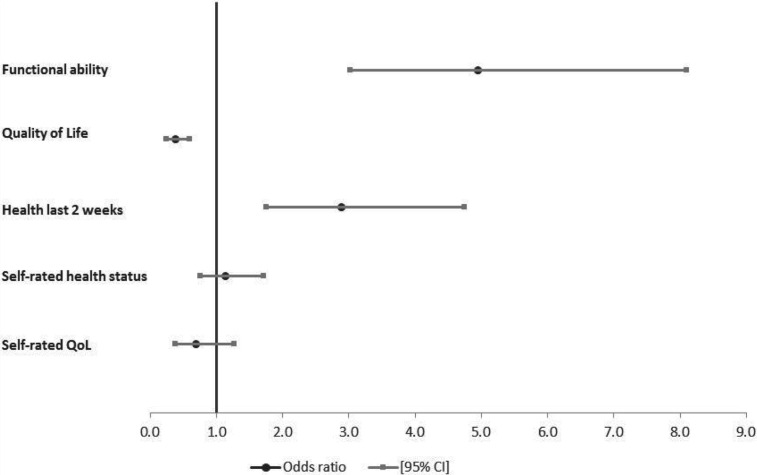
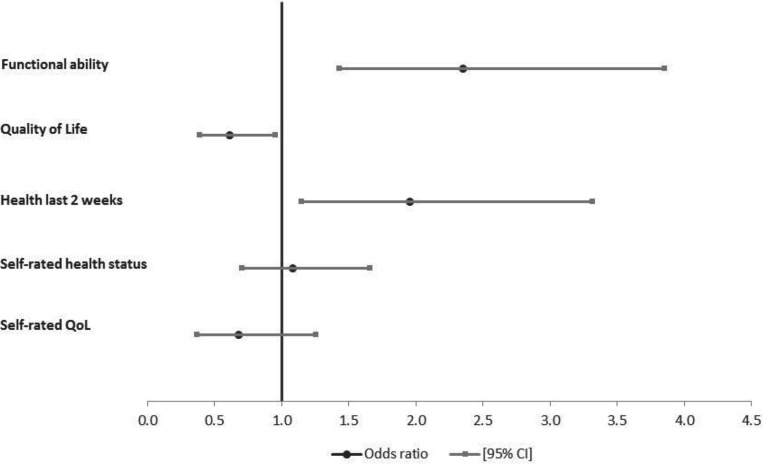
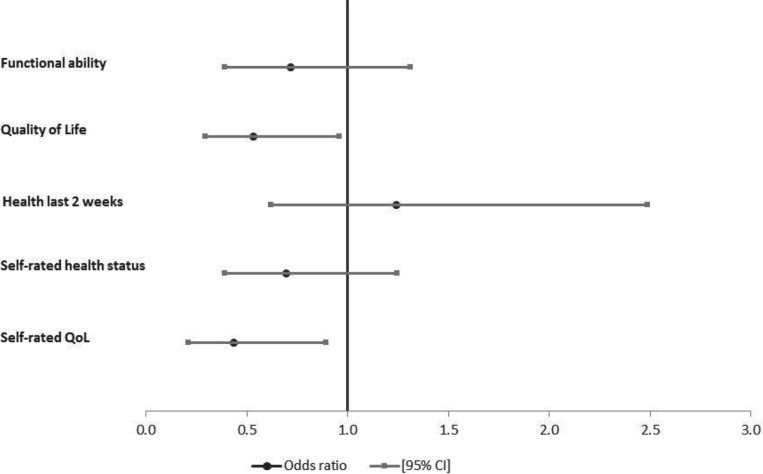
This paper examines how care-giving to adults and/or children and care-receiving is associated with the health and wellbeing of older people aged 50+ in rural South Africa. Data used are from a cross-sectional survey adapted from World Health Organization's Study on Global Ageing and Adult Health (SAGE) conducted in 2009/10 in rural South Africa. Bivariate statistics and multivariate logistical regression were used to assess the relationship between care-giving and/or care-receiving with functional disability, quality of life or emotional wellbeing, and self-rated health status, adjusted for socio-demographic factors. Sixty-three per cent of 422 older people were care-givers to at least one young adult or child; 27 per cent of older people were care-givers due to HIV-related reasons in young adults; 84 per cent of participants were care-recipients mainly from adult children, grandchildren and spouse. In logistic regressions adjusting for sex, age, marital status, education, receipt of grants, household headship, household wealth and HIV status, care-giving was statistically significantly associated with good functional ability as measured by ability to perform activities of daily living. This relationship was stronger for older people providing care-giving to adults than to children. In contrast, care-givers were less likely to report good emotional wellbeing; again the relationship was stronger for care-givers to adults than children. Simultaneous care-giving and -receiving was likewise associated with good functional ability, but about a 47 per cent lower chance of good emotional wellbeing. Participants who were HIV-infected were more likely to be in better health but less likely to be receiving care than those who were HIV-affected. Our findings suggest a strong relationship between care-giving and poor emotional wellbeing via an economic or psychological stressor pathway. Interventions that improve older people's socio-economic circumstances and reduce financial hardship as well as those that provide social support would go some way towards mitigating this relationship.
Keywords: HIV-infected; South Africa; care-giving; emotional wellbeing; functional disability; older people; self-reported health.
Figures
References
-
- Abad-Corpa E., Gonzalez-Gil T., Martinez-Hernandez A., Barderas-Manchado A. M., De la Cuesta-Benjumea C., Monistrol-Ruano O. and Mahtani-Chugani V. 2012. Caring to achieve the maximum independence possible: a synthesis of qualitative evidence on older adults’ adaptation to dependency. Journal of Clinical Nursing, 21, 21/22, 3153–69. - PubMed
-
- Aboderin I. 2004. Decline in material family support for older people in urban Ghana, Africa: understanding processes and causes of change. Journals of Gerontology: Psychological Sciences and Social Sciences, 59B, 3, S128–37. - PubMed
-
- Aboderin I. 2005. Changing family relationships in developing countries In Johnson M. L., Bengston V. L., Coleman P. G. and Kirkwood T. B. L. (eds), Age and Ageing. Cambridge University Press, Cambridge, 469–75.
-
- Agyarko R. D., Kalache A. and Kowal P. 2000. Older people, children and the HIV/AIDS nexus. Paper presented at the XIII International AIDS Conference, 9–14 July, Durban, South Africa.
-
- Agyarko R. D., Madzingira N., Mupedziswa R., Mujuru N., Kanyowa L. and Matorofa J. 2002. Impact of AIDS on Older People in Africa: Zimbabwe Case Study. World Health Organization, Geneva.
Grants and funding
LinkOut - more resources
Full Text Sources
Other Literature Sources