


Shortness of filum terminale represents an anatomical specific feature in fibromyalgia: a nuclear magnetic resonance and clinical study
- PMID: 25878985
- PMCID: PMC4396674
Shortness of filum terminale represents an anatomical specific feature in fibromyalgia: a nuclear magnetic resonance and clinical study
Abstract
Background: we aimed to assess whether shortness of filum terminale (FT) can represent a specific feature of fibromyalgia. Therefore we investigated benefits coming from FT section with a mini-invasive technique in patients with fibromyalgia. Filum terminale disease (FD), described firstly in 1996, is consequence of an abnormal traction exerted on spinal cord since FT is shorter than usual. Fibromyalgia syndrome (FS) is featured by chronic widespread musculoskeletal pain associated with stiffness and extra-skeletal symptoms affecting many organs and systems. Filum terminale disease and fibromyalgia syndrome share common clinical features in at least one subset of patients.
Methods: we evaluated 42 patients firstly diagnosed for FS and then re-evaluated by nuclear magnetic resonance. 38 out of 42 had also FD and 20 of them underwent surgical treatment, i.e., FT section according to Royo-Salvador technique.
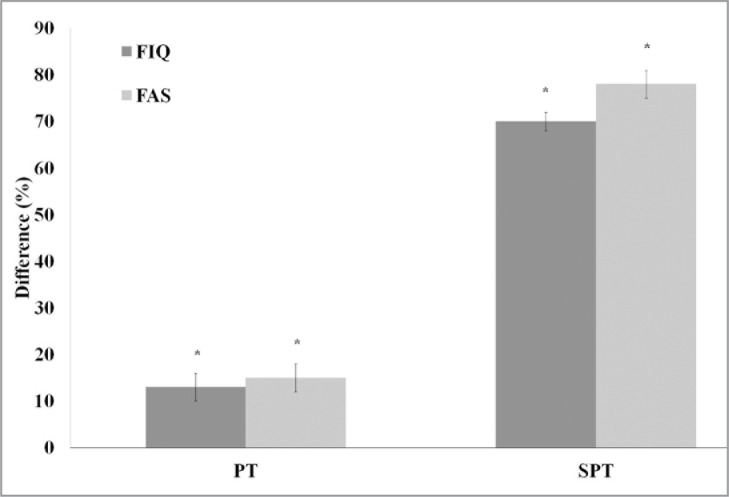
Results: after physical therapy, surgically treated patients showed significant improvement of symptoms in terms of reduction of pain and increment of quality of life, compared to group, which refused surgery and performed physical therapy only.
Conclusion: we suggest that FT shortness can be considered one of predisposing causes for developing FS and that FD surgical treatment in patients with FS can improve overall treatment outcome.
Keywords: anatomical modification; fibromyalgia assessment status; fibromyalgia impact questionnaire; mini-invasive surgery; musculo-skeletal disorder; physical therapy.
Figures

References
-
- Royo-Salvador MB. Syringomyelia, scoliosis and idiopathic Arnold-Chiari malformations: a common etiology. Rev Neurol. 1996a;24:937–959. - PubMed
-
- Royo-Salvador MB. Platybasia, basilar groove, odontoid process and kinking of the brainstem: a common etiology with idiopathic syringomyelia, scoliosis and Chiari malformations. Rev Neurol. 1996b;24:1241–1250. - PubMed
-
- Yamada S, Zinke DE, Sanders D. Pathophysiology of “tethered cord syndrome”. J Neurosurg. 1981;54:494–503. - PubMed
-
- Royo-Salvador MB. A new surgical treatment for syringomyelia, scoliosis, Arnold-Chiari malformation, kinking of the brainstem, odontoid recess, idiopathic basilar impression and platybasia. Rev Neurol. 1997;140:523–530. - PubMed
-
- Cazzola M, Sarzi Puttini P, Stisi S, et al. Fibromyalgia syndrome: definition and diagnostic aspects. Reumatismo. 2008;60:3–14. - PubMed
LinkOut - more resources
Full Text Sources