


The impact of cochlear implantation on cognition in older adults: a systematic review of clinical evidence
- PMID: 25879461
- PMCID: PMC4348398
- DOI: 10.1186/s12877-015-0014-3
The impact of cochlear implantation on cognition in older adults: a systematic review of clinical evidence
Abstract
Background: Hearing loss is the third most prevalent chronic condition faced by older adults and has been linked to difficulties in speech perception, activities of daily living, and social interaction. Recent studies have suggested a correlation between severity of hearing loss and an individual's cognitive function; however, a causative link has yet to be established. One intervention option for management of the most severe to profound hearing loss in older adults is cochlear implantation. We performed a review to determine the status of the literature on the potential influence of cochlear implantation on cognition in the older adult population.
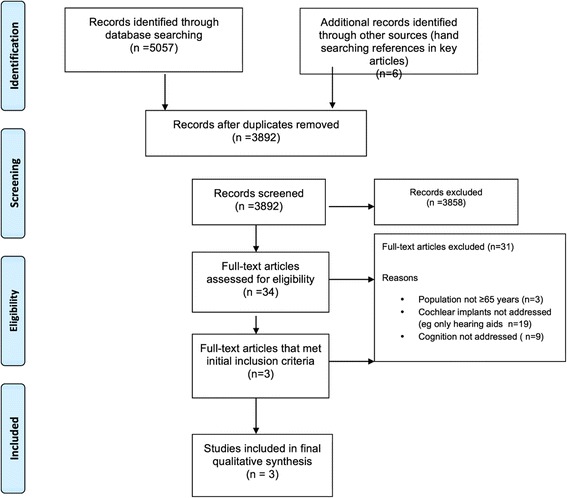
Methods: Over 3800 articles related to cochlear implants, cognition, and older adults were reviewed. Inclusion criteria were as follows: (1) study population including adults > 65 years, (2) intervention with cochlear implantation, and (3) cognition as the primary outcome measure of implantation.
Results: Out of 3,886 studies selected, 3 met inclusion criteria for the review.
Conclusions: While many publications have shown that cochlear implants improve speech perception, social functioning, and overall quality of life, we found no studies in the English literature that have prospectively evaluated changes in cognitive function after implantation with modern cochlear implants in older adults. The state of the current literature reveals a need for further clinical research on the impact of cochlear implantation on cognition in older adults.
Figures
References
Publication types
MeSH terms
LinkOut - more resources
Full Text Sources
Other Literature Sources
Medical
Miscellaneous
