


Relative benefit-risk comparing diclofenac to other traditional non-steroidal anti-inflammatory drugs and cyclooxygenase-2 inhibitors in patients with osteoarthritis or rheumatoid arthritis: a network meta-analysis
- PMID: 25879879
- PMCID: PMC4411793
- DOI: 10.1186/s13075-015-0554-0
Relative benefit-risk comparing diclofenac to other traditional non-steroidal anti-inflammatory drugs and cyclooxygenase-2 inhibitors in patients with osteoarthritis or rheumatoid arthritis: a network meta-analysis
Abstract
Introduction: There is argument over the benefits and risks of drugs for treating chronic musculoskeletal pain. This study compared the efficacy, safety, and tolerability of diclofenac, ibuprofen, naproxen, celecoxib, and etoricoxib for patients with pain caused by osteoarthritis (OA) or rheumatoid arthritis (RA).
Methods: A systematic literature review used Medline and EMBASE to identify randomised controlled trials. Efficacy outcomes assessed included: pain relief measured by visual analogue scale (VAS); Western Ontario McMaster Universities Arthritis Index (WOMAC) VAS or WOMAC Likert scale; physical functioning measured by WOMAC VAS or Likert scale; and patient global assessment (PGA) of disease severity measured on VAS or 5-point Likert scale. Safety outcomes included: Antiplatelet Trialists' Collaboration (APTC), major cardiovascular (CV) and major upper gastrointestinal (GI) events, and withdrawals. Data for each outcome were synthesized by a Bayesian network meta-analysis (NMA). For efficacy assessments, labelled doses for OA treatment were used for the base case while labelled doses for RA treatment were also included in the sensitivity analysis. Pooled data across dose ranges were used for safety.
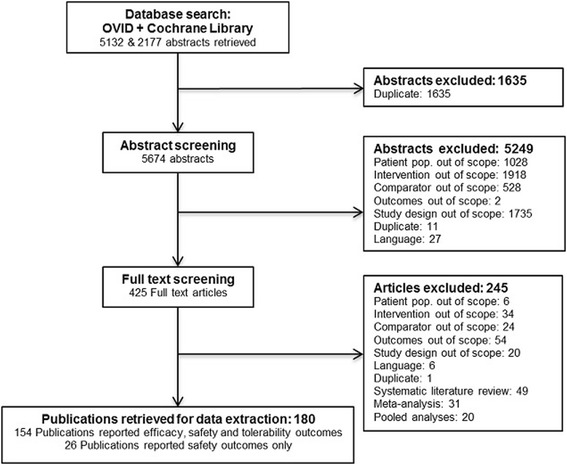
Results: Efficacy, safety, and tolerability data were found for 146,524 patients in 176 studies included in the NMA. Diclofenac (150 mg/day) was likely to be more effective in alleviating pain than celecoxib (200 mg/day), naproxen (1000 mg/day), and ibuprofen (2400 mg/day), and similar to etoricoxib (60 mg/day); a lower dose of diclofenac (100 mg/day) was comparable to all other treatments in alleviating pain. Improved physical function with diclofenac (100 and 150 mg/day) was mostly comparable to all other treatments. PGA with diclofenac (100 and 150 mg/day) was likely to be more effective or comparable to all other treatments. All active treatments were similar for APTC and major CV events. Major upper GI events with diclofenac were lower compared to naproxen and ibuprofen, comparable to celecoxib, and higher than etoricoxib. Risk of withdrawal with diclofenac was lower compared to ibuprofen, similar to celecoxib and naproxen, and higher than etoricoxib.
Conclusions: The benefit-risk profile of diclofenac was comparable to other treatments used for pain relief in OA and RA; benefits and risks vary in individuals and need consideration when making treatment decisions.
Figures



References
-
- Callahan LF. The burden of rheumatoid arthritis: facts and figures. J Rheumatol Suppl. 1998;53:8–12. - PubMed
Publication types
MeSH terms
Substances
LinkOut - more resources
Full Text Sources
Other Literature Sources
Medical
Research Materials
