Comparative Study
. 2015 Feb;21(2):119-28.

Did Medicare Part D reduce disparities?

Affiliations
Comparative Study

Did Medicare Part D reduce disparities?

Julie Zissimopoulos et al. Am J Manag Care. 2015 Feb.

Abstract

Objectives: We assessed whether Medicare Part D reduced disparities in access to medication.

Study design: Secondary data analysis of a 20% sample of Medicare beneficiaries, using Parts A and B medical claims from 2002 to 2008 and Part D drug claims from 2006 to 2008.

Methods: We analyzed the medication use of Hispanic, black, and white beneficiaries with diabetes before and after reaching the Part D coverage gap, and compared their use with that of race-specific reference groups not exposed to the loss in coverage. Unadjusted difference-in-difference results were validated with multivariate regression models adjusted for demographics, comorbidities, and zip code-level household income used as a proxy for socioeconomic status.

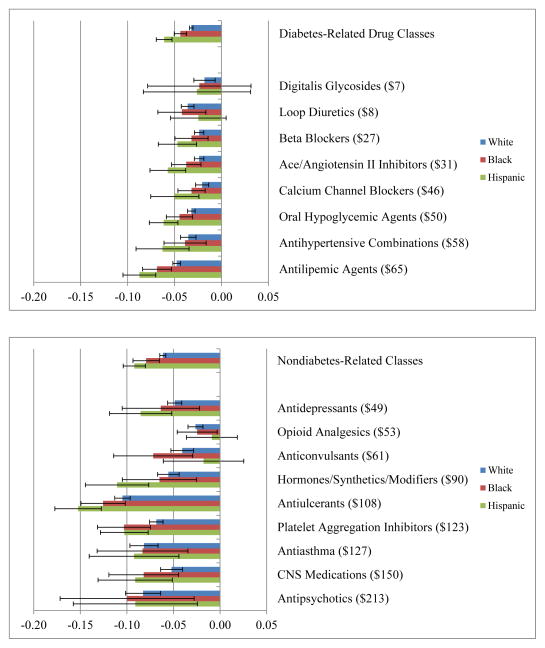
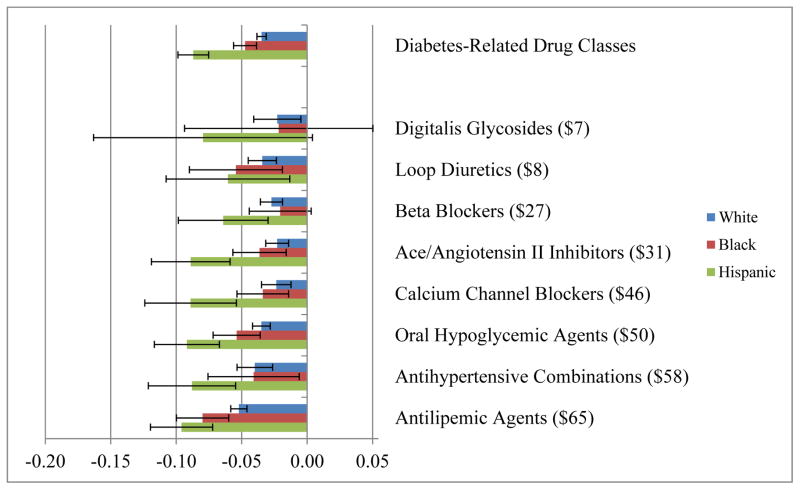
Results: The rate at which Hispanics reduced use of diabetes-related medications in the coverage gap was twice as high as whites, while blacks decreased their use of diabetes-related medications by 33% more than whites. The reduction in medication use was correlated with drug price. Hispanics and blacks were more likely than whites to discontinue a therapy after reaching the coverage gap but more likely to resume once coverage restarted. Hispanics without subsidies and living in low-income areas reduced medication use more than similar blacks and whites in the coverage gap.

Conclusions: We found that the Part D coverage gap is particularly disruptive to minorities and those living in low-income areas. The implications of this work suggest that protecting the health of vulnerable groups requires more than premium subsidies. Patient education may be a first step, but more substantive improvements in adherence may require changes in healthcare delivery.


Conflict of interest statement

Conflicts of Interest: None of the authors have any relevant conflicts of interest.

Figures

Figure 1
Figure 1
Regression Adjusted Difference-in-Difference in Medication Use (MPR), by Therapeutic Class and Race (percentage point) MPR refers to the Medication Possession Ratio, which is the fraction of days that a patient “possesses” or has access to medication, as measured by prescription fills. “CNS medications” refers to central nervous system medications. Changes are based on results from multivariate models which control for age, age-squared, gender, comorbid conditions, and socioeconomic status. Prices shown reflect the average price paid in the sample for a 30-day supply of medication in the therapeutic class. Diabetes-related drug classes: Whites who received the low-income subsidy (LIS): n=74,452; Whites who did not receive the low-income subsidy (non-LIS): n=115,333; LIS blacks: n=26,140; Non-LIS blacks: n=6,131; LIS Hispanics: n=29,113; Non-LIS Hispanics: n=4,311. Nondiabetes-related drug classes: LIS whites: n=65,062; Non-LIS whites: n=89,927; LIS blacks: n=21,337; Non-LIS blacks: n=4,373; LIS Hispanics: n=25,083; Non-LIS Hispanics: n=3,464.
Figure 2
Figure 2
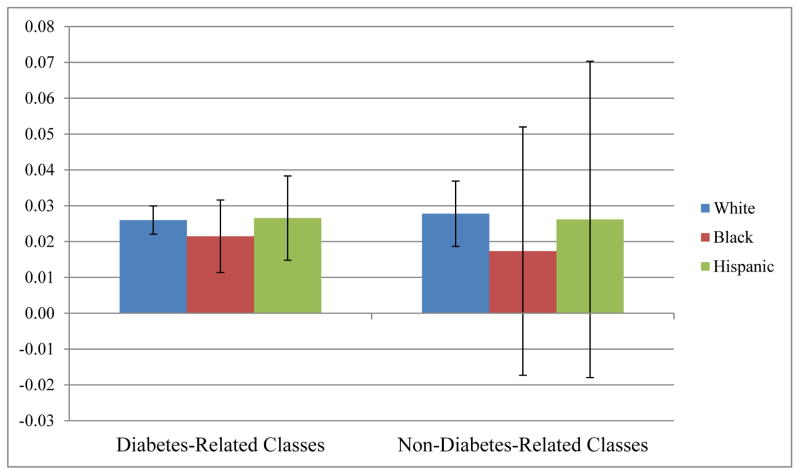
Regression Adjusted Difference-in-Difference in Use of Generic Substitutes (GDR), by Race (percentage point) GDR refers to the Generic Dispensing Rate. Changes are based on results from multivariate models which control for age, age-squared, gender, comorbid conditions, and socioeconomic status. GDR for ACE/ARB class is for ACE Inhibitors only since ARB class is brand-dominated. This analysis is limited to therapeutic classes which are neither brand nor generic-dominated. Diabetes-related classes include: oral hypoglycemic agents, ACE inhibitors, calcium channel blockers, diuretics, beta blockers, angiotensin II receptor blockers (ARBs), statins, digitalis glycosides, and combination antihypertensives. ACE inhibitors and ARBs are combined into a single class because they are commonly considered therapeutically interchangeable. The set of other drugs consists of the nine most prevalent nondiabetes-related classes used by this set of beneficiaries: platelet aggregation inhibitors and antiulcerants. Diabetes-related drug classes: Whites who received the low-income subsidy (LIS): n=70,284; Whites who did not receive the low-income subsidy (non-LIS): n=104,784; LIS blacks: n=24,412; Non-LIS blacks: n=5,475; LIS Hispanics: n=27,159; Non-LIS Hispanics: n=3,736. Nondiabetes-related drug classes: LIS whites: n=61,860; Non-LIS whites: n=76,652; LIS blacks: n=19,054; Non-LIS blacks: n=3,339; LIS Hispanics: n=22,485; Non-LIS Hispanics: n=2,668.
Figure 3
Figure 3
Regression Adjusted Difference-in-Difference in Medication Use (MPR), by Therapeutic Class and Race for the Near-Poor Population MPR refers to the Medication Possession Ratio, which is the fraction of days that a patient “possesses” or has access to medication, as measured by prescription fills. Changes are based on results from multivariate models which control for age, age-squared, gender, comorbid conditions, and socioeconomic status. Prices shown reflect the average price paid in the sample for a 30-day supply of medication in the therapeutic class. ACE inhibitors and ARBs are combined into a single class because they are commonly considered therapeutically interchangeable. We defined the “near-poor” as white, black and Hispanics beneficiaries residing in zip codes with a median household income below $25,000 (the bottom quartile of the sample’s income distribution). Whites who received the low-income subsidy (LIS): n=74,452; Whites who did not receive the low-income subsidy (non-LIS): n=115,333; LIS blacks: n=26,140; Non-LIS blacks: n=6,131; LIS Hispanics: n=29,113; Non-LIS Hispanics: n=4,311

References

    1. KRC Research; KRC Research, editor; KRC Research, translator. Seniors’ Opinions About Medicare Rx: Sixth Year Update. Washington, DC: KRC Research; 2011.
    1. Joyce GF, Zissimopoulos J, Goldman DP. Digesting the doughnut hole. J Health Econ. 2013 - PMC - PubMed
    1. Goldman DP, Smith JP. Can patient self-management help explain the SES health gradient? Proc Natl Acad Sci U S A. 2002;99(16):10929–10934. - PMC - PubMed
    1. Haviland AM, Elliott MN, Weech-Maldonado R, Hambarsoomian K, Orr N, Hays RD. Racial/ethnic disparities in Medicare Part D experiences. Med Care. 2012;50:S40–S47. - PMC - PubMed
    1. Group TDCaCTR. The effect of intensive treatment of diabetes on the development and progression of long-term complications in insulin-dependent diabetes mellitus. New Engl J Med. 1993;329(14):977–986. - PubMed

Publication types

MeSH terms

Substances