


The changes in clot microstructure in patients with ischaemic stroke and the effects of therapeutic intervention: a prospective observational study
- PMID: 25885595
- PMCID: PMC4367933
- DOI: 10.1186/s12883-015-0289-1
The changes in clot microstructure in patients with ischaemic stroke and the effects of therapeutic intervention: a prospective observational study
Abstract
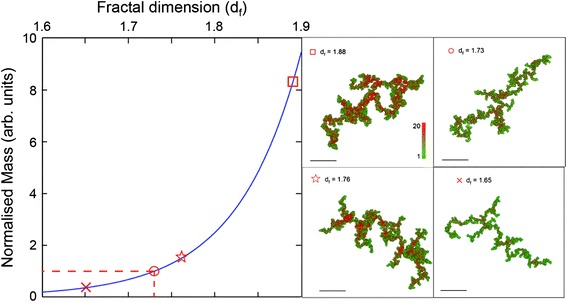
Background: Stroke is the second largest cause of death worldwide. Hypercoagulability is a key feature in ischaemic stroke due to the development of an abnormally dense clot structure but techniques assessing the mechanics and quality of clot microstructure have limited clinical use. We have previously validated a new haemorheological technique using three parameters to reflect clot microstructure (Fractal Dimension (d f )) ex-vivo, real-time clot formation time (T GP ) and blood clot strength (elasticity at the gel point (G'GP)). We aimed to evaluate these novel clotting biomarkers in ischaemic stroke and changes of clot structure following therapeutic intervention.
Methods: In a prospective cohort study clot microstructure was compared in ischaemic stroke patients and a control group of healthy volunteers. Further assessment took place at 2-4 hours and at 24 hours after therapeutic intervention in the stroke group to assess the effects of thrombolysis and anti-platelet therapy.
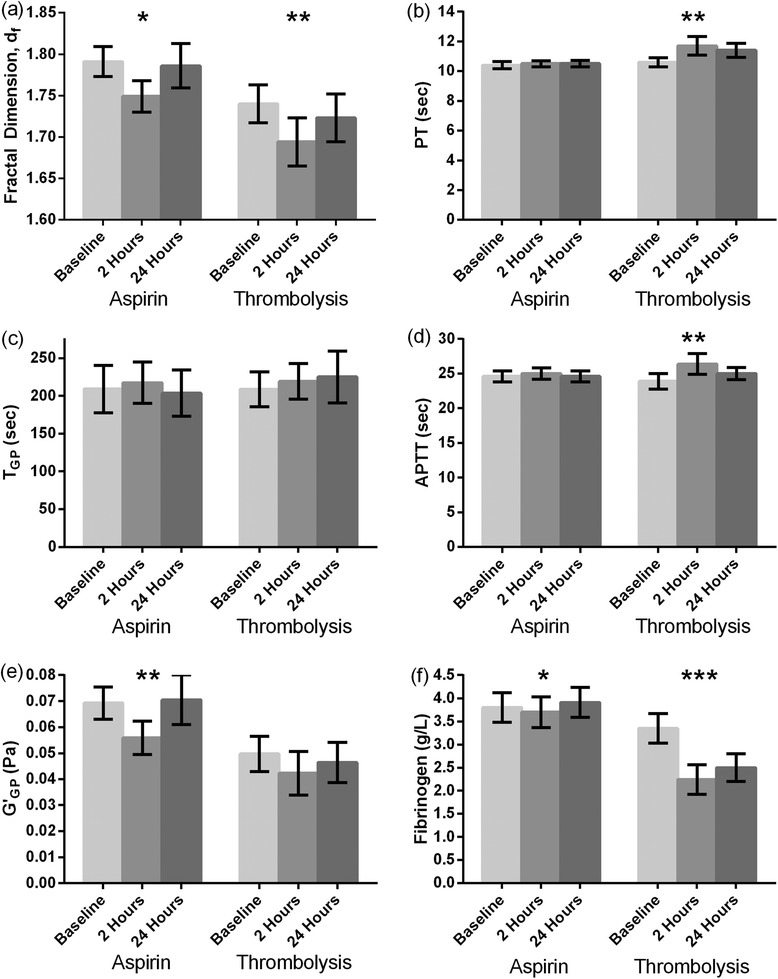
Results: 75 patients (mean age 72.8 years [SD 13.1]; 47 male, 28 female) with ischaemic stroke were recruited. Of the 75 patients, 32 were thrombolysed with t-PA and 43 were loaded with 300 mg aspirin. The following parameters were significantly different between patients with stroke and the 74 healthy subjects: d f (1.760 ± .053 versus 1.735 ± 0.048, p = 0.003), TGP (208 ± 67 versus 231 ± 75, p = 0.05), G'GP (0.056 ± 0.017 versus 0.045 ± 0.014, p < 0.0001) and fibrinogen (3.7 ± 0.8 versus 3.2 ± 0.5, p < 0.00001). There was a significant decrease in d f (p = 0.02), G'GP (p = 0.01) and fibrinogen (p = 0.01) following the administration of aspirin and for d f (p = 0.003) and fibrinogen (p < 0.001) following thrombolysis as compared to baseline values.
Conclusion: Patients with ischaemic stroke have denser and stronger clot structure as detected by d f and G'GP. The effect of thrombolysis on clot microstructure (d f ) was more prominent than antiplatelet therapy. Further work is needed to assess the clinical and therapeutic implications of these novel biomarkers.
Figures
References
-
- WHO. The top ten causes of death (2012). http://www.who.int/mediacentre/factsheets/fs310/en/ Accessed March 3 2014.
-
- Scott EM, Ariens RA, Grant PJ. Genetic and environmental determinants of fibrin structure and function: Relevance to clinical disease. Arterioscler Thromb Vasc Biol. 2004;24:1558–66. doi: 10.1161/01.ATV.0000136649.83297.bf. - DOI - PubMed
Publication types
MeSH terms
Substances
LinkOut - more resources
Full Text Sources
Other Literature Sources
Medical
