


Personal and environmental factors to consider when aiming to improve participation in physical activity in children with Spina Bifida: a qualitative study
- PMID: 25886148
- PMCID: PMC4336512
- DOI: 10.1186/s12883-015-0265-9
Personal and environmental factors to consider when aiming to improve participation in physical activity in children with Spina Bifida: a qualitative study
Abstract
Background: Youth with spina bifida (SB) are less fit and active than other groups with childhood disability. While recent studies have shown benefits of exercise training, the increased fitness levels do not sustain or lead to increased levels of physical activity (PA) in these children. Therefore, it seems important to explore which factors are associated with participation in PA (or lack of) in youth with SB. The objective of this study is to describe both personal and environmental factors that are important for participation in physical activity as experienced by these children and their parents, in order to better develop intervention strategies to improve participation in PA in youth with SB.
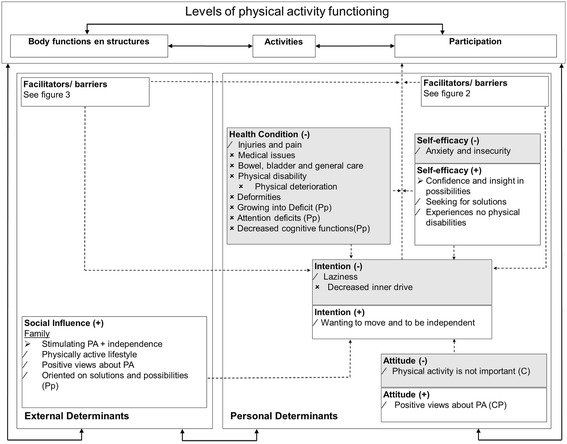
Methods: Eleven semi-structured interviews with parents of children with SB aged 4-7 years, nine focus groups with youth with SB (n = 33, age 8-18 years) and eight focus groups with their parents (n = 31) were conducted, recorded and transcribed verbatim. Two independent researchers analyzed the data. Central themes for physical activity were constructed, using the model for Physical Activity for Persons with a Disability (PAD model) as a background scheme.
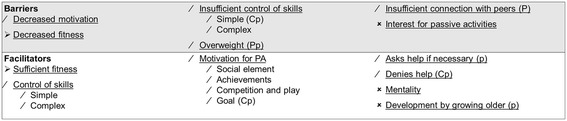
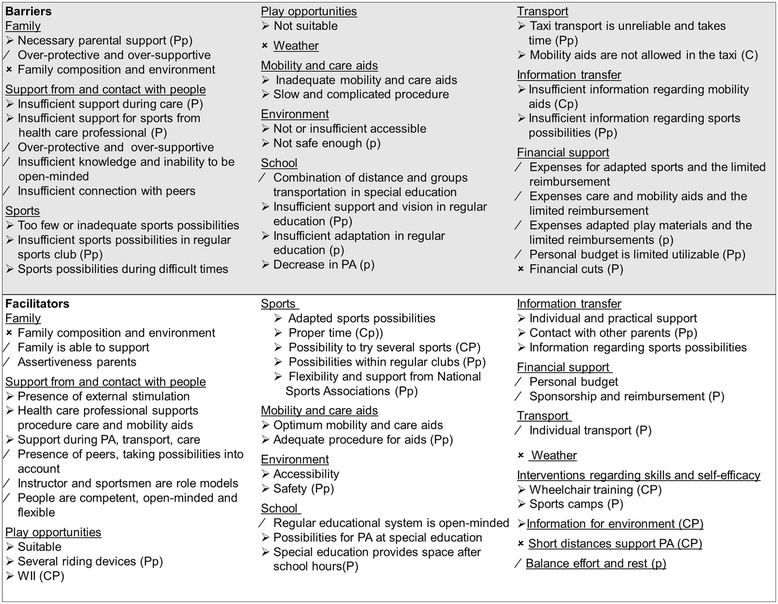
Results: Data showed that youth with SB encountered both personal and environmental factors associated with participation in PA on all levels of the PAD model. Bowel and bladder care, competence in skills, sufficient fitness, medical events and self-efficacy were important personal factors. Environmental factors that were associated with physical activity included the contact with and support from other people, the use of assistive devices for mobility and care, adequate information regarding possibilities for adapted sports and accessibility of playgrounds and sports facilities.
Conclusions: Our findings suggest that a variety of both personal and environmental factors were either positively or negatively associated with participation in PA. An individual approach, assessing possibilities rather than overcoming barriers within and surrounding the child may be a good starting point when setting up intervention programs to improve participation in PA. Therefore, assessment of both personal and environmental factors associated with physical activity should be standard care within multidisciplinary intervention programs aimed to encourage healthy active lifestyles in youth with SB.
Figures
References
-
- Annual Report 2011 with Data for 2009. International Clearinghouse for Birth Defects Surveillance and Research. [http://www.icbdsr.org/filebank/documents/ar2005/Report2011.pdf]
-
- Singh DK. Families of Children with Spina Bifida : A Review. J Dev Phys Disabil. 2003;15(1):37–54. doi: 10.1023/A:1021452220291. - DOI
Publication types
MeSH terms
LinkOut - more resources
Full Text Sources
Other Literature Sources
Medical
