


Situation analysis of parasitological and entomological indices of onchocerciasis transmission in three drainage basins of the rain forest of South West Cameroon after a decade of ivermectin treatment
- PMID: 25886166
- PMCID: PMC4393872
- DOI: 10.1186/s13071-015-0817-2
Situation analysis of parasitological and entomological indices of onchocerciasis transmission in three drainage basins of the rain forest of South West Cameroon after a decade of ivermectin treatment
Abstract
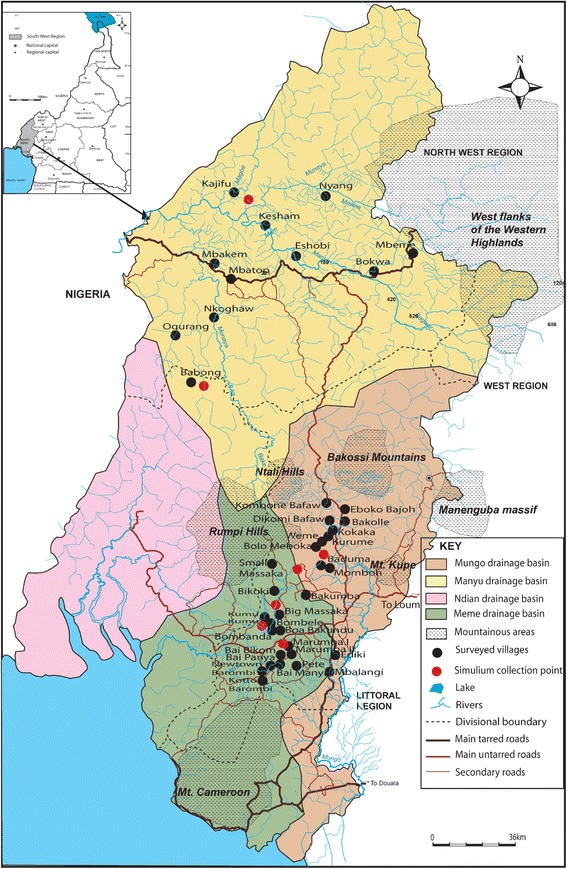
Background: Community-Directed Treatment with Ivermectin (CDTI) is the main strategy adopted by the African Programme for Onchocerciasis control (APOC). Recent reports from onchocerciasis endemic areas of savannah zones have demonstrated the feasibility of disease elimination through CDTI. Such information is lacking in rain forest zones. In this study, we investigated the parasitological and entomological indices of onchocerciasis transmission in three drainage basins in the rain forest area of Cameroon [after over a decade of CDTI]. River basins differed in terms of river number and their flow rates; and were characterized by high pre-control prevalence rates (60-98%).
Methods: Nodule palpation and skin snipping were carried out in the study communities to determine the nodule rates, microfilarial prevalences and intensity. Simulium flies were caught at capture points and dissected to determine the biting, parous, infection and infective rates and the transmission potential.
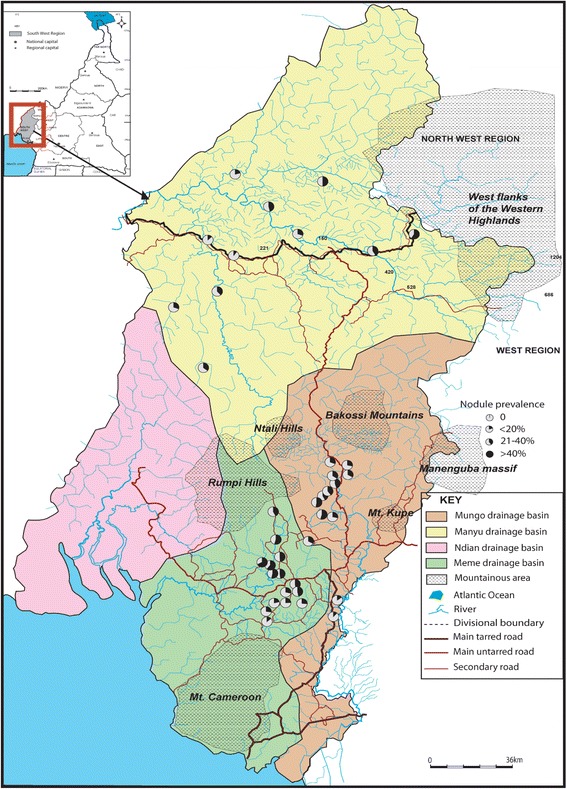
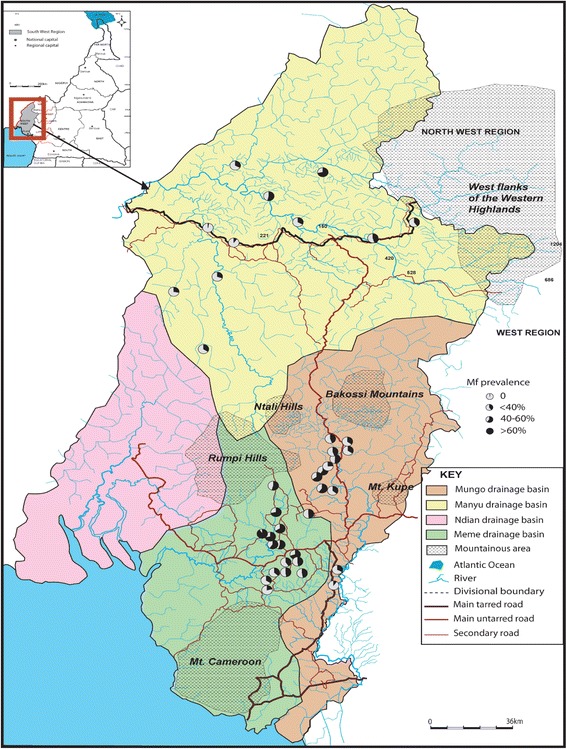
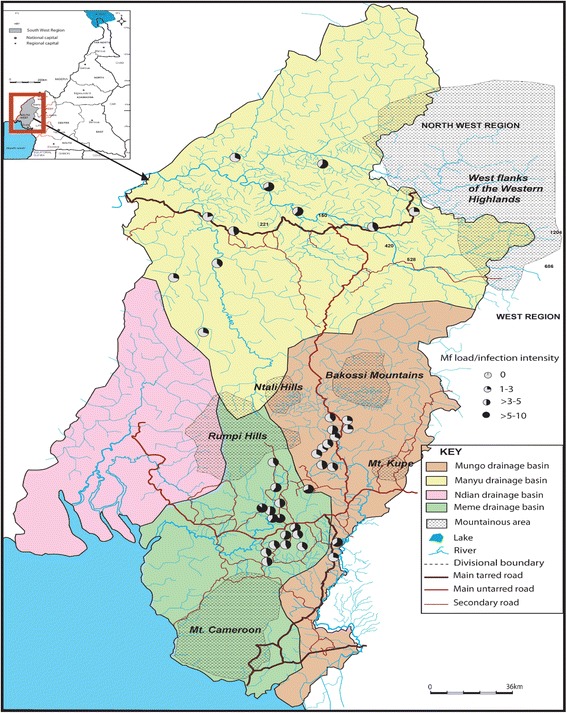
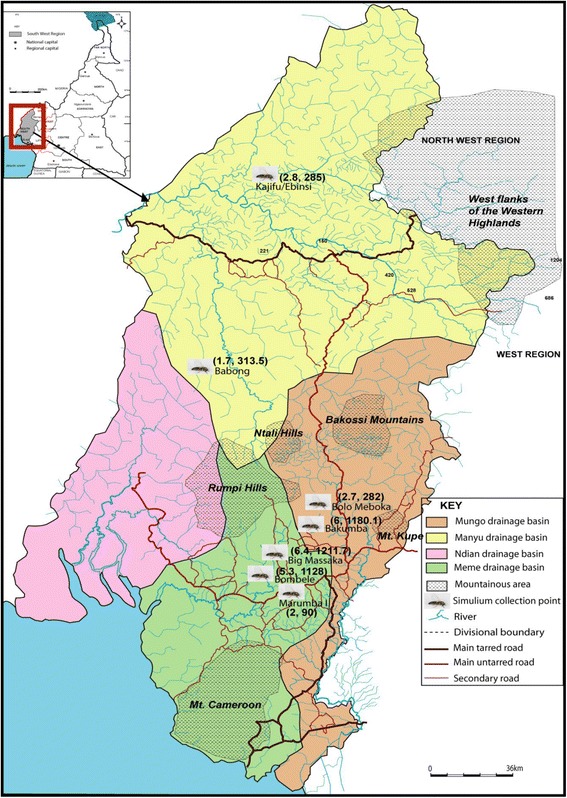
Results: The highest mean microfilaria (mf) prevalence was recorded in the Meme (52.7%), followed by Mungo (41.0%) and Manyu drainage basin (33.0%). The same trend was seen with nodule prevalence between the drainage basins. Twenty-three (23/39) communities (among which 13 in the Meme) still had mf prevalence above 40%. All the communities surveyed had community microfilarial loads (CMFL) below 10 mf/skin snip (ss). The infection was more intense in the Mungo and Meme. The intensity of infection was still high in younger individuals and children less than 10 years of age. Transmission potentials as high as 1211.7 infective larvae/person/month were found in some of the study communities. Entomological indices followed the same trend as the parasitological indices in the three river basins with the Meme having the highest values.
Conclusion: When compared with pre-control data, results of the present study show that after over a decade of CDTI, the burden of onchocerciasis has reduced. However, transmission is still going on in this study site where loiasis and onchocerciasis are co-endemic and where ecological factors strongly favour the onchocerciasis transmission. The possible reasons for this persistent and differential transmission despite over a decade of control efforts using ivermectin are discussed.
Figures
References
-
- Zoure H, Noma M, Tekle A, Amazigo U, Diggle P, Giorgi E, et al. The geographic distribution of Onchocerciasis in the 20 participating countries of the African programme for Onchocerciasis control: (2) pre-control endemicity levels and estimated number infected. Parasit Vectors. 2014;7(1):326. doi: 10.1186/1756-3305-7-326. - DOI - PMC - PubMed
-
- African Programme for Onchocerciasis Control [APOC] Ouagadougou (Burkina Faso): final communiqué of the 11th session of the joint action forum (JAF) after ivermectin treatment. Lancet. 2005;357:1415–6.
-
- Noma M, Zoure H, Tekle A, Enyong P, Nwoke B, Remme J. The geographic distribution of Onchocerciasis in the 20 participating countries of the African programme for Onchocerciasis control: (1) priority areas for ivermectin treatment. Parasit Vectors. 2014;7(1):325. doi: 10.1186/1756-3305-7-325. - DOI - PMC - PubMed
-
- Remme JHF, Feenstra P, Lever PR, Medici AC, Morel CM, Noma M, et al. Tropical Diseases Targeted for Elimination: Chagas Disease, Lymphatic Filariasis, Onchocerciasis, and Leprosy. In: Jamison DT, Breman JG, Measham AR, Alleyne G, Claeson M, Evans DB, Jha P, Mills A, Musgrove P, et al., editors. Disease Control Priorities in Developing Countries, Chapter 22. 2. Washington (DC): World Bank and Oxford University Press; 2006. pp. 433–50. - PubMed
Publication types
MeSH terms
Substances
Grants and funding
LinkOut - more resources
Full Text Sources
Other Literature Sources
Molecular Biology Databases
