


Copy number variants encompassing Mendelian disease genes in a large multigenerational family segregating bipolar disorder
- PMID: 25887117
- PMCID: PMC4382929
- DOI: 10.1186/s12863-015-0184-1
Copy number variants encompassing Mendelian disease genes in a large multigenerational family segregating bipolar disorder
Abstract
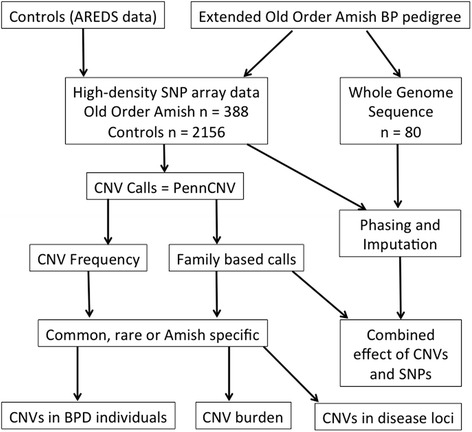
Background: Bipolar affective disorder (BP) is a common, highly heritable psychiatric disorder characterized by periods of depression and mania. Using dense SNP genotype data, we characterized CNVs in 388 members of an Old Order Amish Pedigree with bipolar disorder. We identified CNV regions arising from common ancestral mutations by utilizing the pedigree information. By combining this analysis with whole genome sequence data in the same individuals, we also explored the role of compound heterozygosity.
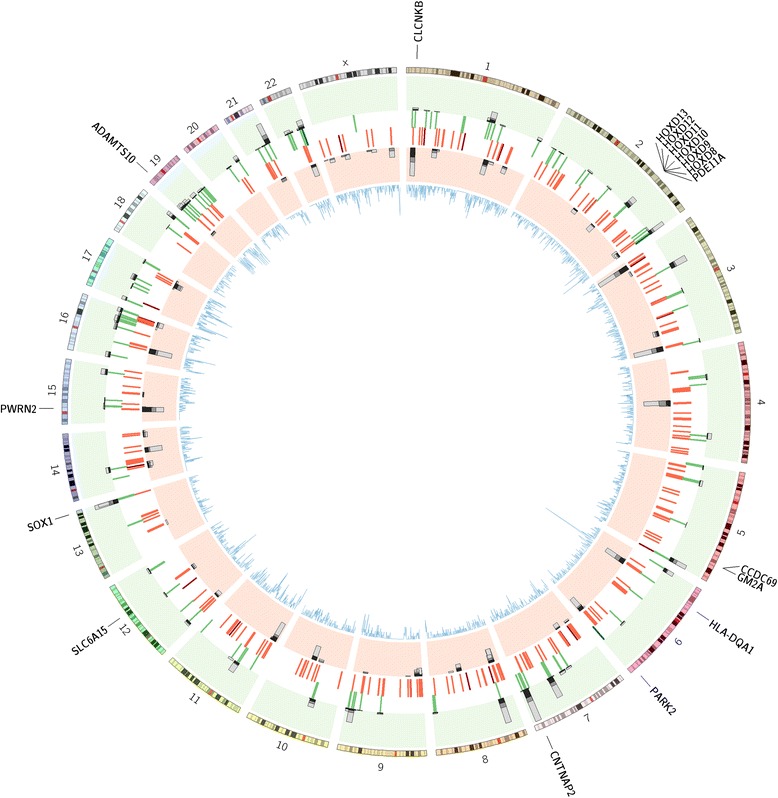
Results: Here we describe 541 inherited CNV regions, of which 268 are rare in a control population of European origin but present in a large number of Amish individuals. In addition, we highlight a set of CNVs found at higher frequencies in BP individuals, and within genes known to play a role in human development and disease. As in prior reports, we find no evidence for an increased burden of CNVs in BP individuals, but we report a trend towards a higher burden of CNVs in known Mendelian disease loci in bipolar individuals (BPI and BPII, p = 0.06).
Conclusions: We conclude that CNVs may be contributing factors in the phenotypic presentation of mood disorders and co-morbid medical conditions in this family. These results reinforce the hypothesis of a complex genetic architecture underlying BP disorder, and suggest that the role of CNVs should continue to be investigated in BP data sets.
Figures
References
-
- American Psychiatric Association . Diagnostic and statistical manual of mental disorders. 5. Arlington, VA: American Psychiatric Publishing; 2013.
-
- McIntyre RS, Konarski JZ. Bipolar disorder: a national health concern. CNS Spectr. 2004;9:6–15. - PubMed
Publication types
MeSH terms
Grants and funding
LinkOut - more resources
Full Text Sources
Other Literature Sources
Medical
Research Materials
