


Comparing timeliness, content, and disease severity of formal and informal source outbreak reporting
- PMID: 25887692
- PMCID: PMC4369067
- DOI: 10.1186/s12879-015-0885-0
Comparing timeliness, content, and disease severity of formal and informal source outbreak reporting
Abstract
Background: Infectious disease surveillance has recently seen many changes including rapid growth of informal surveillance, acting both as competitor and a facilitator to traditional surveillance, as well as the implementation of the revised International Health Regulations. The present study aims to compare outbreak reporting by formal and informal sources given such changes in the field.
Methods: 111 outbreaks identified from June to December 2012 were studied using first formal source report and first informal source report collected by HealthMap, an automated and curated aggregator of data sources for infectious disease surveillance. The outbreak reports were compared for timeliness, reported content, and disease severity.
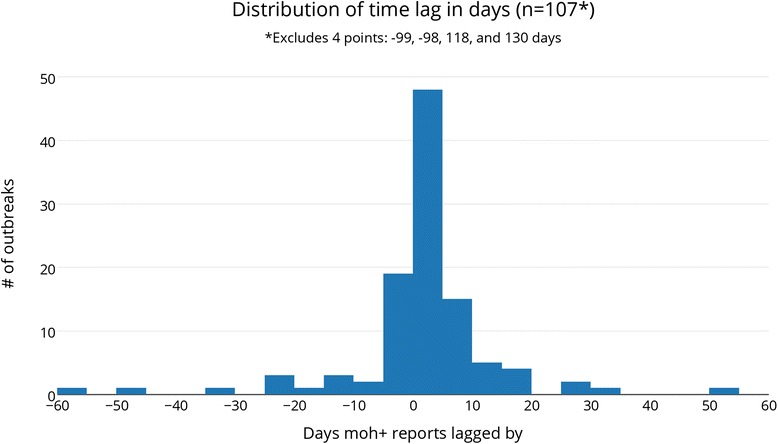
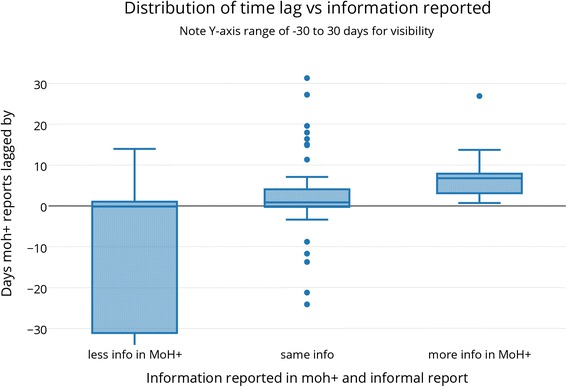
Results: Formal source reports lagged behind informal source reports by a median of 1.26 days (p=0.002). In 61% of the outbreaks studied, the same information was reported in the initial formal and informal reports. Disease severity had no significant effect on timeliness of reporting.
Conclusion: The findings suggest that recent changes in the field of surveillance improved formal source reporting, particularly in the dimension of timeliness. Still, informal sources were found to report slightly faster and with accurate information. This study emphasizes the importance of utilizing both formal and informal sources for timely and accurate infectious disease outbreak surveillance.
Figures
References
-
- Mondor L, Brownstein JS, Chan E, Madoff LC, Pollack MP, Buckeridge DL, et al. “Timeliness of nongovernmental versus governmental global outbreak communications”. Emerg Infect Dis. Jul 2012. http://dx.doi.org/10.3201/eid1807.120249. - DOI - PMC - PubMed
Publication types
MeSH terms
Grants and funding
LinkOut - more resources
Full Text Sources
Other Literature Sources
Medical
