


Counting glomeruli and podocytes: rationale and methodologies
- PMID: 25887899
- PMCID: PMC4466040
- DOI: 10.1097/MNH.0000000000000121
Counting glomeruli and podocytes: rationale and methodologies
Abstract
Purpose of review: There is currently much interest in the numbers of both glomeruli and podocytes. This interest stems from a greater understanding of the effects of suboptimal fetal events on nephron endowment, the associations between low nephron number and chronic cardiovascular and kidney disease in adults, and the emergence of the podocyte depletion hypothesis.
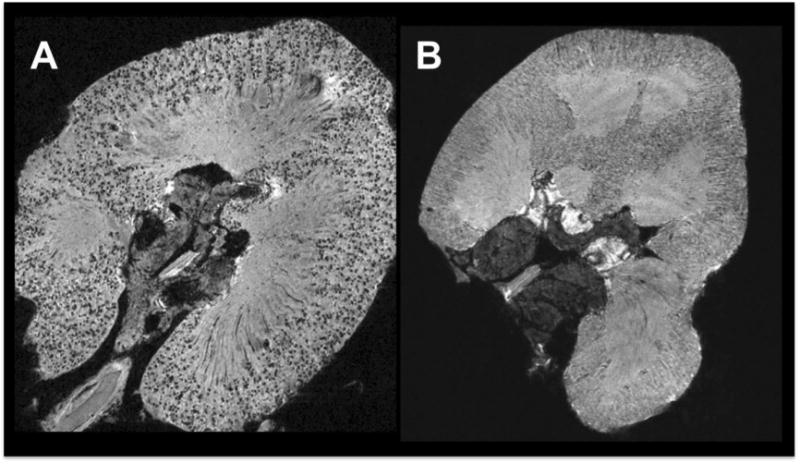
Recent findings: Obtaining accurate and precise estimates of glomerular and podocyte number has proven surprisingly difficult. When whole kidneys or large tissue samples are available, design-based stereological methods are considered gold standard because they are based on principles that negate systematic bias. However, these methods are often tedious and time consuming, and oftentimes inapplicable when dealing with small samples such as biopsies. Therefore, novel methods suitable for small tissue samples, and innovative approaches to facilitate high throughput measurements, such as MRI to estimate glomerular number and flow cytometry to estimate podocyte number, have recently been described.
Summary: This review describes current gold-standard methods for estimating glomerular and podocyte number, as well as methods developed in the past 3 years. We are now better placed than ever before to accurately and precisely estimate glomerular and podocyte number, and examine relationships between these measurements and kidney health and disease.
Conflict of interest statement
References
-
- Brenner BM. Nephron adaptation to renal injury or ablation. Am J Physiol. 1985;249(3 Pt 2):F324–37. - PubMed
-
- Hostetter TH, et al. Hyperfiltration in remnant nephrons: a potentially adverse response to renal ablation. Am J Physiol. 1981;241(1):F85–93. - PubMed
-
- Dorey ES, et al. Adverse prenatal environment and kidney development: implications for programing of adult disease. Reproduction. 2014;147(6):R189–98. - PubMed
Publication types
MeSH terms
Grants and funding
LinkOut - more resources
Full Text Sources
Other Literature Sources
Medical
Miscellaneous
