


Primary apocrine sweat gland carcinomas of the axilla: a report of two cases and a review of the literature
- PMID: 25888740
- PMCID: PMC4336764
- DOI: 10.1186/s12957-015-0473-1
Primary apocrine sweat gland carcinomas of the axilla: a report of two cases and a review of the literature
Abstract
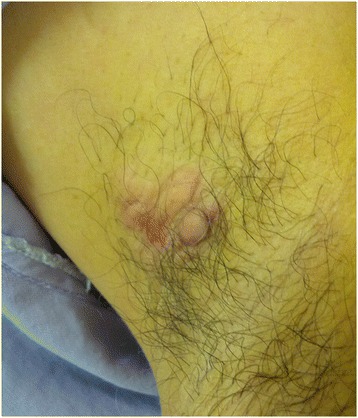
Primary apocrine sweat gland carcinoma (PASGC) is an extremely rare malignancy with a relatively favorable prognosis. PASGC is often suspected to be a benign disease during an initial clinical examination, which leads to inadequate initial treatment and extensive metastasis. Owing to the limited number of reports on PASGC, its diagnostic criteria and treatment guidelines have not yet been established. The only known curative therapy for localized PASGC is wide local excision. In the present report, we describe two cases of PASGC with locally aggressive disease that arose in the axilla and review the literature about its clinicopathological features, diagnosis, and treatment. Based on the findings of the current report, we suggest that a sentinel lymph node biopsy and adjuvant anti-estrogen therapy should be included in the management of PASGC.
Figures


References
-
- Vučinić I, Stojadinović T, Borić Mikez Z, Đanić D, Coha B. Apocrine carcinoma of the scalp with aggressive clinical course–a case report and review of the literature. Coll Antropol. 2013;36:209–12. - PubMed
-
- Pucevich B, Catinchi-Jaime S, Ho J, Jukic DM. Invasive primary ductal apocrine adenocarcinoma of axilla: a case report with immunohistochemical profiling and a review of literature. Dermatol Online J. 2008;14:5. - PubMed
-
- Karaca S, Kulac M, Sahin O, Esme H, Solak O, Aktepe F. A rare cutaneous tumor of the axilla: apocrine adenocarcinoma. Indian J Dermatol. 2007;52:50. doi: 10.4103/0019-5154.31926. - DOI
Publication types
MeSH terms
LinkOut - more resources
Full Text Sources
Other Literature Sources
