


Evaluation of sulphadoxine-pyrimethamine for intermittent preventive treatment of malaria in pregnancy: a retrospective birth outcomes study in Mansa, Zambia
- PMID: 25890159
- PMCID: PMC4327785
- DOI: 10.1186/s12936-015-0576-8
Evaluation of sulphadoxine-pyrimethamine for intermittent preventive treatment of malaria in pregnancy: a retrospective birth outcomes study in Mansa, Zambia
Abstract
Background: Intermittent preventive treatment of malaria in pregnancy (IPTp) with sulphadoxine-pyrimethamine (SP) decreases placental parasitaemia, thus improving birth outcomes. Zambian policy recommends monthly SP-IPTp doses given presumptively during pregnancy at each antenatal examination, spaced one month apart after 16 weeks of gestation. The effectiveness of SP-IPTp was evaluated in Zambia where a recent study showed moderate prevalence of Plasmodium falciparum parasites with genetic mutations that confer SP resistance.
Methods: HIV-negative women were enrolled at the time of delivery at two facilities in Mansa, Zambia, an area of high malaria transmission. Women were interviewed and SP exposure was determined by antenatal card documentation or self-reports. Using Poisson regression modelling, the effectiveness of SP-IPTp was evaluated for outcomes of parasitaemia (microscopic examination of maternal peripheral, cord, and placental blood films), maternal anaemia (Hb < 11 g/dl), placental infection (histopathology), and infant outcomes (low birth weight (LBW), preterm delivery, and small for gestational age) in women who took 0-4 doses of SP-IPTp.
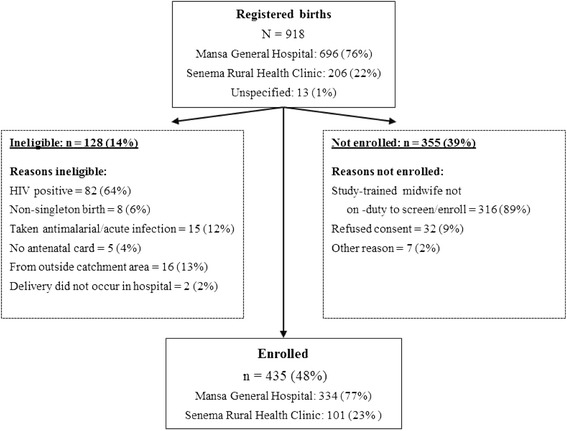
Results: Participants included 435 women, with a median age of 23 years (range 16-44). Thirty-four women took zero doses of SP-IPTp, while 115, 142 and 144 women took one, two, or ≥ three doses, respectively. Multivariate Poisson regression models considering age, mosquito net usage, indoor residual spraying, urban home, gravidity, facility, wet season delivery, and marital status showed that among paucigravid women ≥ two doses of SP-ITPp compared to one or less doses was associated with a protective effect on LBW (prevalence ratio (PR) 0.33, 95% confidence interval (CI) 0.12-0.91) and any infection (PR 0.76, CI 0.58-0.99). Multivariate models considering SP-IPTp as a continuous variable showed a protective dose-response association with LBW (paucigravid women: PR 0.54, CI 0.33-0.90, multigravid women: PR 0.63, CI 0.41-0.97).
Conclusions: In Mansa, Zambia, an area of moderate SP resistance, ≥ two doses of SP-IPTp were associated with a protective effect from malaria in pregnancy, especially among paucigravid women. Each dose of SP-IPTp contributed to a 46 and 37% decrease in the frequency of LBW among paucigravid and multigravid women, respectively. SP-IPTp remains a viable strategy in this context.
Figures
References
-
- Central Statistical Office (CSO) MoHM, Tropical Diseases Research Centre (TDRC), University of Zambia aMII . Zambia Demographic and Health Survey 2007. Calverton, Maryland, USA: CSO and Macro International Inc; 2009.
-
- Steketee RW, Nahlen BL, Parise ME, Menendez C. The burden of malaria in pregnancy in malaria-endemic areas. Am J Trop Med Hyg. 2001;64:28–35. - PubMed
-
- Ministry of Health. Zambia national malaria indicator survey 2010. Government of the Republic of Zambia; 2010
Publication types
MeSH terms
Substances
LinkOut - more resources
Full Text Sources
Other Literature Sources
Research Materials
