


EMPOWER-support of patient empowerment by an intelligent self-management pathway for patients: study protocol
- PMID: 25890197
- PMCID: PMC4372173
- DOI: 10.1186/s12911-015-0142-x
EMPOWER-support of patient empowerment by an intelligent self-management pathway for patients: study protocol
Abstract
Background: Diabetes education together with patient empowerment has shown to be key to effective self-management behavior. When delivered through information and communication technologies (ICT), this solution has shown to lead to better health outcomes. However, the potential of ICT and their integration into the healthcare environment have not yet been fully exploited. ICT should be in particular used to facilitate communication and information exchange between patient and healthcare providers. In addition, systems should include components facilitating behavior change using empowerment approaches such as goal-setting.
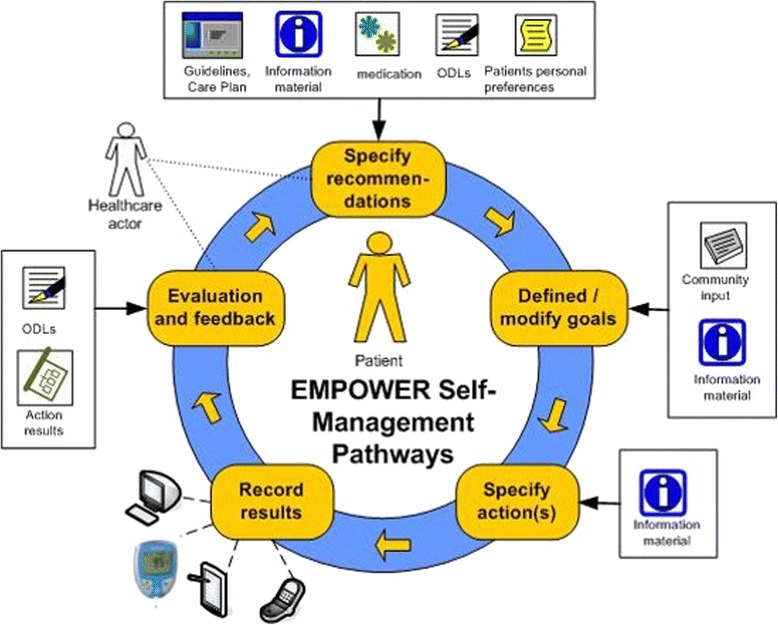
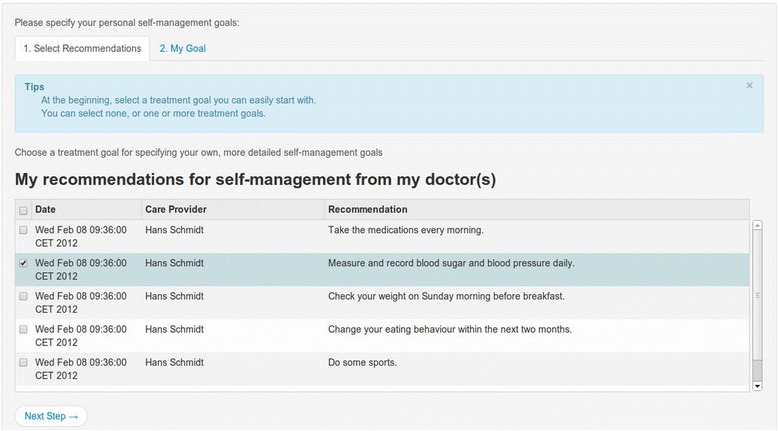
Methods/design: Funded by the European Commission (FP7-ICT-2011-288209) a web/mobile based platform (EMPOWER) has been developed, which aims at supporting self-management activities of diabetes patients and their treating physicians in Germany and Turkey. The platform semantically integrates multiple information sources, such as electronic and personal health records (EHR/PHR). Patients can register patterns of daily living, record blood glucose levels, design disease management plans and set long- and short-term goals. The project actively involves the treating physician, who has the possibility to set recommendations for the patient and to monitor his/her progress on the platform. In the test-phase of EMPOWER, patients will be assigned to an intervention group and a control group. Data will be collected at baseline and three months after the intervention started. In addition, qualitative interviews will be conducted to collect extra information on usability and usefulness. Outcome measures include amongst others the Problem Areas in Diabetes questionnaire (PAID), the Summary of Diabetes Self-Care Activities and scales evaluating doctor-patient interaction. Physiological parameters, such as physical activity or blood glucose levels will be collected via the platform. Further, log files and number of logins will serve as independent variables.
Discussion: The interplay between multiple sources, including EHR, patients' own registered information and physicians' recommendations on one platform can have important practice implications. It might not only improve self-management activities in diabetes patients but it will also facilitate physician's work, and ultimately the physician patient relationship.
Trial registration: The trial has been registered with Deutsches Register Klinischer Studien (German register of clinical trials) under DRKS00007699 on January 30, 2015.
Figures
References
Publication types
MeSH terms
Associated data
LinkOut - more resources
Full Text Sources
Other Literature Sources
Medical
