


A missense variant in CST3 exerts a recessive effect on susceptibility to age-related macular degeneration resembling its association with Alzheimer's disease
- PMID: 25893795
- PMCID: PMC4460273
- DOI: 10.1007/s00439-015-1552-7
A missense variant in CST3 exerts a recessive effect on susceptibility to age-related macular degeneration resembling its association with Alzheimer's disease
Abstract
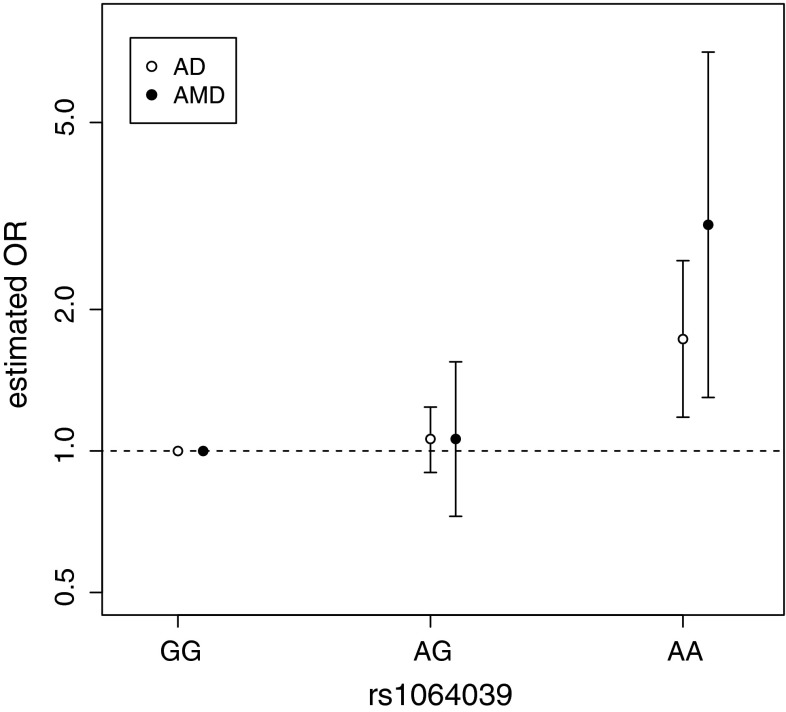
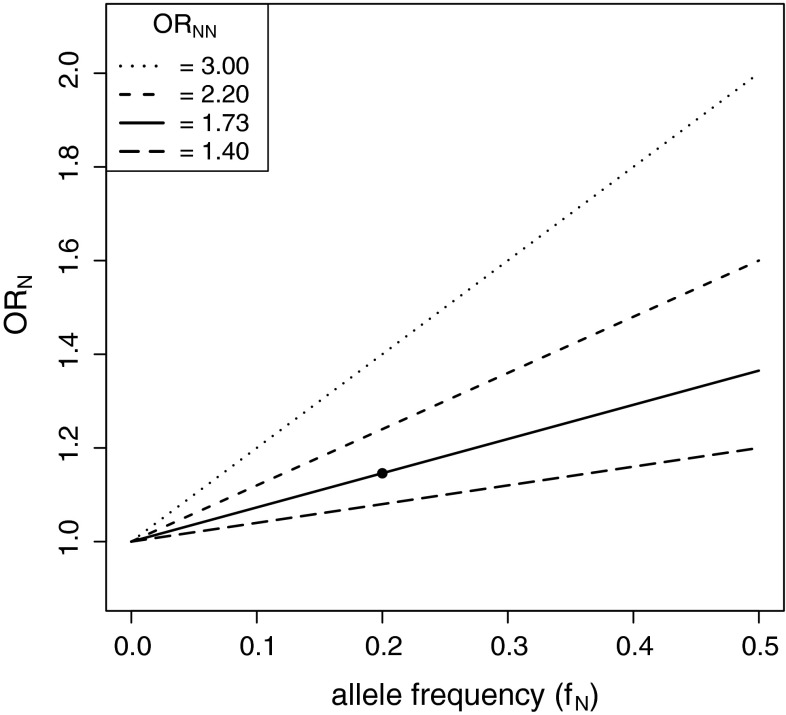
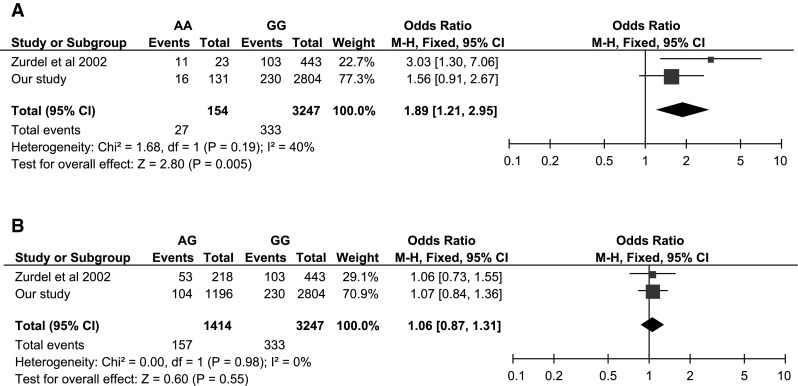
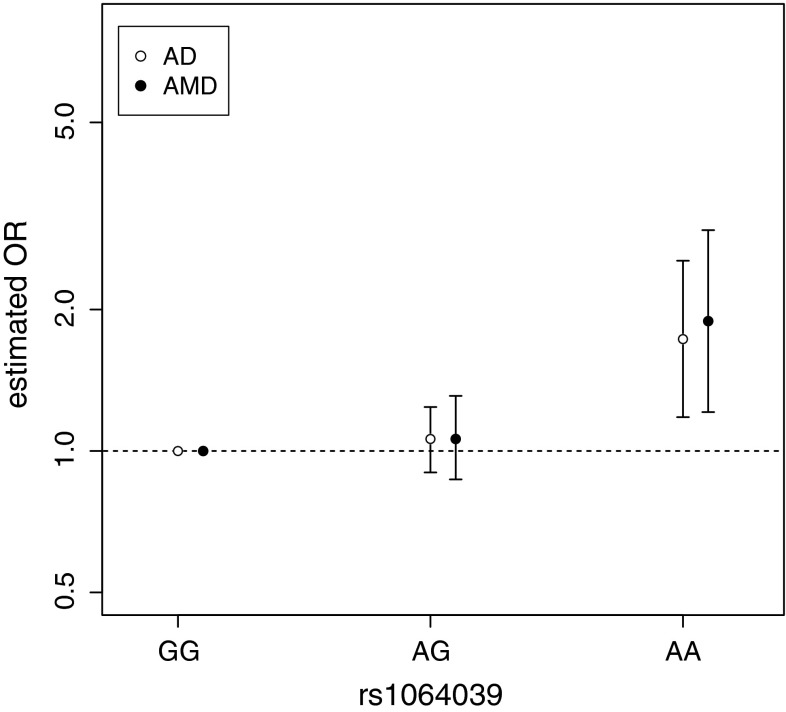
Age-related macular degeneration (AMD) and Alzheimer's disease (AD) are degenerative, multifactorial diseases involving age-related accumulation of extracellular deposits linked to dysregulation of protein homeostasis. Here, we strengthen the evidence that an nsSNP (p.Ala25Thr) in the cysteine proteinase inhibitor cystatin C gene CST3, previously confirmed by meta-analysis to be associated with AD, is associated with exudative AMD. To our knowledge, this is the first report highlighting a genetic variant that increases the risk of developing both AD and AMD. Furthermore, we demonstrate that the risk associated with the mutant allele follows a recessive model for both diseases. We perform an AMD-CST3 case-control study genotyping 350 exudative AMD Caucasian individuals. Bringing together our data with the previously reported AMD-CST3 association study, the evidence of a recessive effect on AMD risk is strengthened (OR = 1.89, P = 0.005). This effect closely resembles the AD-CST3 recessive effect (OR = 1.73, P = 0.005) previously established by meta-analysis. This resemblance is substantiated by the high correlation between CST3 genotype and effect size across the two diseases (R(2) = 0.978). A recessive effect is in line with the known function of cystatin C, a potent enzyme inhibitor. Its potency means that, in heterozygous individuals, a single functional allele is sufficient to maintain its inhibitory function; only homozygous individuals will lack this form of proteolytic regulation. Our findings support the hypothesis that recessively acting variants account for some of the missing heritability of multifactorial diseases. Replacement therapy represents a translational opportunity for individuals homozygous for the mutant allele.
Figures
References
-
- Akerblom A, Eriksson N, Wallentin L, Siegbahn A, Barratt BJ, Becker RC, Budaj A, Himmelmann A, Husted S, Storey RF, Johansson A, James SK. Polymorphism of the cystatin C gene in patients with acute coronary syndromes: results from the Platelet inhibition and patient outcomes study. Am Heart J. 2014;168(96–102):e2. - PubMed
-
- Arakawa S, Takahashi A, Ashikawa K, Hosono N, Aoi T, Yasuda M, Oshima Y, Yoshida S, Enaida H, Tsuchihashi T, Mori K, Honda S, Negi A, Arakawa A, Kadonosono K, Kiyohara Y, Kamatani N, Nakamura Y, Ishibashi T, Kubo M. Genome-wide association study identifies two susceptibility loci for exudative age-related macular degeneration in the Japanese population. Nat Genet. 2011;43:1001–1004. doi: 10.1038/ng.938. - DOI - PubMed
-
- Bagos PG (2008) A unification of multivariate methods for meta-analysis of genetic association studies. Stat Appl Genet Mol Biol 7:Article31. doi:10.2202/1544-6115.1408 - PubMed
Publication types
MeSH terms
Substances
Grants and funding
LinkOut - more resources
Full Text Sources
Other Literature Sources
Medical
Miscellaneous
