


Systematic review of randomised controlled trials of interventions that aim to reduce the risk, either directly or indirectly, of overweight and obesity in infancy and early childhood
- PMID: 25894857
- PMCID: PMC5029770
- DOI: 10.1111/mcn.12184
Systematic review of randomised controlled trials of interventions that aim to reduce the risk, either directly or indirectly, of overweight and obesity in infancy and early childhood
Abstract
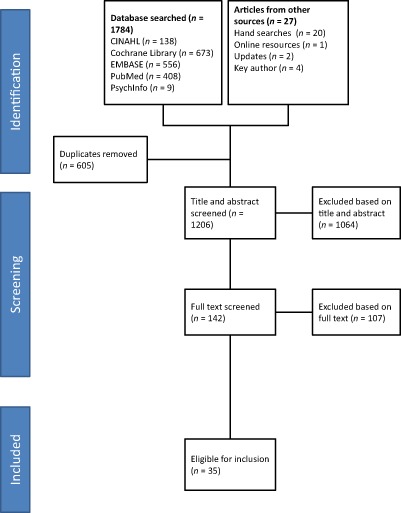
The risk factors for childhood overweight and obesity are known and can be identified antenatally or during infancy, however, the majority of effective interventions are designed for older children. This review identified interventions designed to reduce the risk of overweight/obesity that were delivered antenatally or during the first 2 years of life, with outcomes reported from birth to 7 years of age. Six electronic databases were searched for papers reporting randomised controlled trials of interventions published from January 1990 to September 2013. A total of 35 eligible studies were identified, describing 27 unique trials of which 24 were behavioural and three were non-behavioural. The 24 behavioural trials were categorised by type of intervention: (1) nutritional and/or responsive feeding interventions targeted at parents of infants, which improved feeding practices and had some impact on child weight (n = 12); (2) breastfeeding promotion and lactation support for mothers, which had a positive effect on breastfeeding but not child weight (n = 5); (3) parenting and family lifestyle (n = 4); and (4) maternal health (n = 3) interventions that had some impact on feeding practices but not child weight. The non-behavioural trials comprised interventions manipulating formula milk composition (n = 3). Of these, lower/hydrolysed protein formula milk had a positive effect on weight outcomes. Interventions that aim to improve diet and parental responsiveness to infant cues showed most promise in terms of self-reported behavioural change. Despite the known risk factors, there were very few intervention studies for pregnant women that continue during infancy which should be a priority for future research.
Keywords: infancy; intervention; obesity; overweight; prevention.
© 2015 The Authors. Maternal & Child Nutrition published by John Wiley & Sons Ltd.
Conflict of interest statement
The authors declare that they have no conflicts of interest.
References
-
- Agrasada G.V. & Kylberg E. (2009) When and why Filipino mothers of term low birth weight infants interrupted breastfeeding exclusively. Breastfeeding Review: Professional Publication of the Nursing Mothers' Association of Australia 17(3), 5–10. - PubMed
-
- Agrasada G.V., Gustafsson J., Kylberg E. & Ewald U. (2005) Postnatal peer counselling on exclusive breastfeeding of low‐birthweight infants: a randomized, controlled trial. Acta Paediatrica 94(8), 1109–1115. - PubMed
-
- Albernaz E., Victora C.G., Haisma H., Wright A. & Coward W.A. (2003) Lactation counseling increases breast‐feeding duration but not breast milk intake as measured by isotopic methods. The Journal of Nutrition 133, 205–210. - PubMed
-
- Bhandari N., Bahl R., Mazumdar S., Martines J., Black R.E. & Bhan M.K. (2003) Effect of community‐based promotion of exclusive breastfeeding on diarrhoeal illness and growth: a cluster randomised controlled trial. Lancet 361, 1418–1423. - PubMed
Publication types
MeSH terms
LinkOut - more resources
Full Text Sources
Other Literature Sources
Medical
