


Review of 'the potential role of arterial stiffness in the pathogenesis of Alzheimer's disease'
- PMID: 25894876
- PMCID: PMC4423756
- DOI: 10.2217/nmt.14.53
Review of 'the potential role of arterial stiffness in the pathogenesis of Alzheimer's disease'
Abstract
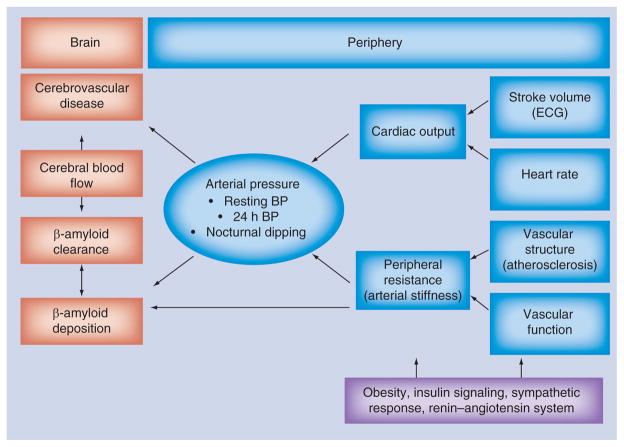
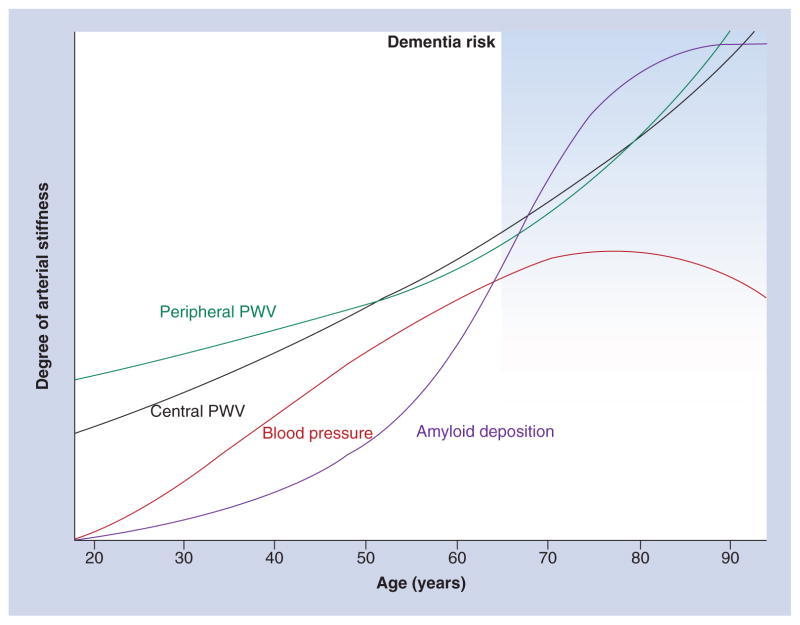
Arterial stiffness is emerging as an important risk marker for poor brain aging and dementia through its associations with cerebral small vessel disease, stroke, β-amyloid deposition, brain atrophy and cognitive impairment. Arterial stiffness directly relates the detrimental effects of hypertension on peripheral organs with dire consequences for the extensive microvasculature structure of the kidneys and brain. In this review, we discuss the evidence linking arterial stiffness, hypertension and brain structural abnormalities in older adults. In particular, we discuss the potential mechanisms linking arterial stiffness to brain β-amyloid deposition and dementia and potential therapeutic strategies to prevent hypertension's adverse effects on the brain.
Keywords: Alzheimer's disease; arterial stiffness; brain aging; dementia; hypertension; β-amyloid deposition.
Figures
References
-
- Fotuhi M, Hachinski V, Whitehouse PJ. Changing perspectives regarding late-life dementia. Nat Rev Neurol. 2009;5(12):649–658. - PubMed
-
- Kloppenborg RP, Van Den Berg E, Kappelle LJ, Biessels GJ. Diabetes and other vascular risk factors for dementia: which factor matters most? A systematic review. Eur J Pharmacol. 2008;585(1):97–108. - PubMed
-
- Erkinjuntti T, Gauthier S. The concept of vascular cognitive impairment. Front Neurol Neurosci. 2009;24:79–85. - PubMed
-
- Beach TG, Wilson JR, Sue LI, et al. Circle of Willis atherosclerosis: association with Alzheimer’s disease, neuritic plaques and neurofibrillary tangles. Acta Neuropathol. 2007;113(1):13–21. - PubMed
Publication types
MeSH terms
Substances
Grants and funding
LinkOut - more resources
Full Text Sources
Other Literature Sources
Medical
