


Are patients with inflammatory bowel disease on chronic immunosuppressive therapy at increased risk of cervical high-grade dysplasia/cancer? A meta-analysis
- PMID: 25895005
- PMCID: PMC4458370
- DOI: 10.1097/MIB.0000000000000338
Are patients with inflammatory bowel disease on chronic immunosuppressive therapy at increased risk of cervical high-grade dysplasia/cancer? A meta-analysis
Abstract
Background: Immunosuppression is a mainstay of therapy for both induction and maintenance of remission for inflammatory bowel disease (IBD). Women who are chronically immunosuppressed have been shown to be at higher risk of developing cervical high-grade dysplasia and/or carcinoma. There is contradictory data whether immunosuppressed patients with IBD have the same risk profile for cervical cancer as patients with solid organ transplant or HIV infection.
Objective: To determine whether the risk of cervical high-grade dysplasia and/or cancer is higher in patients with IBD on immunosuppressive therapy compared with the rates in the general population.
Methods: The studies were restricted to full-text retrospective cohort studies and case controls that had a high (6-9) Newcastle-Ottawa Score.
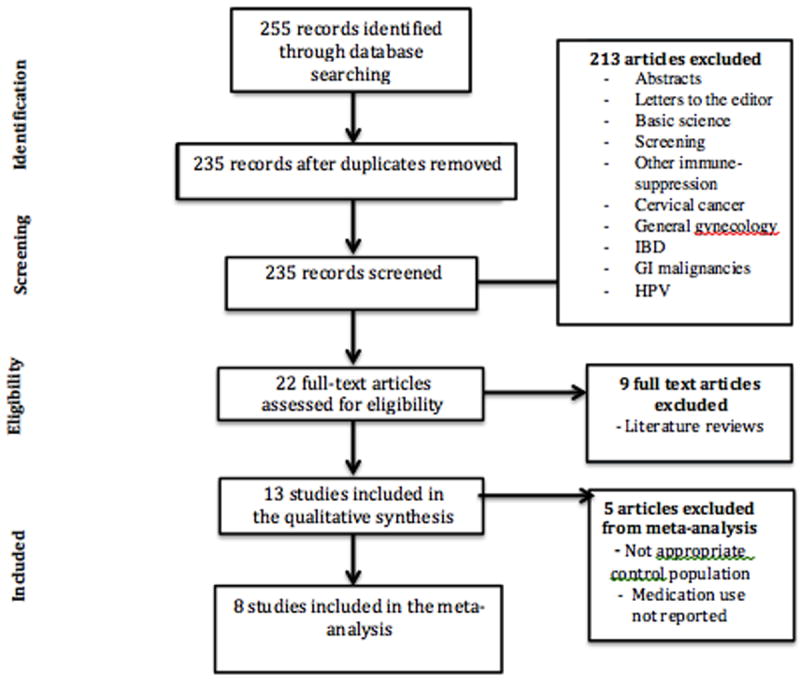
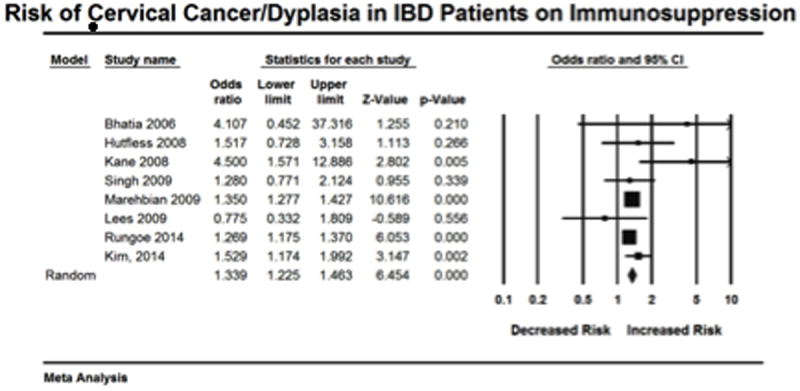
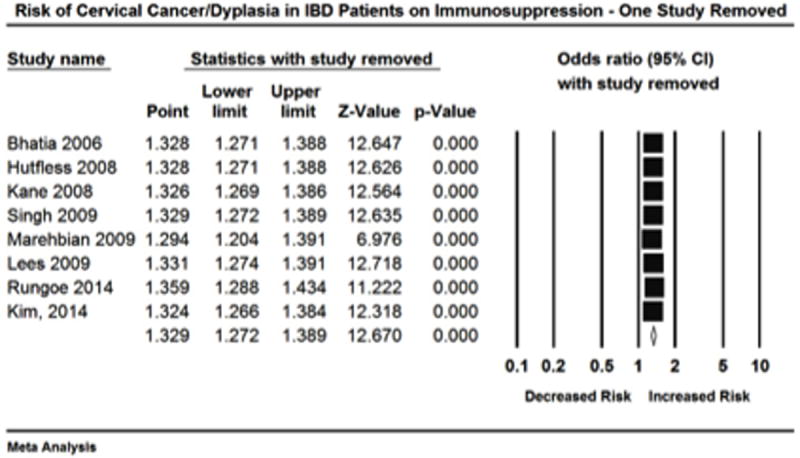
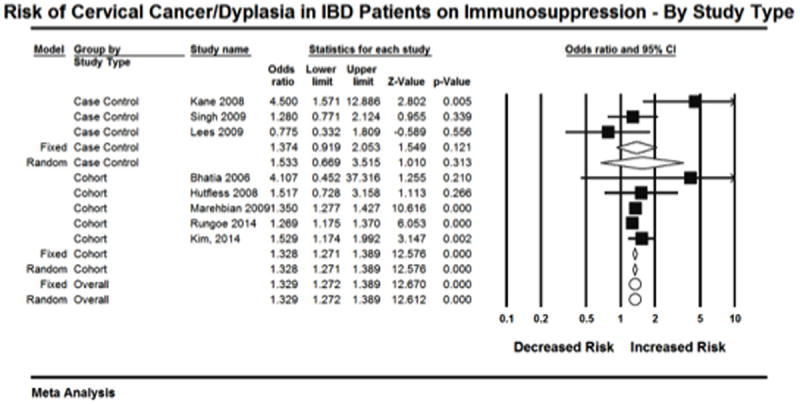
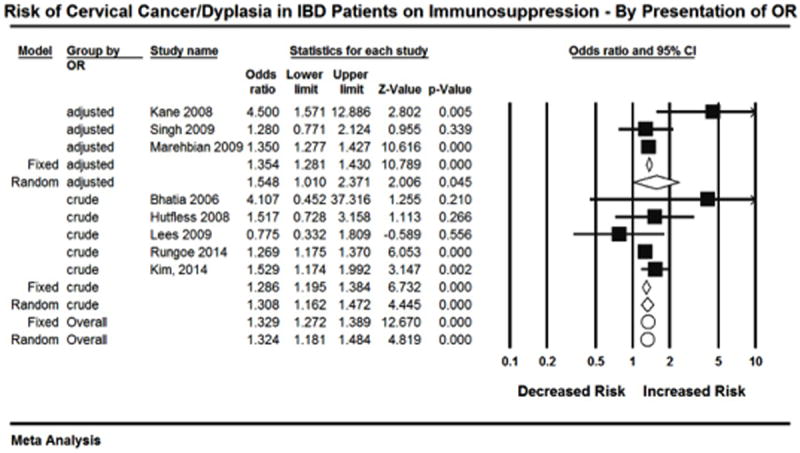
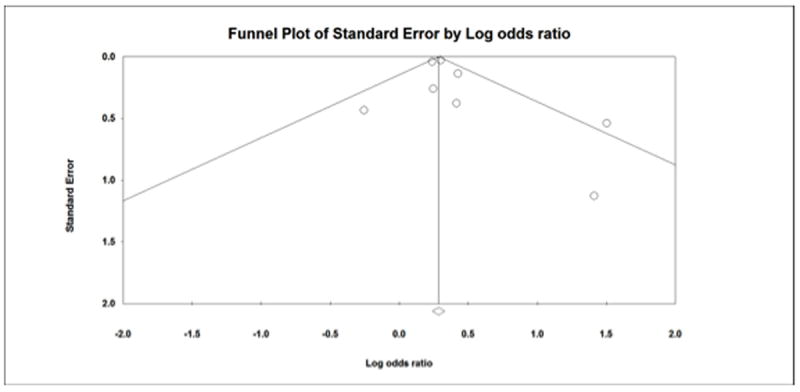
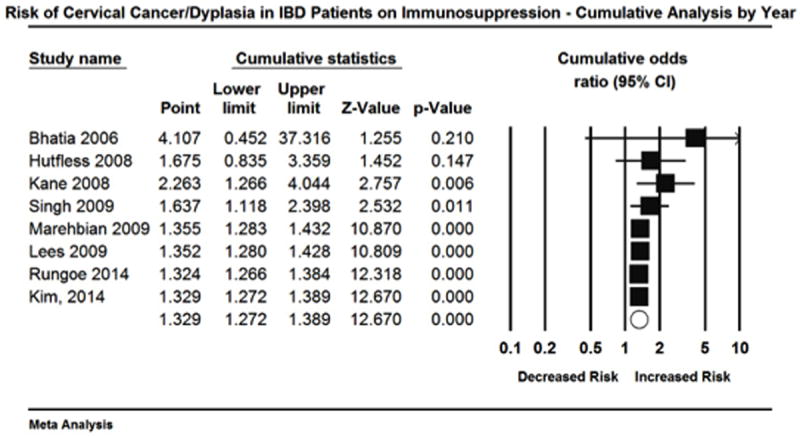
Results: All pooled analyses were based on a random-effects model. Five cohort studies and 3 case-control studies of patients with IBD on any immunosuppression with cervical high-grade dysplasia/cancer (n = 995) were included in the meta-analysis. The total IBD population in these studies was 77,116. Patients with IBD had an increased risk of cervical high-grade dysplasia/cancer compared with healthy controls (odds ratio = 1.34, 95% confidence interval: 1.23-1.46). Heterogeneity was detected (I = 34.23, Q = 10.64, df = 7; P = 0.15). The source was found to be the type of study, as well as the odds ratio presented (crude versus adjusted).
Conclusions: There is sufficient evidence to suggest an increased risk of cervical high-grade dysplasia/cancer in patients with IBD on immunosuppressive medications compared with the general population. Given this increased risk, increased screening intervals are indicated.
Figures

References
-
- Sandborn WJ, Feagan BG, Lichtenstein GR. Medical management of mild to moderate Crohn’s disease: evidence-based treatment algorithms for induction and maintenance of remission. Aliment Pharmacol Ther. 2007;26:987–1003. - PubMed
-
- Cutrell J, Bedimo R. Non-AIDS-defining cancers among HIV-infected patients. Curr HIV/AIDS Rep. 2013;10:207–216. - PubMed
-
- Dantal J, Hourmant M, Cantarovich D, et al. Effect of long-term immunosuppression in kidney-graft recipients on cancer incidence: randomised comparison of two cyclosporin regimens. Lancet. 1998;351:623–628. - PubMed
-
- Jensen P, Hansen S, Moller B, et al. Skin cancer in kidney and heart transplant recipients and different long-term immunosuppressive therapy regimens. J Am Acad Dermatol. 1999;40:177–186. - PubMed
Publication types
MeSH terms
Substances
Grants and funding
LinkOut - more resources
Full Text Sources
Miscellaneous
